Schools
An Interview With Dr. Alixe Callen: Part One
Acton-Boxborough Regional High School principal discusses challenges, hopes, and what makes the A-B community special.
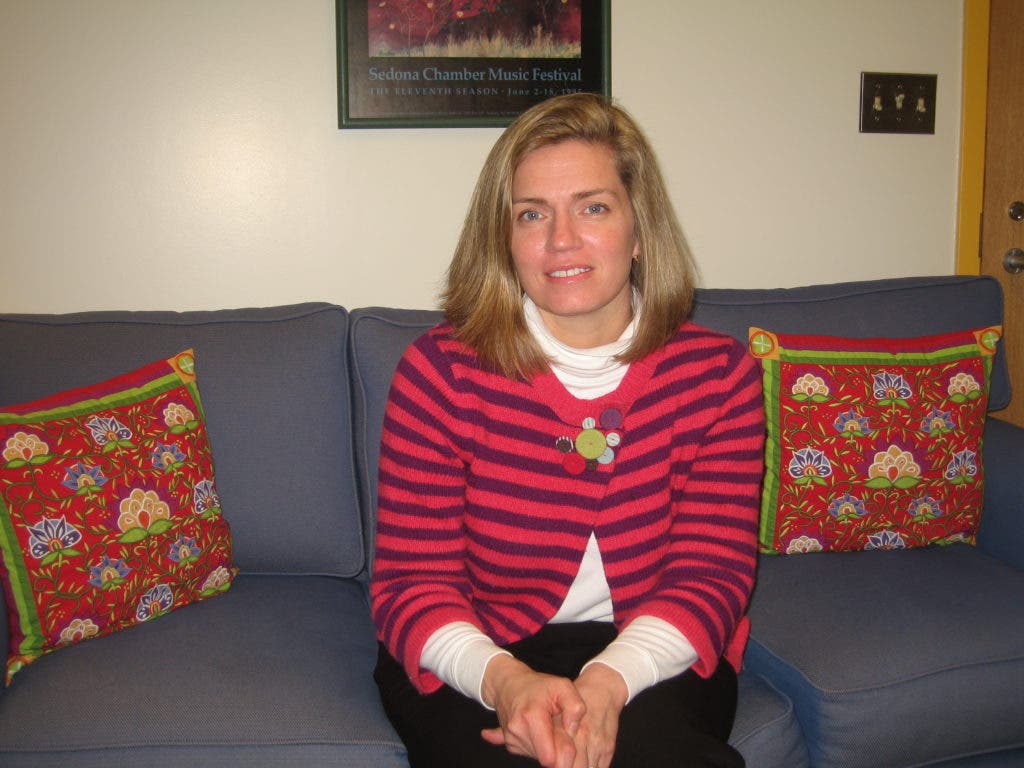
Your Schools will occasionally feature interviews with Acton-Boxborough school principals and other educators and administrators. In the first such feature, Alexandra (Alixe) Callen, Ed. D., discusses her experiences and goals as the principal of Acton-Boxborough Regional High School. The assistant principal at Needham High School for four years before starting at ABRHS in the fall of 2008, Callen earned a doctorate in education at Harvard University in 2003 but her dream of leading a school to its full potential began long beforehand, she said.
“I always wanted to be a teacher, literally since I was very young. However, I discovered during my first couple of years of teaching that the work I enjoyed most involved school-level as opposed to classroom-level decision-making,” Callen said. “It was at that point that I decided to pursue my doctorate and my principal certification.”
In the first of a two-part interview, Callen talks about the challenges and joys of her job, and how allowing students certain freedoms actually contributes to their academic success.
Find out what's happening in Actonfor free with the latest updates from Patch.
What is most special about being principal of ABRHS?
Find out what's happening in Actonfor free with the latest updates from Patch.
For one thing, such a predominant number of kids go to public school in Acton. Acton and Boxborough are very unusual in that for instance in Concord, where I live, about 20 percent of kids go to private school. In A-B, it’s about four to five percent. People are very connected to the schools and the community in a way that’s really quite powerful, I think…kids grow up spending time here on campus, playing on the fields, going to performances. The notion of (ABRHS) being a community center is very important to me.
This is a funny example, but all the way through, all the sports teams are called the Colonials…you know, that they all wear Colonials jerseys whatever (their grade), and I don’t think that’s always typical…which I think is just a nice way of connecting.
Are the pressures and expectations what you expected?
I have to say, I’ve worked in other communities where I feel like the pressure was (more)…I feel like this is the most functional place I’ve ever worked. There are high expectations, absolutely, for everybody who works here and who goes here, and it’s part of the school community. But I don’t have the sense that anybody’s saying, “It’s all on you.” It’s more of a community feel, like, we’re going to work on this together. It feels very supportive.
So I guess the challenge is making sure everybody’s voices are heard and that we’re meeting everyone’s needs. And I think the thing that’s always a challenge as a school administrator is to make sure you’re thinking ahead. It’s very easy to be reactive and just take care of what comes along…but for instance, right now I think there’s a lot on the horizon in terms of technology and how technology will change. I’ve said this publicly a number of times but I think we’re within five years of one-to-one computing being the norm in schools like this—every kid will have a laptop. The time is coming where everyone will have that and that will be considered a tool for school and if that’s the case—if every kid has every bit of knowledge and content at their fingertips, what does that mean about how we teach? It would be very easy to ignore that (for now) and take it as it comes, but we can’t take it as it comes. That requires thought and vision and professional development and conversations and planning. So I want to make sure we do that in a way that’s thoughtful, not just because we’re pressured because it’s a high-caliber school…there are far too many things that happen in school and society that are not done thoughtfully and I think we need to have some serious preparation into how we do that.
How would you describe your leadership style?
I try to be as inclusive as possible; I think that my ideas are no better than anyone else’s ideas…especially amongst the faculty, I try to be as democratic as possible, as open-door as possible. That’s not to say that I’m not in a position to have to make hard decisions sometimes, but I try to get as much input into those as I can.
I’ve often said I think one of the hardest things about being a school administrator is deciding when you need to seek other feedback and when it just helps people (for me) to go ahead and make a decision—you know, when do people just want you to step in and make a decision and then everybody can move forward, and when is it more helpful to be more inclusive. I like to talk, so I’m happy to get feedback…the more feedback, the better.
I would say another challenge is that there’s so much to get done—desk work, budget, email, things like that, so it’s hard to get out and be as visible as I’d like in classes. I try to do two to three classes a week and sometimes even that’s hard. I would prefer to be doing way more than that. But I try to be visible, I try to be at as many student events as I can be and active in students’ lives.
In terms of (my predecessor), Steve's work here was phenomenal. I made a deliberate decision when I first came on board not to try and be like him, but to be myself... I am still in awe of all that he was able to accomplish here.
What happens on a typical day?
It’s completely different every day. There’s some sort of rhythm through the year in terms of what I’m working on. For instance, mid-winter, the month of January is pretty much budget focused. Toward the spring it’s much more focused on events like graduation and then prom. Summer is getting ready for the start of school…it just depends. And then there are things that come up, and you need to be able to drop everything...although when I was an assistant principal, I think I felt that more, because assistant principals tend to be the ones to deal with a discipline crisis, for instance. So I probably don’t get as disrupted, but there’s always the possibility.
What do you consider meaningful measures of success beyond standardized tests?
I think everybody here is proud of how well we do and it’s nice to have that layer of success with test scores; I think it gives us a confidence that by external measures, we’re doing fine, so I’m proud of those. That said, there are many other ways I would judge what we do as a school. I think what I love most about the school—and I feel funny taking any (credit) for it because it was developed before I came—is the culture. There’s really a culture of mutual respect here on campus. When students have free periods, they have free periods. Every single person in the building has a 47-minute lunch…at other schools where I’ve taught, students are sent to the cafeteria for their 20 minutes and they can’t leave or go anyplace else. Here they can go to the library, or some student centers around the building…I think having (freedom) throughout the day creates a climate where adults aren’t always telling kids what to do. Another example of that is, students, if they’re not in class, can use their cell phones. I think we have rules that have reasons and are thoughtful so it changes the relationship between adults and kids because there’s a certain logic to that.
Does that approach sometimes backfire?
Of course, on occasion. But I would say our discipline problems don’t exceed those schools that do have more structure. I don’t think (allowing that freedom) makes it worse. I certainly saw as many, if not more kids getting in trouble at schools where structures were tighter. It’s always a balance. But I love that whenever we talk to kids about a rule, there’s a reason for it. It’s not that we implemented it just to be strict. I also think that creates a nice learning environment for kids because there’s a lot of choice, there’s a lot of room for them. Our graduation requirements are actually much lighter than a lot of the other schools in the area. We only require two years of math and two years of science and we don’t have a world language requirement. The majority of kids take those (classes) though because it’s their choice, they develop their own program , they’re sort of given the respect to do that, and what’s been so amazing for me to watch is the way kids take that and run. Kids work hard here because they choose to work hard, not because they’re told to.
Next week: Callen discusses bullying, teen stress, and her long-term goals.