Schools
An Interview With Dr. Alixe Callen: Part Two
Acton-Boxborough Regional High School principal discusses challenges, hopes, and what makes the A-B community special.
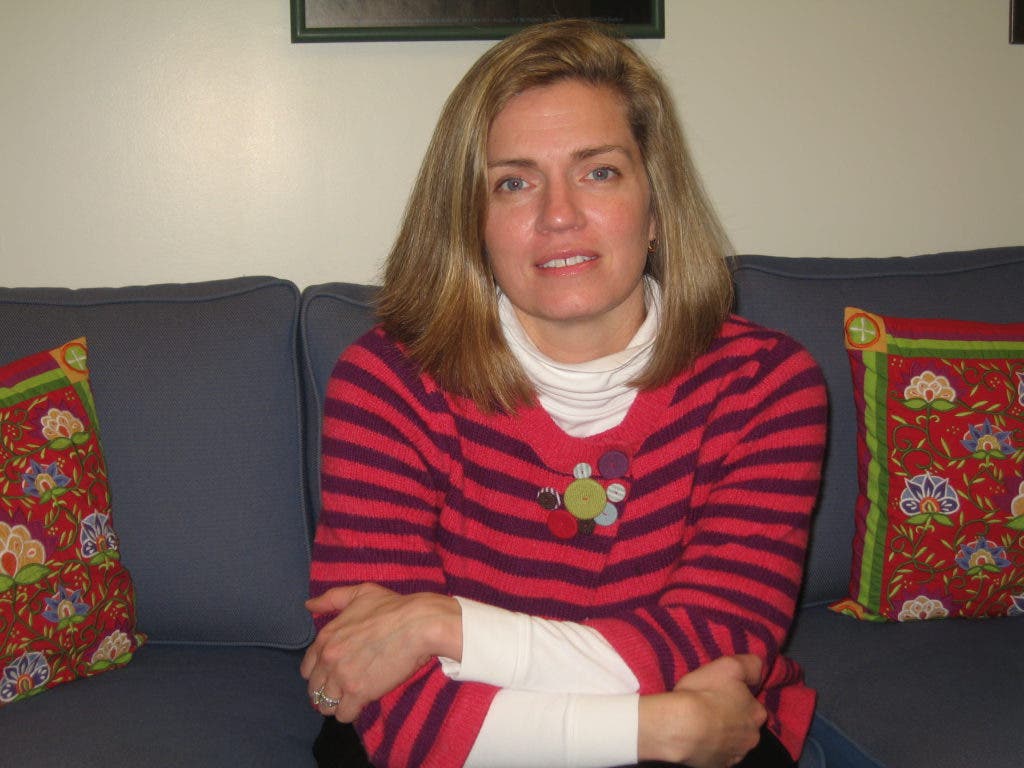
Your Schools will occasionally feature interviews with Acton-Boxborough school principals and other educators and administrators.
In the second of a two-part interview, Acton-Boxborough Regional High School Principal Alexandra (Alixe) Callen, Ed. D., talks about bullying, teen stress, and her long-term goals.
What impact has the recent anti-bullying legislation had on students, parents and administrators at ABRHS?
Find out what's happening in Actonfor free with the latest updates from Patch.
I think the only impact I see is that it’s on people’s minds more, and I think people are quicker to jump to say that something is bullying. They might see a certain behavior or a regular conflict between kids and immediately jump to the idea that it’s bullying, which I’ve actually seen both as a parent and educator. And (there is) more panic about it, given the stakes that are involved and so I think it’s important to remember that sometimes there is conflict between kids and when there isn’t that power differential, to help kids deal with conflict without us as adults calling it bullying or putting labels on it… helping kids to really work through those situations.
That said, there are absolutely always serious harassment issues. I’ve had those across my career as an educator, as a teacher and an assistant principal in other schools. I think parents and kids don’t always want to come forward because they think it will get worse when they say something, but that has not been my experience at all. My sense is that when the school gets involved, we can really make change and help people. I would really want to say to parents to please come forward when those things happen. If we can have more of a culture where people are willing to share those kinds of things, that will help us to improve the culture overall, because if your child’s being mistreated by somebody, it’s likely (the perpetrator) is doing it to someone else as well. But if we don’t have the information, we can’t act on it… I would just want (parents) to trust us as educators, and not feel that things will get worse if they come forward.
Find out what's happening in Actonfor free with the latest updates from Patch.
What are some of your proudest personal achievements here?
This is only my third year…but we had a big year this year, we had a lot to do in terms of our big accreditation visit from the New England Association of Schools and Colleges, every 10 years they do a big visit where they come to each school and we had 18 educators here for three days. I really spent the first two years I was here preparing for that. So I’m proud to get through that, but I also feel it was such a focus that now we can really spend time thinking about our next steps as a school and a school community.
Was that difficult to step into as a new principal?
Oh, we had a lot to do preparing for it. You have to spend an entire year on a self-study (to determine if the school is meeting each item in a long list of standards) and we had to review our mission statement… just a lot of work. I had an incredible team working with me on it. Our counselor Susan Root, and one of our science teachers, Kim Landry, were the co-chairs. But that was a lot (of work) and preparing that took a lot from all of us.
What did the process yield in terms of specific areas to focus on?
We haven’t gotten the (NEASC) report yet, but I think there will be recommendations around resources, around class size, support for students, that kind of thing. One of the things that I think will be huge is they really recommend that we give beyond just grades—give feedback for families and students about their actual skills. We have a certain set of academic learning expectations and (they’ll recommend) giving feedback in terms of how students are meeting each of those expectations. (For example), how well do you communicate? We say that students have to be able to communicate well to graduate. OK, so let’s have a rubric and really report, how did they do? So beyond just the grades, giving some more focused feedback. And that’s actually something I think we should be doing, more of that kind of feedback.
What are some of your other long-term goals?
One of the things I would love to continue to work on more is getting teachers into each other’s classrooms more…more conversation about the nature of instruction. I would love to do more along those lines. I would love to be in classrooms more—I’d love the nature of instruction to be more of our focus and conversation. We already have a district initiative where the district will pay for subs (to teach) so teachers can go to other classrooms. And then actually a group of teachers here started a program—it’s entirely teacher driven and I think it’s fabulous—where groups of about five teachers get together and go to someone’s class and then talk about it. I think the more we can do things like that—it breaks down barriers across departments and helps people to learn from each other. I’m excited to continue to work on that.
Assessment… I think that with technology there’s so much we can be doing beyond multiple choice testing and that kind of thing for kids. I’d love to continue to work on that.
I’d love to get an advisory program started for students where they have an adult in the school they can go to, sort of a non-academic support. All our students have counselors but our counselor loads are so high—about 230 students per counselor—that to be able to have a program where each adult in the building has a certain number of students who they meet with on a regular basis and connect with… so we’re working on that, trying to think about how to get something along those lines going.
You’re known to have a particular interest in teen stress. What can you say about that?
Stress has been a consistent interest of mine for the past four or five years, and it’s entirely different now. I think it’s important that we recognize that it’s a cultural issue and not a structural one. People think, oh, if we change the schedule or limit the homework—we all own it. It’s something that really goes beyond just what the school does or what home does—teachers all say it’s the parents, parents all say it’s the teachers and kids say it’s both, although I also think kids own a huge part of it too. I think that kids comparing how much stress they have in their life has become its own currency, its own form of capital. How late they were up the night before or how much work they have to do or how many honors classes they’re taking--kids like to be able to play that (all) up as well. I think parents do the same thing. We had our eighth grade parent night the other night and one thing I said to them is, you need to block out the ‘parent talk.’ This is about your kid’s high school experience, it’s not about telling somebody over the frozen foods aisle how many honors classes your kid is taking.
We’re not going to fix it by just fixing policies and procedures. We’re going to fix it by talking about it and helping students along those lines.
How about homework? Do you think kids get too much, not enough or the right amount?
It’s interesting because teachers are saying they’ve never given less homework, and kids are saying it’s the most homework they’ve ever had, and I think part of it is that it’s taking them longer because of (being distracted) by the computer. Technology is a huge (problem). It used to be, we’d sit down to do our homework and maybe the rotary phone would ring and you could talk until your parents told you to get off because they were expecting a call…that was the (only) way technology would really interrupt our work. Nowadays kids sit down to do their homework and they tell their parents they have to do it on the computer which, I don’t think there’s as much to do on the computer as they say needs to be done on the computer because, in addition to having up their work, they’ve also got minimized facebook, and IMing, and they can go back and forth really quickly. So one of the things I say to parents is, bring back the kitchen table…(have them) sit and do their homework without the distraction of the computer really helps.
I also think it contributes to sleep deprivation. I think kids have their cell phones and they hear a buzz in the middle of the night and they think they have to respond, and they have to be hip and they have to be funny, so it’s really important that parents take cell phones or have the service turned off for certain hours. No laptops in the room, when they go to bed they really need to have those things taken away because they will wake (kids) up and they feel the pressure to respond.
But with the homework, I don’t think it’s always true (that all teachers give less)…the fact of the matter is, we wouldn’t have the achievement numbers we do if kids weren’t working hard. So always a certain amount of homework is expected and is important. Kids have to work outside of class to be able to emphasize the skills. That said, I really try to encourage teachers not to give busywork… don’t give homework for the sake of homework, make sure it’s critical to the class. Also important is I don’t think kids feel as stressed when they’re engaged so I encourage teachers to make sure their work is engaging and thoughtful, which makes it less overwhelming and more meaningful. I see that with my own kids, when they’re really involved in a project they’re more excited about it and less stressed.
And what about your own stress? What do you like to do for stress relief and for fun?
I love to spend time with my kids (Zander, 12, and Miles, 8). They both play a lot of sports so I spend a lot of time on the sidelines. I read a lot, I really love to read, novels, really a variety, I read the New Yorker every week…I actually get stressed out if I don’t have something to read. I like to run and exercise as much as I can, I feel that really helps me to stay focused. I also love to cook…my day can end (here) anytime from 4 until 10, so I try to go home and cook dinner for my kids if I have an evening meeting.