Health & Fitness
Say, Cheese!: Nobscot Artisan Cheese
Profile of weekly ABFM cheese vendor, Nobscot Artisan Cheese
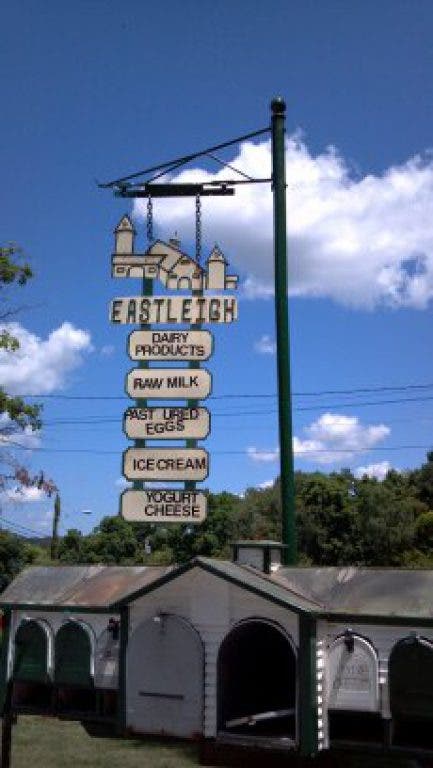


It wasn't easy finding a good, reliable cheese vendor for the market. For many artisan cheese producers, margins are too small to devote time and resources to farmers markets, and cheese is a delicate, "alive" product that requires lots of care in handling.
This year we have been fortunate to have Nobscot Artisan Cheese (NAC) every Sunday. They are our only cheese vendor and they usually share their table with a complementary wine vendor--cheese and wine anyone? The cheese is made on a beautiful 110-acre, dairy farm in Framingham (yes, you read that right--Framingham) called Eastleigh Farm. Eastleigh has been a dairy farm since 1934. Sue Rubel, owner of NAC, started her cheese business on the farm three years ago.
Rubel had been searching for a source of raw milk* to make the kinds of cheeses she loved growing up. She found there to be a growing awareness of and an increasing market for raw milk and raw milk cheese. Eastleigh had just been certified to sell its own raw milk on the farm. Using milk from the farm's 200, grass-fed, mostly-Jersey cows, Rubel began producing fresh cheeses which she brings to our market, and will soon be making cave-aged, raw milk cheese.
Find out what's happening in Actonfor free with the latest updates from Patch.
Rubel is half Swiss and grew-up in a cheese-eating family, many of whom live in Switzerland.
Making her cheese is a three day process. On Day 1, the milk for her fresh cheeses is pasteurized, then the proprietary culture and rennet are added and curds begin to form. Everything sits for 24 hours. On Day 2, the curds are ladled into bags and hung for 6 hours until all the whey drains out. The draining whey is caught and pumped into a large container which is collected by a pig farmer in Carlisle who uses the whey to feed piglets. The curds are pressed into molds or hoops and left, weighted, overnight. On Day 3, Rubel un-molds and divides the cheese into 20-lb tubs. This is when she adds salt and herbs and spices. All the mixing is done by hand including kneading the curds until they are smooth. The cheeses are packed into 8 oz. containers for sale at the farm’s store and at ten (!) farmers markets throughout the area.
Find out what's happening in Actonfor free with the latest updates from Patch.
Rubel is most excited about making raw milk cheeses. She has constructed a traditional aging room, a room about 16’ x 32’, filled with aisles of wooden racks to hold cheeses. She plans to fill the racks with Swiss–style, raw milk cheeses, and a semi-soft, washed rind cheese, possibly a Taleggio. The hemlock racks impart nuances of flavor to the cheese. Like grapes which pick up flavor from qualities in the soil, climate and geography--the terroir if you will--the flavors of raw milk cheeses are developed through contact with the wood, from the grass the cows were eating at the time of milking, and from Framingham’s particular terroir.
Visiting Eastleigh Farm is a real surprise and a pleasure. There are picnic tables set under shade trees and a farm store to buy the cheeses, milk, honey and other farm products.
Next up for Nobscot? Raw milk ice cream; stay tuned.
________________________________________________________________
* Raw milk is unpasteurized. Pasteurized milk has been heated up to 145 degrees F and maintained at that temperature for 30 minutes. The pasteurization process is designed to kill bacteria and most enzyme activity in milk. Proponents of raw milk argue that these substances add depth of flavor to the end product and are beneficial to the full functioning of our digestive systems and to our overall health. Fifteen states, including Massachusetts, now allow raw milk to be sold on farms that produce it. Making and selling cheese from raw milk is allowed in this country as long as the cheese has been aged for a minimum of sixty days.