Health & Fitness
Small Business 101-Acton
How many hours are there in a week? and other logistical issues
Production season is only two weeks away and it’s finally time to talk logistics! I have to say I can already see how easily effectively planning ahead of time could make or break my summer. It’s surprising how many moving parts there are here and how differently I am looking at jobs from the eyes of a producer rather than a salesman. During most of this preseason, I looked at jobs almost purely from an economic standpoint, where I wanted to create the most cost-effective price for my clients while also making sure I would be covering my materials and labor expenses. To be honest, I didn’t think too much about what exactly would go into these expenses beyond the fact that I needed a total sum of labor hours to budget for and a total sum of materials expenses.
This is where Steve and the Collegiate background has really helped me. Each manager in the program has a production planner on Google Docs (which is great for collaboration because Steve and I can look at and edit the same document in real time) that has us planning in our production schedule for the coming month. That may sound pretty far in advance, but I think it has helped me look at my summer in the big picture a lot more successfully. Basically, the planner is a visual tool that breaks down my schedule into the forty hour work week of each of my painters. As it stands now, I have six painters scheduled to work forty hours a week, so I have two hundred and forty hours to work with total in a given week. This may be old news to you guys, but two hundred and forty hours is a lot more concrete to me than just saying a week. Now each individual job gets a chunk of the big block. When I schedule something, I can say in advance, ok this job is going to take fifteen percent of our production capacity for the week. Again, this may not be so novel to you, but it’s definitely a change in mindset for me and I think it will help me be a lot more efficient in terms of scheduling and will also help me with my communication with customers, as I can say “your job should take X hours from when we start.” Being a weather dependent business, I can’t guarantee a start or end date, but I feel like giving them a more tangible idea of how long the job will take can only help.
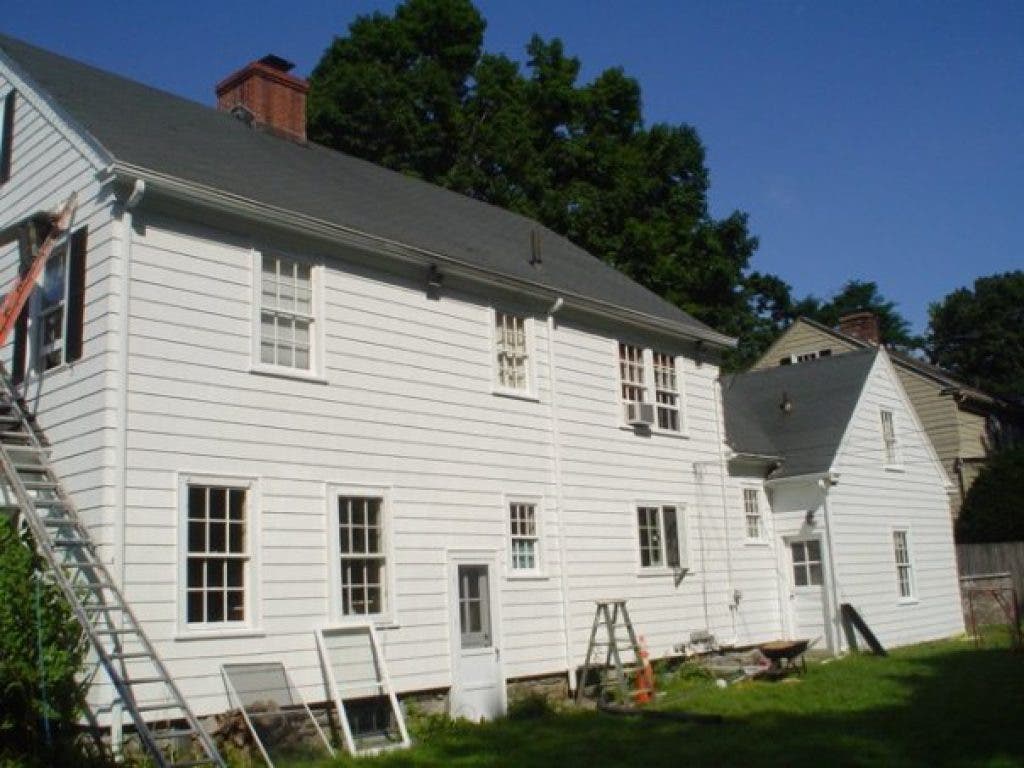
The other half of the logistics equation is buying materials and sending them to the right locations. With six painters, I ideally would have two separate job sites going at once, one site with four painters and the other with two(having more than four painters on site tends to just crowd everyone and reduce efficiency). Having only one set of ladders, I have to plan this down to a T where I know ahead of time which site will be working on second and third stories of homes while the other site works on only the first story. This way, I know where each ladder needs to be at a given time so my painters are always busy painting! Also, I need to put in orders to Sherwin Williams ahead of time to make sure I have enough paint at each job site. It is absolutely essential for me to be planning ahead here because the closest Sherwin Williams is in Lexington, a twenty minute drive each direction. The good thing about this is that Sherwin Williams will deliver any order of five gallons or more. This should save time for me, but it also means that I have to be really effective at ordering in bulk to take the fullest advantage of this delivery and avoid unnecessary trips to Lexington.
Find out what's happening in Actonfor free with the latest updates from Patch.
All in all, the logistics equation is not an easy one. The more time I spend looking at my production tracker, the more respect I have for small businesses everywhere that have to keep track of labor hours, materials, shipping, and a host of other things while also maintaining relationships with their customers. My hope is that I stay on top of everything, but it certainly is a lot to keep track of. I’d like to end reaching out for comments, especially from any small business owners or masters of planning logistics, about any thoughts to help keep track of things and how I could organize myself to stay ahead of the game!