Arts & Entertainment
Hand-Drumming: Highway to the Soul [VIDEO]
Mike Morse, Acton teacher forms drum circle in Woburn.
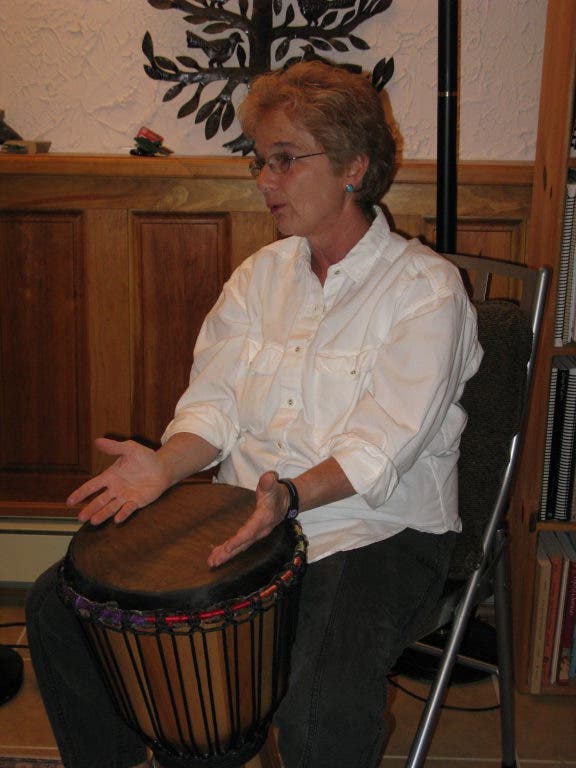


Have you ever drummed your fingers against your desk, table or steering wheel? Or swayed to a strong drum rhythm?
Mike Morse has. As a kid, Morse described himself as a “tapper.”
Deb Severo always drums on her car's steering wheel.
Find out what's happening in Actonfor free with the latest updates from Patch.
Bring them together with African djembe hand drums and what to you get?
Rhythms that Morse says feel like they “touch a deep place: I call it ‘soul.’”
Find out what's happening in Actonfor free with the latest updates from Patch.
Morse teaches hand drumming, makes African drums, performs and two months ago organized the Woburn Drum Circle. Severo drums with the circle.
Severo played a hand drum for the first time last winter. Then she found a hand drum teacher and drum circle down the street from her home on the west side of the city – at Morse’s house.
When Morse was a child, he told his parents he wanted to be a drummer.
“Not in an apartment,” he said they told him. So he played guitar and trumpet.
Until, that is, he moved into his 30s and bought a house. Still interested in drums—not a drum set but, rather, Latin drums like congas and bongos and their rhythms—he took a hand drumming class.
He started to teach and hold drum circles “right away,” in the mid-1990s. They help him learn, he said.
“Teaching drumming helps people with another way of expressing what’s in their soul,” said Morse, sitting in his basement, where the circle convenes.
“It’s also healing,” according to the founder of Namaste Drumming. Namaste means, “I greet the divine in you,” Morse said. “Drumming helps the brain process experiences.” He’s seen people with difficult emotional issues drum their way, he said, to resolving them.
And drumming lets souls talk to each other. Morse likened drum rhythms to non-verbal conversation. He can speed up the drum tempo with other drummers, he said, and they will follow, without speaking.
In Africa, drum rhythms are use ritualistically, Morse explained, to mark time and the seasons. There are harvest rhythms, he said, and initiation rhythms for both boys and girls.
Drums are made from materials at hand, according to Morse: the bodies from wood and the tops, or heads, from the skin of a calf, goat or cow. One of his drums has goat skin on one end and thicker cow skin on the other. “For different sounds,” he explained.
A social worker at Colebrook High School in Acton, Morse said he has introduced drumming to students there. They make drums out of large, empty water bottles.
Drum circles range in size from large—60 people—to small.
People with no experience are welcome to come and learn, he said, how to drum. The next circle is scheduled for June 29. The charge: $10 per person. To register: meetup.com/The-Woburn-Drum-Circle; for more information: namastedrumming.com.
The Woburn circle meets on Friday evenings, from 7 to 9 p.m. Friday is a good meeting day, Morse said, because drumming is both therapeutic and cathartic at the end of a work week.
Morse doesn’t emphasize practicing, even for the group of between six and 10 people who drum for benefit concerts, for the food pantry, for example, he said, or for the opening of a gallery exhibit that features African art.
A little after 7 this past Friday, Morse and Severo started to drum.
Severo occasionally closed her eyes, smiled, and swayed to the rhythm.
“If you think too much, you can lose your rhythm,” she said during a break.
“Your hands know what they’re doing,” said Morse.
They also demonstrated the sound of dunun drums, which are played with drum sticks.
Besides drumming, Severo said she loves to dance—especially to the hypnotic beat of a drum.