Politics & Government
You Asked, They Answered: Q&A With Acton Selectmen Candidates
Katie Green, Janet Adachi, Margaret Busse and Eric Romaniak are vying for two seats. Annual Town Election is March 26.


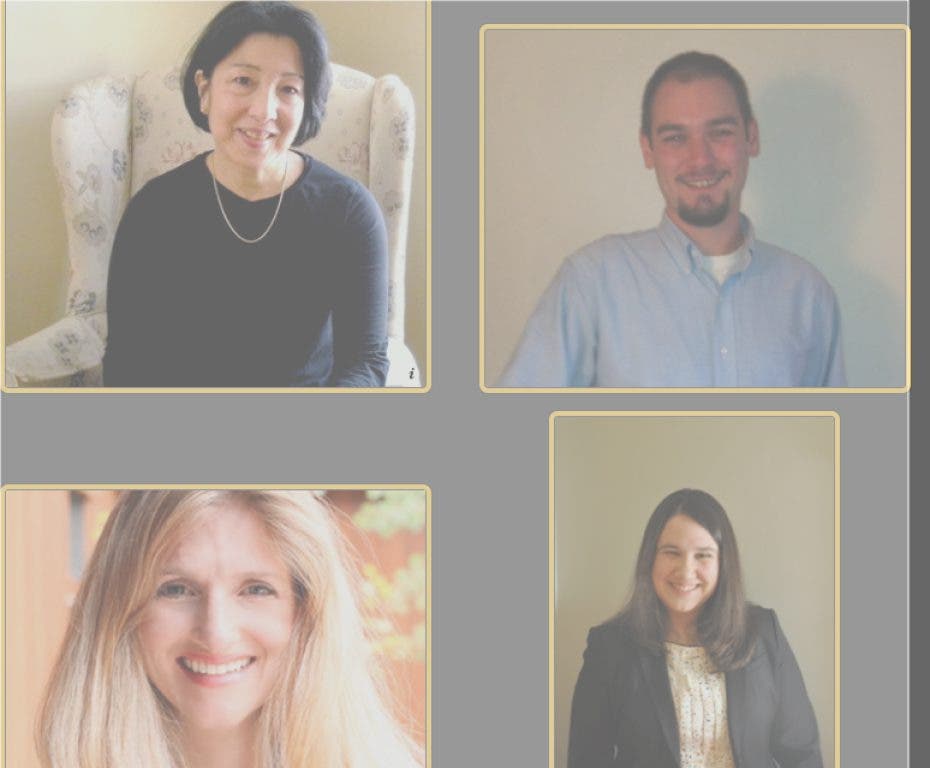
Weeks ago, Acton Patch reached out to its readers, asking, "What would you ask the candidates for Board of Selectmen if you had the chance?"
After receiving about a handfull of questions, editor Robert Fucci randomly chose four and presented them to this year's candidates: Katie Green, Janet Adachi, Margaret Busse and Eric Romaniak.
All four candidates agreed to take part in the Q&A. None of the candidates argued about the questions asked. There was no work limit to their answers, and all candidates had one week to respond to the questions. Romaniak did not submit his answers prior to Friday's deadline.
Find out what's happening in Actonfor free with the latest updates from Patch.
Here are their answers:
1. How much should Acton property taxes be increased next year?
Find out what's happening in Actonfor free with the latest updates from Patch.
KG: Due to rising costs and contractual salary increases, a level service budget this year costs about 3% more than the previous year. Even with raising property taxes by the maximum 2.5% allowed under Proposition 21/2, we would still have to look at reducing our services. The proposed budget for FY’14, approved by the Board of Selectman, the School Committee, and the Finance Committee, finds some creative savings and efficiencies and uses a small portion of our robust reserves to keep a level services budget without increasing taxes beyond 2.5%.
I support this proposal as I believe it strikes the correct balance between providing the services we expect with the tax rate we are willing to pay.
JA: It depends on various factors, including property values, other available revenues, and proposed costs. But preferably no more than 2.5%.
MB: No more than 2.5%, and hopefully, less. I strongly believe that we can keep expenses under control, and not invoke a budget override of Proposition 2 1/2 next year or ever, by:
- building the budget up from a “base 0” perspective (instead of using a “level service budget” as a starting point, I believe we need to build our budget starting with “$0” and work our way up, scrutinizing and rigorously justifying every expense we have),
- improving our short-term and long-range fiscal planning, and
- paying down OPEB liabilities prudently, (Other Post-Employment Benefits, a huge liability owed to retired town employees that the town has only recently begun to recognize and manage).
I have an MBA from Harvard University as well as professional financial experience and so look forward to applying a fresh, but trained, set of eyes to our town’s budget in order to distinguish between items that do not make sense to continue funding and items that represent essential town services and investments in our town’s future.
2. What is your stance on open space and development?
KG: Open space has environmental, social, and recreational benefits. In Acton, we understand the value of protecting our undeveloped land. We often only have one chance to purchase and preserve open space, so we must take a comprehensive look at the undeveloped land in town and identify parcels we might want to protect down the road.
I support creative ways of protecting land, such as using transfer of development rights to discourage growth on open land and encourage it in our town centers. I am strongly committed to promoting smart growth so that we can both maintain and expand our robust town centers while still preserving open space.
JA: I support the preservation of open space in accordance with the priorities set forth in the Town’s Open Space Plan, and controlled development that furthers the goals and objectives of the 2020 Master Plan.
MB: As chair of the Acton 2020 master plan committee, one major part of the community input we received is the desire to protect more open space in town and de-emphasize residential development. Right now, the town has a few ways to do this—buying land outright, encouraging land donations, or using a zoning mechanism for residential development called PCRC which encourages cluster housing development while preserving common open space. Other than using these methods, we must accept that private land owners have the right to develop their property.
However, there are other compelling ways to protect more open space. The Acton 2020 plan recommends exploring the use of a zoning mechanism called Transfer of Development Rights (TDR) which has the ability to allow landowners in areas that, as a town, we want to preserve, to sell their development rights to landowners in areas where we are comfortable allowing more dense development (such as in areas close to town villages, Kelley’s Corner, etc). We need to explore the use of TDR in much greater depth, but it could be a great opportunity to obtain much more open space without using tax dollars while also concentrating development where we want it.
3. How will you increase our commercial tax base?
KG: Acton residents account for approximately 87%, and businesses 13%, of our town’s tax revenues. Increasing commercial development in town will help reduce our residential tax burden while still allowing us to provide quality services.
I support creating a smoother permitting process, carefully clarifying our zoning bylaws, and looking at improving our infrastructure in order to attract more commercial development. In talking with business owners in town, most spoke about how excited they were to come here but how they wished the permitting process had been just that much easier. Streamlining this process to make it more user friendly is a simple, low cost solution that will help encourage commercial growth. Better, more favorable zoning can also bring commercial development. However, we need to act carefully to ensure that we guide that development to our town centers. In order to increase development in these areas, we need to provide adequate infrastructure, from roads to wastewater. If we want to increase commercial development here, we need to create long-term solutions to these problems today.
While it is tempting to open our doors wide to any kind of commercial development, our first priority must be our residents. We need to plan for smart, guided growth in order to strike the balance between preserving town character and sustaining our community for the future.
JA: I assume that the question is asking how the Board of Selectmen might encourage growth of the commercial tax base. The Town has been working on zoning changes and improvements in the permitting process in an effort to make the Town a more business friendly place. The Board should continue to work with the Economic Development Committee, which advises the Selectmen on ways to foster business and commercial growth, to identify further improvements the Town should undertake to attract and retain business.
MB: Acton residents bear 87% of the town’s overall tax levy, while businesses only account for only 13%. The demographics in Acton are desirable for both retailers and employers, but we have to do much more to attract more businesses. I advocate doing the following:
- Instead of simply waiting for businesses to come to us, we need to proactively seek out the type of businesses that we want: for example, better retail, a movie theater, restaurants, and employment-based businesses
- Create a more friendly business environment, which involves, among other things,
- Updating the sign by-law to be more clear and liberating for business owners
- Streamlining the business permitting process
- Changing the general attitude at Town Hall into a cultural that treats businesses as entities to support and not oppose
4. How will you revive Kelley's Corner?
KG: I believe Kelley’s Corner should be one of the town centers in which we focus smart growth development. Many residents would like to see increased walkability, fewer traffic issues, better aesthetics, and more mixed-use development in this area. This is an ambitious plan. But with focused zoning changes, improved infrastructure, and good relationships between the town, state, residents, business owners, and developers, I believe we can work toward that goal.
I have some concerns that the current proposal hinges too much on receiving a $3 million state grant. Having worked in the State House when the MassWorks Grants were introduced, I understand how competitive the grant process is. However, I do not support the alternative of leaving Kelley’s Corner as it is and allowing development to happen without appropriate town guidance and input.
I support the financial request before this year’s Town Meeting, because it will not only make us eligible for the grant, but it will also leave us with better zoning and design guidelines that we can use to direct development in the area for years to come.
JA: I assume that the question is asking how I think the Board of Selectmen might encourage the revival of Kelley’s Corner. Kelley’s Corner is a congested, busy place and not really moribund, so transformation rather than revival may be a more apt description of what that area needs.
The 2013 Town Meeting warrant includes a proposed appropriation for an in-depth, multi-faceted evaluation of Kelley’s Corner that eventually would lead to zoning change, design standards and plans for infrastructure improvements. That could be a good start to a transformative process.
My greatest concern about Kelley’s Corner, however, remains how to improve traffic circulation and pedestrian safety in an area defined by the intersection of two heavily traveled state roads. If the “re-imagined” Kelley’s Corner will increase development and the potential for heavier vehicular and pedestrian traffic, effective management of that traffic will be essential if there is to be a true transformation.
MB: With its location at the intersection of two major roads, its proximity to the schools, and its sewage capacity, Kelley’s Corner has huge unrealized potential as a town center with more connectivity, better retail and restaurants, and the ability to generate much more in business tax revenue. I strongly support this goal and have worked hard through the Acton 2020 committee to begin a detailed, community-based planning process in order to achieve this. Once our community makes the initial investments of time and money into defining a vision for Kelley’s Corner, we have the opportunity to qualify for state grants to help fund public infrastructure and to guide private developers to direct their investments towards the vision we want. In fact, there are already business developers wanting to invest in Kelley’s Corner but are waiting for the town to define its vision first. If we don’t define our vision, development may still happen there, but it may not be what we want.
Get more local news delivered straight to your inbox. Sign up for free Patch newsletters and alerts.