Neighbor News
If school is fun, is rigor at risk?
Can strong students flourish and have fun at the same time?

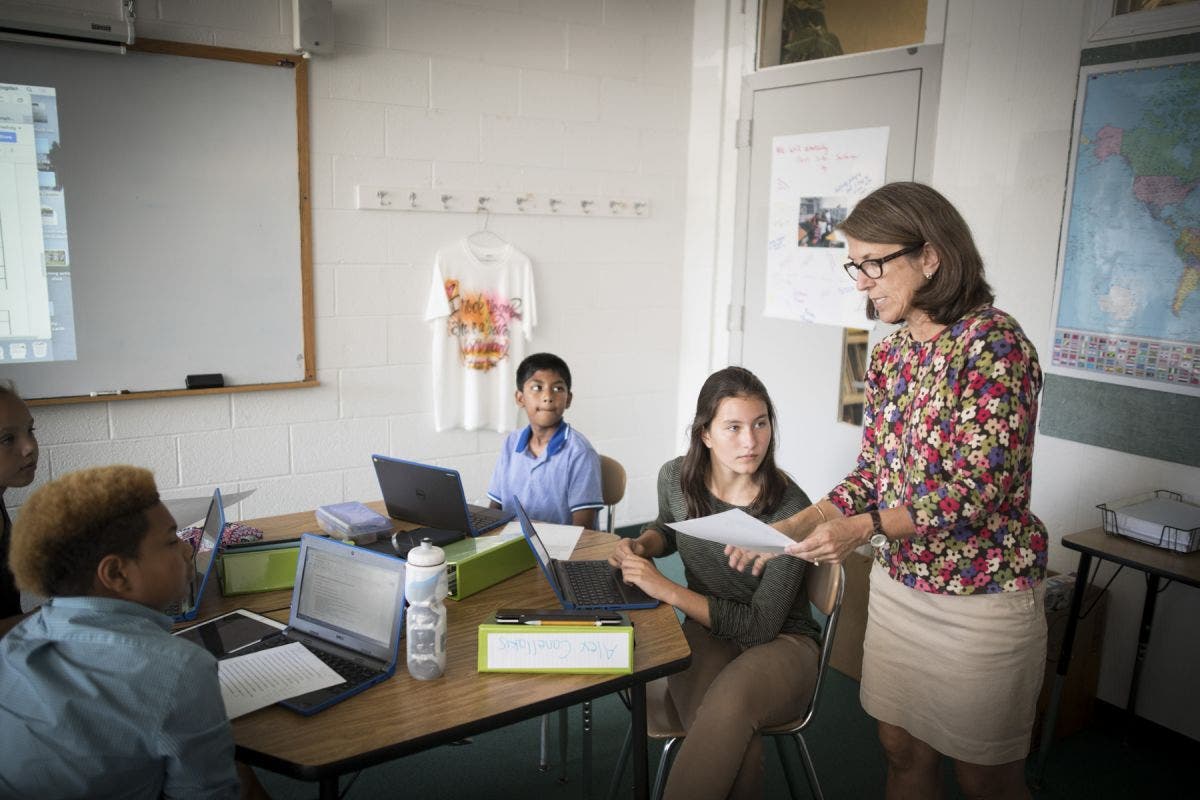
From the day school opened on September 6th, I have been observing students in the hallways, in classes, at lunch and at recess, and you know what? They look like they’re having a lot of fun! Great, right?
As a member of an older generation, the idea that school was “fun” meant that it wasn’t rigorous. Fun, to an adult, is generally equated with a break, relaxing, escaping, engaging in activities that are pleasurable and often less challenging. In today’s competitive world, where parents who choose independent schools are making a significant investment in their child’s education so that they are prepared for their next educational steps, how can I possibly state that my goal this year is for Upper School students at Pike to have fun?
In the September 5th (Vol.41 No.11) issue of Ideas & Perspectives newsletter published by Independent School Management (ISM), they report that after interviewing students at hundreds of schools, they realized that students and adults characterize fun differently. According to their data, for students, fun must be: active; intrinsically enjoyable (there is a love or passion to do it); challenging (it is difficult but not too difficult); relational (done with friends or with caring adults); and mastery-oriented (you are good and/or can get better at it. As ISM goes on to assert, the student definition of fun is not just compatible with, but essential to strong academic programs.
Find out what's happening in Andoverfor free with the latest updates from Patch.
Research shows that emotions matter. A student’s emotional state impacts performance and there is neurological evidence that positive emotions lead to improved learning. I would assert that a rigorous curriculum is one in which students are supported in developing competency in the four C’s: Curiosity, Compassion, Connection and Communication.
Curious people drive innovation, develop deep and meaningful relationships, ask why, seek to understand other perspectives, tend to explore rather than judge and develop habits that assure life-long learning. At Pike, students are encouraged to ask questions, to seek to understand why and to test their ideas. We create learning opportunities that present an essential question or challenge and allow students to explore possible answers. They have the freedom to express themselves and experiment in a variety of creative ways. They are encouraged to share what they learn with their teachers and peers, refine their understanding and follow where their new discoveries lead. All this is supported by solid skill development that assures that they have the ability to not only know how to access resources, but to organize their thoughts and data and express themselves clearly and accurately.
Find out what's happening in Andoverfor free with the latest updates from Patch.
One thing I have learned in my 20+ years working with adolescents is that they can only develop their best selves when they feel connected to others and feel seen, heard and understood. We spend time in advisory class, academic classes, assemblies, clubs and electives helping students make positive connections to each other, to adults and to the greater Pike community. Through lessons in history where they share their culture and find shared experiences or when working together to solve a challenging math problem, or trying to refine a paper airplane design to attain the longest flight, students are guided in how to listen to others, express themselves clearly, care about shared goals and find the place in the community in which they can make an impact. We want them to be able to engage in productive dialogue with each other about things that matter to them. We endeavor to provide the space for them to make sense of the world they are living in and to have a place to learn that we don’t have to agree or be the same and we can still work and live positively together.
When engaged in these types of experiences, compassion is the bedrock upon which positive interactions are built. We strive to help students understand why others are deserving of compassion, how a vibrant and healthy community grows when its individual members choose to care and show compassion toward each other. How choosing to understand someone else’s perspective in lieu of judging benefits everyone and expands the possibilities for creative expression.
The goal I share with the Upper School faculty is to provide a learning environment and experience for students that promote rigor by indulging the student’s definition of fun. The ISM data also revealed that students report that optimal engagement and learning includes:
-teachers who are passionate;
-teachers who care about them outside the classroom;
-teachers who change activities throughout the class period;
-choices in what they study
-classrooms that allow them to be active and take part in lively discussions and debates, discovery-oriented labs, and group projects;
-classes in which the topics are relevant and have “real-world” application; and
-classes that are “fun.”
Pike is a school where the culture is to always be improving, so while students may not find each moment of their day, “fun,” we are always learning and improving the work we engage in with students to maximize their experience and help them grow to be healthy, engaged adults who will truly make a difference in the world. This is at the heart of who we are as a community and why Pike is an amazing place to learn and work and grow.
The Pike School is an independent, coed, day school for Pre-K through ninth grade in Andover, Massachusetts. Visit pikeschool.org to learn more about Pike – and visit our blog for more thought leadership.