Business & Tech
Attleboro Bicyclists Remind Residents of the Rules of the Road
Motorists and bicyclists both need to know and follow rules.
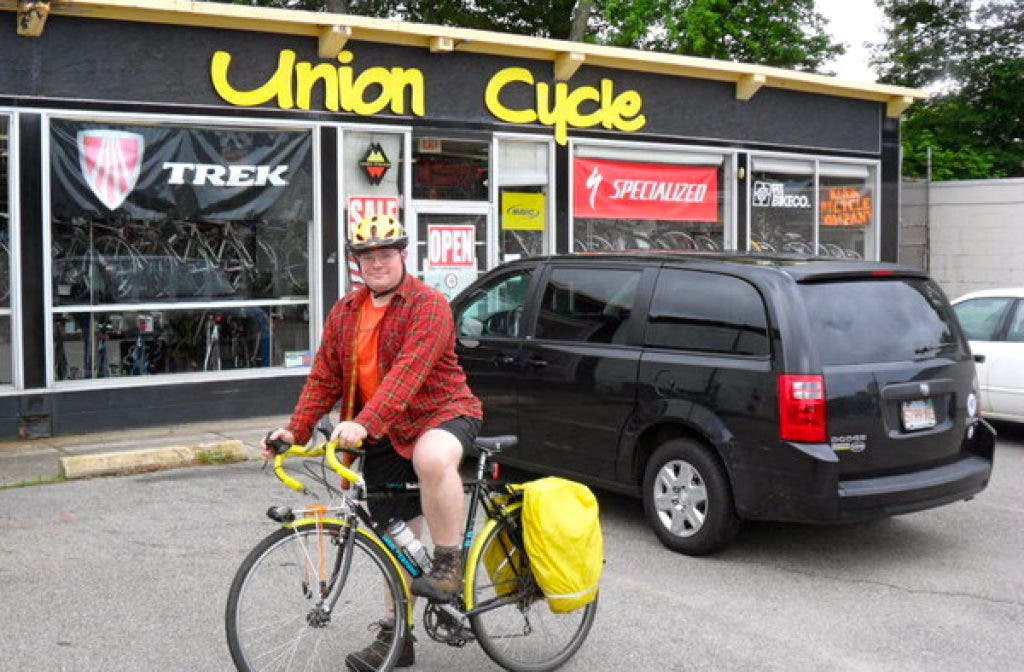
With the end of school and the summer breakout, it is a perfect time for biking. But, it is also an ideal time to learn, relearn and review some of the rules of the road for bicyclists and motor vehicle drivers.
Ron Carlson, service manager at on Pleasant Street in Attleboro, is skilled in repairing and selling bicycles. An avid rider himself, he still considers it a duty of his even away from his job to teach about safety and the rules of the road to bicyclists so they can co-exist with motorists.
“So many people don’t follow the rules due to a lack of education,” he says, citing bicyclists and motorists for not knowing or observing many Massachusetts state laws and regulations. “The law states if you are on a bicycle you are required to follow all laws as a motor vehicle driver does.”
Find out what's happening in Attleborofor free with the latest updates from Patch.
Carlson, who bikes to work, and Union Cycle’s 26-year owner Rick Desmarais, who uses his bike to race and for long-distance trips, have seen many examples of negligence, abuse and occasionally accidents on their frequent biking treks.
Some parents tell me, ‘I don’t agree with you telling my kids to ride with the traffic,’” Carlson says of his volunteer bicycle safety work with the Boy Scouts, youth groups and with adults, too. “But I tell them it is the law and I guess they are just waiting for their kid or for them to have a head-on collision rather than riding away from traffic if it gets too close.”
Find out what's happening in Attleborofor free with the latest updates from Patch.
Carlson says bike safety starts with parents and schools. “I have not seen any bicycle safety education being taught in schools,” he says. “And I am not aware of any programs being taught that involve bicyclists and motor vehicle drivers at the same time.”
Parents should learn the laws and ride with their kids when they are young. That makes it easier to teach them by example.”
A bike rider can get a head start on safety, starting with the bike itself. “The bike should be comfortable, not too big and not too small” Carlson says. “If it is not the right size, it might be too difficult to control in an emergency situation.”
Helmets are a requirement for children (16 and under), but that does not guarantee safety if not placed and adjusted properly. “Don’t tilt the helmet forward or backward too much because it could jam into your head or neck if you get hit head-on,” he says
Other pointers about maintaining a bike:
- Make sure the tires are always pumped to the correct pressure.
- Check that the bolts holding the handlebar to the fork are tight.
- Put wheels between the handlebars so they can freely turn.
And while drivers will not look both ways when making turns to look for bicyclists, it works the other way, too. “When taking a right, many bicyclists do not look left,” he states, especially when flaunting as many as two or three laws at a time. “I saw a bicyclist go up on the sidewalk (against the law) as he came to an intersection with a light, then go into the road, fall to stop for the light or for pedestrians and then take a right or go through the intersection.”
And Carlson repeats: “no cell phones, no texting, no music. You don’t need another distraction on the road. There are already so many distractions that people can’t handle even when they ‘re driving.”
Neither Carlson nor Desmarais are keen about designated bike lanes. “If everyone followed the rules, then we wouldn’t need them,” Desmarais insists.
Among the laws they mention, one has been welcomed as a way to discourage a dangerous situation. It is called ‘dooring’, or opening a car or truck door that often clips a bicyclist and sends him and the bicycle careening. It is one of the most common causes of accidents and crashes between bicyclists and motorists.
“Motorists (and their passengers) can now be ticketed and fined up to $100 for opening car or truck doors into the path of any other traffic, including bicycles and pedestrians,” Carlson says.
Other laws they mention:
- It is illegal for motorists to cut off or turn into bicyclists after passing them
- Motorists must yield to all oncoming vehicles (including bicycles) before turning left.
- Bicycles are permitted to be rode to the right of other traffic, as on the shoulder or designated lanes.
- Bicyclists are supposed to ride with traffic and it is legal to take a left turn.
- Bicyclists can not ride 3, 4 or 5 abreast, but it is legal now to ride two abreast unless impeding the line of traffic.
- Hand signals must be used by bicyclists when making any turn.
Then there are the unwritten rules that often prevent accidents and as practiced by these experienced cyclists.
“I always try to look inside to see if someone is in the car and if I see anyone, I will go wide of the car if I can,” Desmarais says. “At intersections and at lights I will try to get ahead of the drivers if I can. That way they can see me,” he says, emphasizing this is a move he recommends only adults should safely and legally execute.
“I try to make eye contact and give them a wink or a smile or thumbs up,” Carlson says of his interactions with motorists.
Yes, courtesy and common sense should be linked with education and can go a long way in preventing accidents and crashes between bicyclists and motorists.