Schools
Attleboro Educators LAUNCH Effort in Science and Technology Education
Local educators, parents and politicians hope to close the gap on education in science and math.
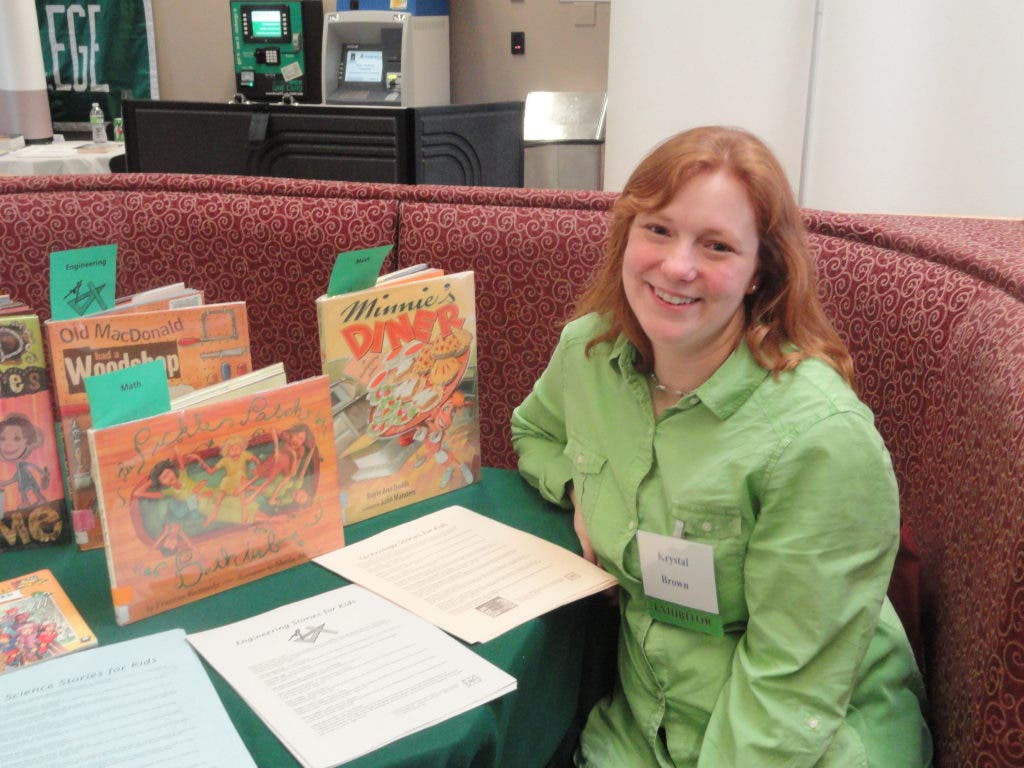


Educators, artistists and business leaders put their heads together and shared ideas and best practices on closing the gap on science, technology, engineering and math (STEM) education during a conference in Attleboro on Friday.
Along with the more than 20 exhibitors at the LAUNCH conference, held at , there were nearly 200 participants who attended the event, which featured workshops and a panel discussion.
Katherine Honey, LAUNCH chair and president of Museum at the Mill, a non-profit organization in Attleboro that organizes LAUNCH, said organizers really wanted to show the importance of STEM knowledge to all members of the community.
Find out what's happening in Attleborofor free with the latest updates from Patch.
“We have people here who have just earned their GED and people here who have just earned their PHD," Honey said. "We want to bring all those segments of society you need to get in place if you’re going to support any initiative, in this case the Stem initiative."
One well attended discussion focused on closing the STEM gap and how students in United States are lagging behind students in other nations when it comes to achievement in STEM fields.
Find out what's happening in Attleborofor free with the latest updates from Patch.
Vicky Bartolini, Professor of Education at Wheaton College, said that early education often places the focus literacy skills and that children need STEM education to develop observation skills, pattern recognition as well as a general curiosity of the world around them.
“We need a national campaign to encourage early STEM literacy,” Bartolini said.
Brian Morry, Executive Director of The Hall at Patriot Place explained how The Hall uses educates middle school students in STEM education through football.
At The Hall, students are able to use their science skills to design a football helmet and test its effectiveness against concussions and use their math skills to manage a salary cap and assemble an NFL team using statistics and data analysis.
“We show them that everything they do is math and science related," Morry said. "Students can come in and work on these projects and they don’t even realize they’re doing math and science."
Inequalities
Panelists Ethel Garvin, Autumn Grant and Jacqueline Cooke focused on the inequalities in STEM education and how that widens the gap.
Cooke, who is administrator of the Women’s Bureau at the U.S. Dept. of Labor, said there are not enough women in STEM related fields.
Cooke spoke on the need to work with young girls to encourage them to pursue these fields. To that end the Women’s Bureau has worked to set up the Girls' E-Mentoring in Science, Engineering & Technology (GEM-SET) mentoring program at the University of Illinois, which allows young women to talk with women who work in STEM related fields.
Ethel Garvin, of the Rev. Dr. Martin Luther King, Jr. Memorial Committee of Greater Attleboro took the same approach with regards to African American students, saying that showing them examples of success is key to inspiring students.
An example of this is the group’s work with which created a quilt of various African American inventors throughout history.
“Image and supporting information can change attitudes and behaviors,” Garvin said.
Grant, who is the State Coordinator of Ms. Wheelchair Massachusetts, spoke on the subject of STEM education for the disabled and again sought to create role models or, as she joked, “roll” models.
Grant stated that only about 10 percent of people with disabilities have college degrees and she wants to encourage those with disabilities to pursue higher education and believes in what she calls “independence through education.”
Preparing for the Future
Lisa Nelson and David Cedrone spoke of the importance of STEM education as it relates to the economy.
Nelson, the district representative for Congressman James P. McGovern, reinforced the idea that the United States needs to improve its STEM education in order to compete in a global economy.
“There is a direct connection between the education and the innovation that is going to help us in the global market," Nelson said.
She also noted that the biotech and green technology industries will be significant in the coming years, saying: “These are the jobs of the future.”
Cedrone, the Associate Commissioner for Economic and Workforce Development in the Massachusetts Department of Higher Education, agreed that the economic future lies with STEM related fields.
Cedrone said that, with an aging American workforce, STEM related industries are increasingly concerned about retirement and wondering where the replacements will come from.
“Very soon nearly all jobs in Massachusetts will require some sort of STEM knowledge,” hesaid.
Local Exhibitors
In addition to the panel there were various workshops and exhibitsthat also touched on furthering STEM education.
Thehad an exhibit showcasing the various fiction books for both young and old readers that have plots relating to math and science.
Donya Kane, an art teacher at Elementary School and showed off the work of her students that combined cubism and Picasso styled artwork with math concepts like geometry, symmetry and patterns.
“Math and art are just naturally linked together,” Kane said.
Hyman-Fine Principal Katherine White had an exhibit explaining her school's focus on improving students understanding of STEM related vocabulary words by involving science and math words across subjects and showing students how these words are included in their everyday lives.
“We wanted to show the word existing in the community so that they would be more than just a math word,” White said.