Business & Tech
Downtown Tattoo Parlor Creates Lasting Impressions
Getting inked, more popular than ever
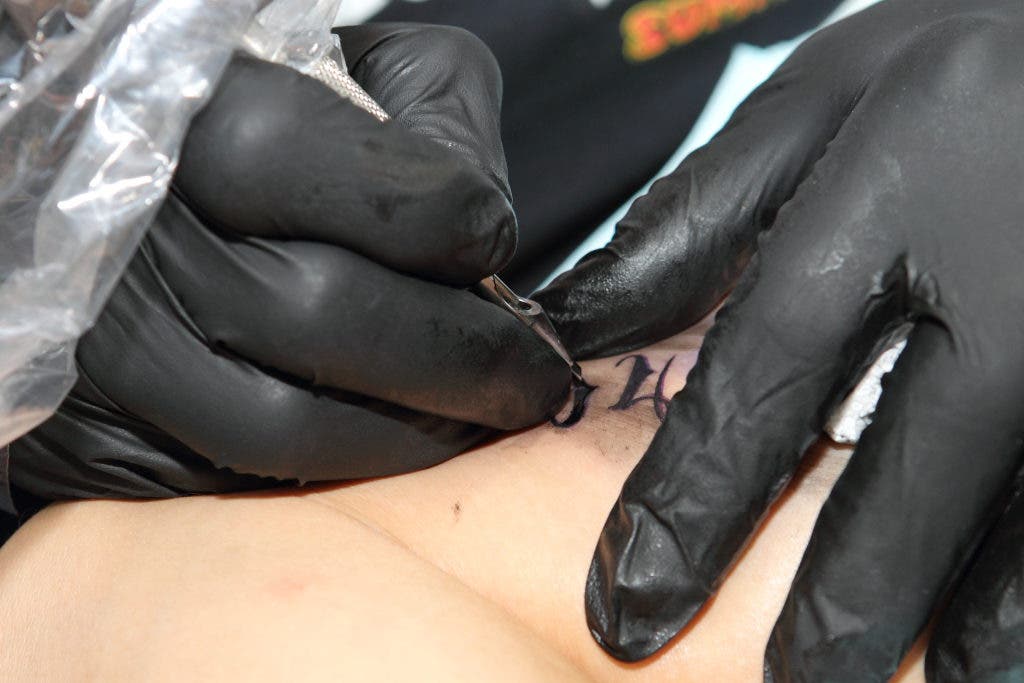


When Attleboro's Tim Stewart and his wife Kristina were married they shared vows, exchanged rings and promised to stay together "until death do us part."
The bond of marriage is meant to be long-lasting and now the couple has an indelible and somewhat more visible sign of their union....complementary tattoos.
Currently serving in the Army and stationed at Fort Bragg, NC, Stewart and his wife have been thinking about getting their tattoos for some time and a two-week leave gave them the opportunity.
Find out what's happening in Attleborofor free with the latest updates from Patch.
Tim had the Italian word "Sempre" (derived from Latin word Semper meaning "Always") tattooed on his left bicep and Kristina had the Irish word Godeo (Forever) inscribed on the underside of her left wrist. "Always and Forever," and that's exactly how today's inks should last, according to Eric Berghman of shop on Park Street.
"Up until the 1980s tattoo ink was made out of Listerine, crushed stone and glycerine which could fade over time," Berghman said. "Modern inks made with pure pigments and vegetable dyes are quite stable," he added.
Find out what's happening in Attleborofor free with the latest updates from Patch.
Working as a tattoo artist since 1976, Berghman has seen many changes take place in the business. It was only about 10 years ago when it became legal to get a tattoo in Massachusetts. The practice was banned in the state in 1962 following a hepatitis outbreak in New York which was linked to a tattoo parlor on Coney Island.
"Tattoo parlors are very closely regulated," Berghman said. "The city comes in and does inspections, making sure that the shop and equipment are clean and that sterilizers are functioning properly and all safety procedures are being followed," he added.
There's a high-tech feel to the shop with computer stations set up so that clients can check out potential art designs on a monitor before committing the design to their body.
Prior to the design being etched into the skin, Berghman makes a stencil and lays it out with a temporary ink so that design size and placement can be approved. This is the last chance to make adjustments before the buzzing sound of the tattoo machine fills the shop.
The machine itself operates by electromagnetic coils moving an armature bar which is connected to a cluster of needles. The ink is injected into the skin with rapid movement of the needles. The ink, however, is placed into the needle cluster by hand, much like dipping an old-fashioned fountain pen into an ink bottle.
Asked to describe the pain level, both Berghman and Stewart agreed that there's simply no way to describe the feeling. "The only thing that feels like getting a tattoo is getting a tattoo," they said.
A small tattoo can be completed in one short session while more complex and larger designs require multiple visits. Upon completion of the tattoo a bandage is applied for an hour so and then the client is asked to stay out of the sunshine as the freshly etched skin is now photo-sensitive.
Tattoo clientele has also changed over the years, with Berghman working on an equal number of men and women. Age is also no barrier to body art, according to Berghman. "My clients range in age from 18 through 80-something."
One only has to spend some time in his shop to get a feel for the deep passion he has for his artistry, but outside of art and business Berghman has a local organization he loves to support and that's the Friends of the Attleboro Animal Shelter (FAAS).
The award is prominently displayed in his shop window. "I received that award for being a top financial supporter of the shelter," Berghman said. "I know they can always use more help and donations and I urge anyone who cares for animals to help out if they can."