Schools
High School Student Has Oysters on the Mind
Junior Molly Rowland educated her teachers about the benefits of oysters in a presentation this week.
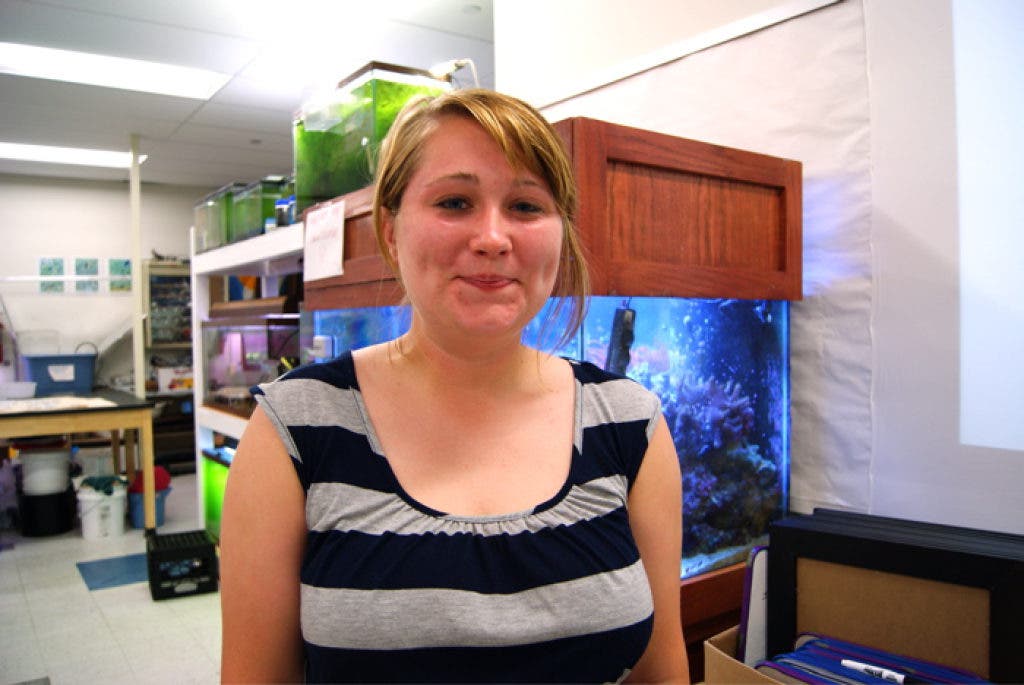


Molly Rowland, a junior at , went into her marine science class last year looking forward to learning about the “cute” animals, like whales and dolphins. She came out with a passion for the smaller organisms of the ocean.
"You walk into the classroom and it’s like magic. There are fish tanks everywhere. You want to know about what's in them. I had never seen a scallop before. It's like 'Oh, they can swim?' "she recalls.
Rowland was so taken with what she learned in the class taught by biology teacher Matt Wills, that she asked to do an independent study with him this year. As part of that course work, she spent the last year researching and volunteering with a number of oyster-related non-profit and commercial businesses, including the ‘Oyster Gardening for Restoration and Enhancement’ project at Roger Williams University and Matunuck Oyster Bar's own oyster farm.
Find out what's happening in Attleborofor free with the latest updates from Patch.
In a presentation given to Seekonk High School faculty on Tuesday afternoon, Rowland used overhead slides and visual props to educate the teachers about the importance of oysters to our environment, culture and economy.
Rowland’s lecture, entitled ‘The American Oyster: Their effect on society, society’s effect on them & why we should keep them alive,’ was packed with interesting tidbits and sobering statistics. Rowland says a disease called Dermo has wiped out 90 percent of the oysters in Narragansett Bay in the past 10 years. Because oysters help filter the water – each one processes 50 gallons per day – they are instrumental in removing pollutants, which in turn helps to regulate water temperature.
Find out what's happening in Attleborofor free with the latest updates from Patch.
Rowland also touched upon the cultural significance of oysters, noting the use by Native Americans for both food and currency, as well as the current economic benefits healthy oysters have on the local shellfish industry.
Though the school year is coming to a close, Rowland won't abandon her love for the bivalve. This summer she'll literally be knee deep in oysters, volunteering with the restoration program at Roger Williams University. At the same time, she’ll be working on her own side project. With the help of a family friend, who donated the use of her dock, Rowland will raise juvenile oysters into adulthood. When they’re ready, she’ll pass them off to a program that will use them for reproductive purposes.
“I want to spend as much time as I can on this. I don’t mind physical work and I love the ocean," she says. "Before last year I was like ‘I’m going to be an art student someday. I’m not going anywhere but art school.' Now that’s all changed."