Politics & Government
Demolition Delayed for Huntington Avenue YMCA
YMCA members are protesting a plan to demolish the Huntington Avenue gym and replace it with Northeastern University dorms.
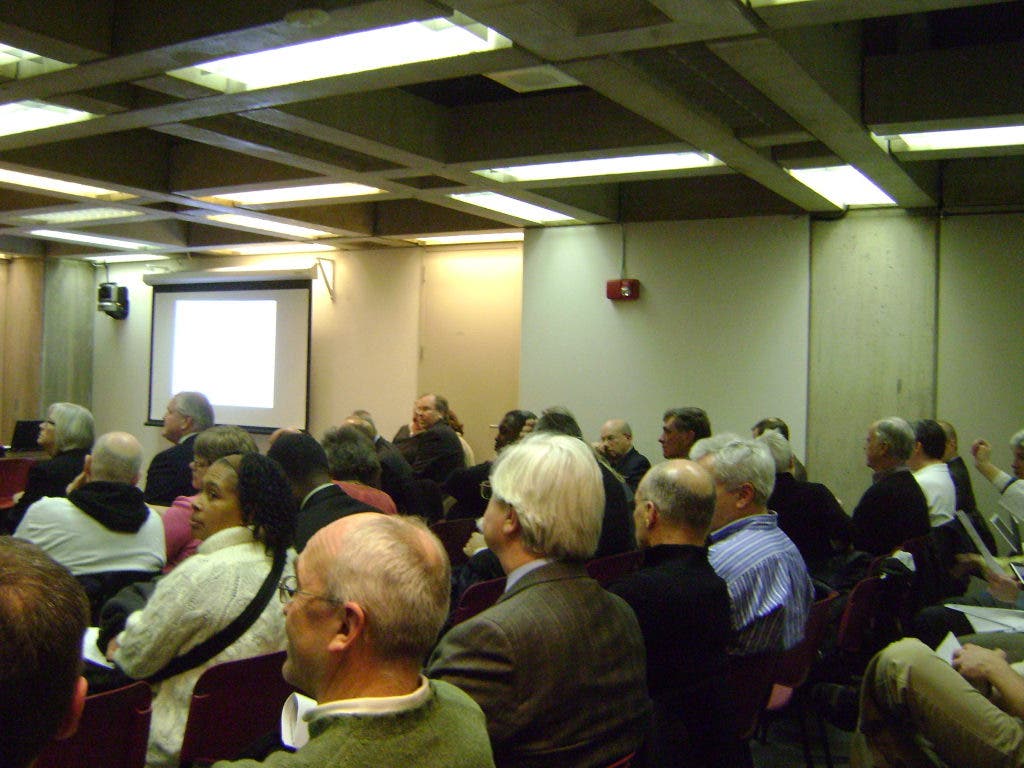
The Boston Landmarks Commission issued a 90-day demolition delay order for the Huntington Avenue YMCA after community residents to a proposal that would convert the almost century-old building into dormitories for Northeastern University students.
Local city residents packed a meeting room in Boston’s City Hall on Tuesday night for the BLC hearing, filling every seat and leaving many standing around the perimeter of the space. In a deal struck between Northeastern and the YMCA of Greater Boston, the gymnasium located on St. Botolph Street at the rear of 316-320 Huntington Avenue would be partially demolished and then renovated into a new 17-story dorm that could house 720 students.
More than 1,000 YMCA members have signed a petition calling for the building's preservation, arguing that the organization provides vital community services that would be impeded by the renovation. Furthermore, as a landmark recognized in the National Record of Historic Places, those against the plan insist the demolition would destroy a piece of the neighborhood’s soul and history.
One of the biggest concerns expressed by Y members is that the renovation, which will downsize the location to 100,000 square feet, will reduce the exercise facilities that they have come to depend on.
Jordan Gallagher, a Dorchester resident and 51-year member of the Huntington Y, said fitness stations are already packed on weekends and that kids flock to the gym’s basketball courts.
“You walk in there on a Saturday morning and there are 60, 70 kids playing basketball,” he said.
While the plan would make space tighter, Kevin Washington, the president and CEO of the YMCA of Greater Boston, said the sale and renovation of the structure will ultimately benefit the organization.
“Having been a YMCA member since the age of 10, the YMCA is part of who I am,” Washington said, explaining how his goal is to do what is best for the future of Y.
Washington argued that the existing structure, which was constructed between 1912 and 1914, is becoming unsound with age , requiring a multitude of repairs over the years. The sale would allow the Y to reinvest in its remaining facilities, Washington said, and transform it into a contemporary community center with higher quality equipment and neighborhood programs.
Northeastern officials argued the school is in desperate need of new dorm space so it can expand university housing options. Nearby neighborhoods such as Mission Hill are currently brimming with students, reducing affordable housing options for families and effectively turning the area into a student village.
John Tobin, the vice president of city community relations at Northeastern, said the college and the City of Boston have committed to a 10-year master plan to increase university housing. The Huntington Avenue Y location is the only available site that is reasonably close to the rest of the school, he said.
The commission said the 90-day demolition delay should be used to educate members on the plan so that more people are comfortable with the possible transition. Moreover, they said Northeastern officials should use that time to investigate whether alternative sites for the structure are available. The delay means that demolition or renovation cannot begin until June 7.
For many members, the Y is a home away from home, which is why the issue has invoked such a strong response. Nancy Doyle, a West Fenway resident, said she turned to the Y to help her cope with the recent death of her son.
“It saved my life,” Doyle sad. “The friendships I’ve formed, the athletics and the social experience saved me.”