Sports
Cape Cod Fishing Forecast and Report
It took a lot of patience and persistence this past week to put bass in the boat. The fish are there, however they are proving difficult to entice.

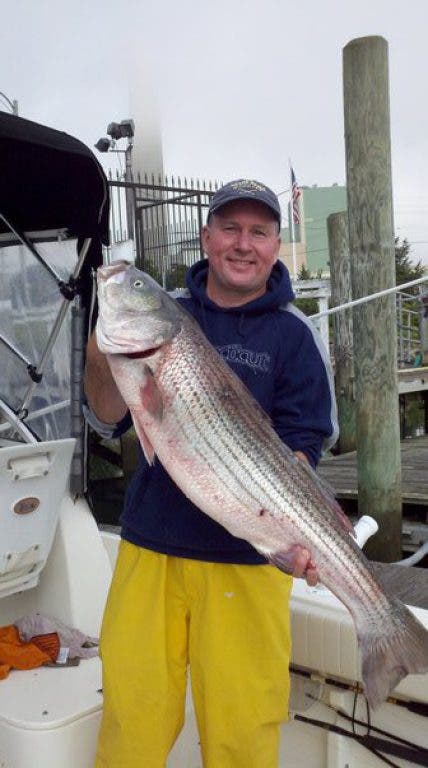


Striped bass are elusive fish that are often difficult to locate. Half the battle is finding the fish in the first place. The other half of the battle is figuring out a way to make them bite.
Unfortunately, during the middle of the summer, stripers often have "lockjaw." Often times fishermen find themselves scratching their heads, wondering how it is possible to troll through an enormous school of bass without enticing a single strike. Lockjaw can drive a fisherman nuts!
But even fish do not feed 24 hours a day, seven days a week. Bass, like all animals, need time to rest. Sometimes the best thing us fishing addicts can do is cross our fingers, and pray that the school of fish on the fish-finder is actively feeding, and not in rest mode.
Find out what's happening in Barnstable-Hyannisfor free with the latest updates from Patch.
On numerous occasions this past week, we found ourselves virtually surrounded by our finned friends. Yet we could only entice one or two bass out of more than a 100 to bite. It takes a lot of patience and persistence to rack up any sort of numbers when bass act like this.
Sometimes a tidal change can snap the fish out of lockjaw mode. Other times a sunrise or sunset will trigger the bass to start biting. Unfortunately, there are times when the bite just never happens.
Find out what's happening in Barnstable-Hyannisfor free with the latest updates from Patch.
The good news is that the bass are out there, and anglers willing to put their time in will be rewarded. There were quite a few nice fish taken this past week. Many of the stripers were in the 20-40 pound range, with rumors of even a 50 pound fish floating around.
The bass fishing will only improve now through October. With good weather and light winds forecasted for the upcoming week, right now is a great time to get out on the water.
What Worked this Past Week
The most important ingredient to a successful trip this week was patience, and being OK with burning a lot of fuel. Much of the week felt more like a search mission than a fishing trip.
I recall covering over 15 miles on one trip before we began to mark bass on the sonar. The good news was that once we began marking a few fish, we found a lot more not far behind. We stumbled across a few seriously big schools of fish this week.
Problem was they were not always feeding. If you are out on the Bay this week and begin marking fish, take a close look at your fish-finder to determine if bait is present amongst the bass marks.
If there are "clouds" of green and blue mixed in amongst the orange arches, odds are the bass are feeding. If you do not mark any bait, there is a fair chance that the bass are resting, and may have the dreaded lockjaw condition.
Sticking with the fish and repeatedly trolling through them, or pitching baits on top of them proved to be the ticket to boating bass up to the 35 pound mark. The average fish in the Bay right now is around 26 pounds, which is definitely leaning towards the hefty side of the spectrum.
Looking Forward
The bass bite in our area historically begins to improve once August rolls around. Some years after a brisk northerly wind, the bass will "stack up" at places like Scorton Ledge and along Sandy Neck beach. Cruising along the beachfront in water depths as shallow as 20 feet will sometimes pay off in a big way during and after a northerly blow.
Yet most days during August feature a hot blazing sun and a brisk southwest breeze. It's now more important than ever to get out of bed at the crack of dawn and get on the water early. Fishing early in the morning and late into the evening will undoubtedly produce more bass than during the middle of the day.
As always, covering a lot of water is important during early August. By making minor adjustments to your sonar, it is possible to mark bass while cruising at over 20 miles per hour.
If you are seeing a lot of clutter and disturbance on your fish-finder when cruising at high speeds, try reducing the sensitivity until the screen clears up. When traveling at high speeds, a big school of bass will appear as a skinny cloud of orange, blue and green on most color units.
Tight lines, good luck and stay safe out there!
For more fishing reports visit My Fishing Cape Cod.