Schools
CCCC’S 'Commit to Complete' Team Exceeds Goal
The local honor society helps engage students to finish their studies.
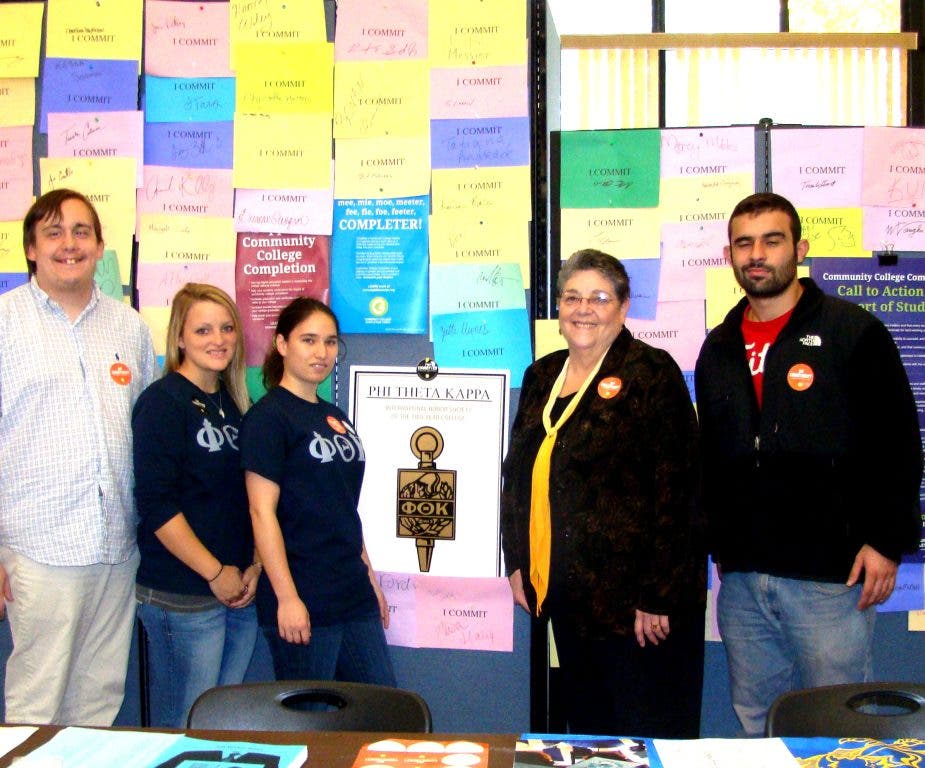
After a week of engaging students, and offering academic information and counseling, Cape Cod Community College’s Phi Theta Kappa (PTK) “Commit to Complete” Team exceeded their goal in enrolling students in a national movement pledging to raise student completion rates by 50 percent over the next decade.
The local honor society chapter had hoped 100 students would sign the commitment pledge, and were excited to enroll their 125th participant this past Friday afternoon.
During the week, College staff, with 25 PTK volunteers, helped students look up their academic record and perform a self-audit to see how close they were to completing based on the credits they’d earned to date.
Find out what's happening in Barnstable-Hyannisfor free with the latest updates from Patch.
The program’s goal was to educate students about the value of completing a program of study, rather than leaving early, and motivating them to become actively engaged in their education. Students who were unsure of just what they needed to complete, were referred to the College’s Advising Center for help. Those unsure of just what program they wanted to complete were similarly referred to the Advising Center and to the College’s Career Center as well.
On Friday, President Schatzberg stopped by the booth to express her appreciation to all who had been part of the effort, and to have photos taken with students. What’s the point of completion? Why make the commitment?
Find out what's happening in Barnstable-Hyannisfor free with the latest updates from Patch.
Here are just some of the reasons expressed by the PTK team as they engaged students over the week.
- Higher earnings; Students who complete their Associate Degree or certificate can expect to earn as much as $8,000 more per year and about $400,000+ more in a lifetime than a high school graduate.
- Being prepared for change; People change jobs up to 10 times in their working lives - and when you are job-hunting, a college credential can give you an edge. Keeping your job; Credential holders also are more likely to retain jobs
Unemployment for community college graduates is typically 30 percent lower than for high school grads. Easing transfer for further study; Completers encounter fewer barriers to transfer! They save time and money by not having to repeat courses or take courses you did not know you needed. Showing perseverance; Completers have the personal satisfaction of reaching educational goals and having something tangible to show for it - something valued by employers, scholarship officials and transfer recruiters.
National statistics note that: 60 percent of the jobs by 2020 will require some kind of a college credential, study after high school completion.
Those who don’t complete their programs are likely to face a very uncertain future, and that all starts with college study itself. While 65% of students who drop out actually plan to return to their studies, only about 38% do return, a very terrible loss to those not continuing.