Business & Tech
Antiques: Stargazing Without a Telescope
A new piece at Danish Country has deep roots in Hellenic history.
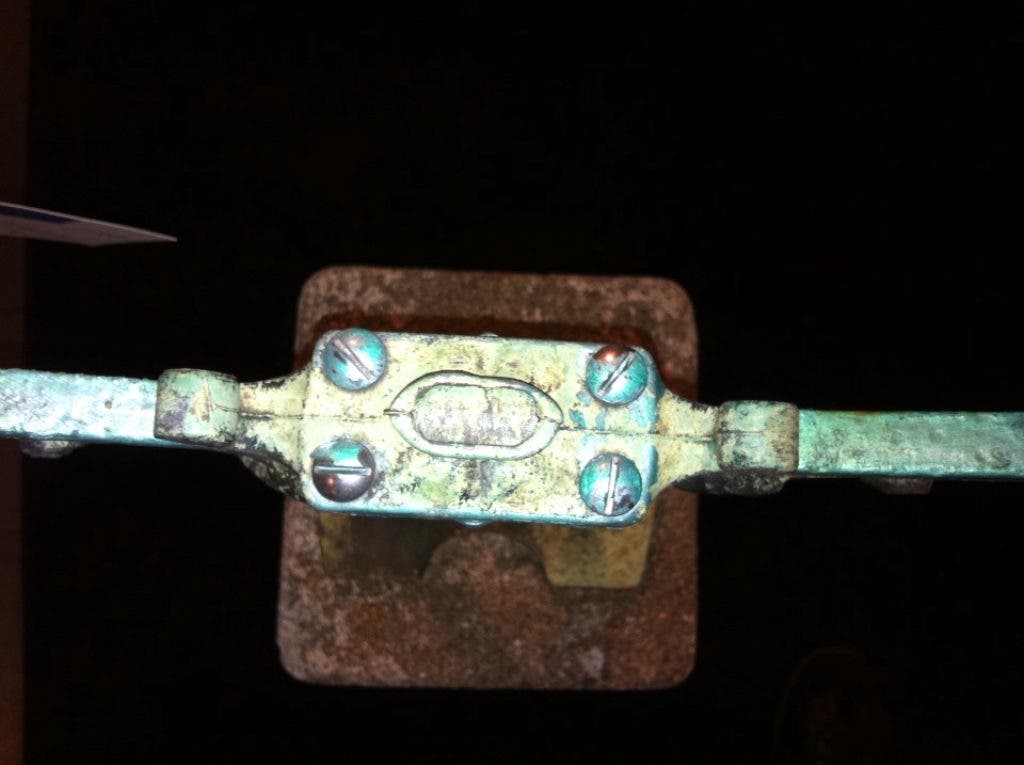


Armillary Sphere, $495
“This is from the first half of the 20th century – maybe the 1920s – so it’s one of the more recent pieces in the shop,” said Danish Country Antiques owner Jim Kilroy of his recent acquisition, an armillary that stands 54” and is 21” in diameter.
Although most often referred to as an armillary, instruments like this one are sometimes also called spherical astrolabs or armillas; these mechanized globes provide a model of objects in the celestial sphere of the sky.
Find out what's happening in Beacon Hillfor free with the latest updates from Patch.
“By the 20th century, I’m sure it’s primary use was that of a decorative garden ornament and not much more,” Kilroy said, noting he picked it up on his recent trip to Denmark. “It’s made of iron and brass – I’m thinking maybe it tells time.”
Further research supports Kilroy’s assertion: positioned properly, these spheres can tell time. But they were developed with the intention of demonstrating the motion of stars around the earth – a means of determining celestial positioning in a pre-telescope world.
Find out what's happening in Beacon Hillfor free with the latest updates from Patch.
The armillary sphere evolved in ancient Greece from the earliest astronomers, beginning with Eratosthenes. Advances in its design came from Asia, Medieval Islam and continued with Renaissance scientists.