Politics & Government
End of Robocalls? State Rep Files Bill To Ban Robocalls In MA
New legislation asks that offenders be fined $10k per call.


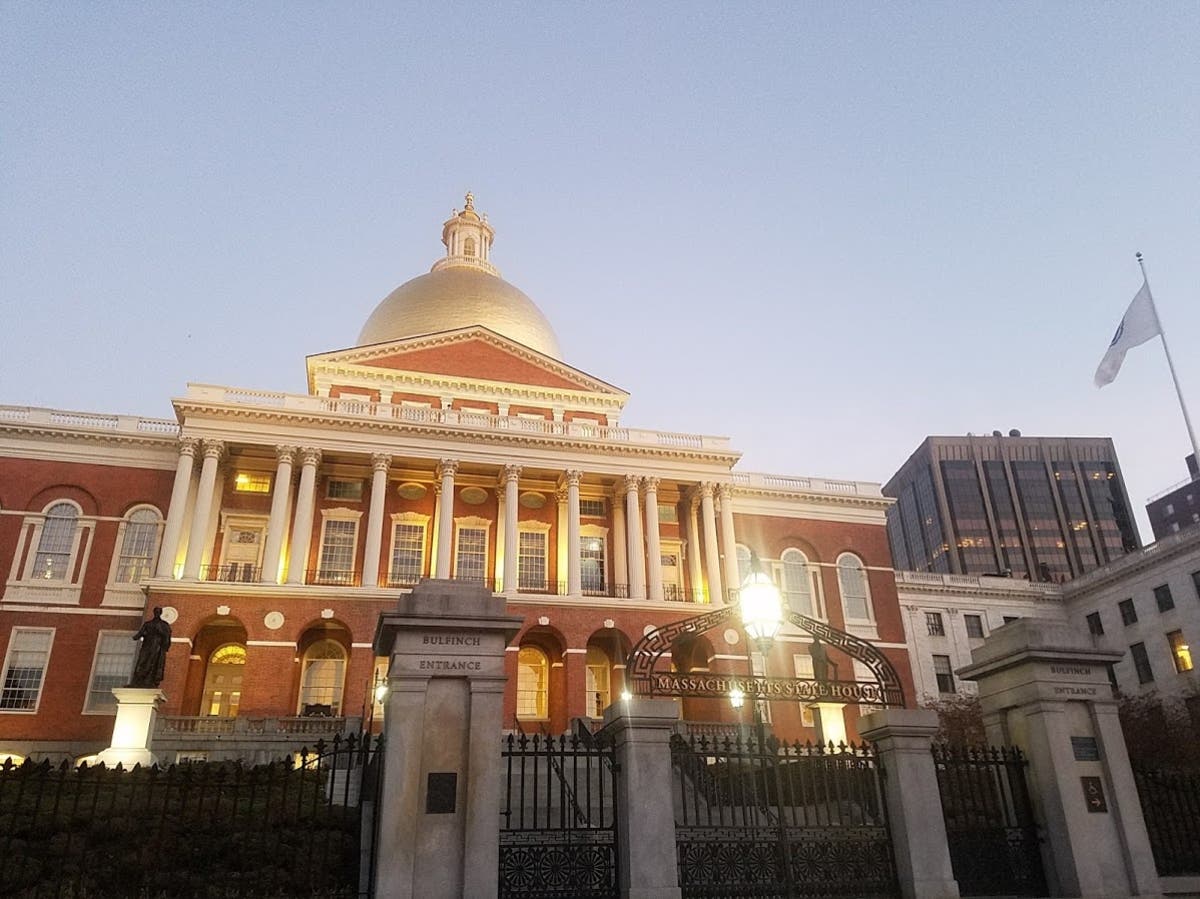
BEACON HILL, MA — They happen to some of us nearly every day: The call from the number you don't recognize, sometimes with your area code, sometimes completely out of state. You pick up only to a moment of silence followed by a recorded voice:
"Hello, don't hang up..." or "We're calling with an important message about your debit card..."
As the Attorney General has warned against engaging with robocallers and the scams they tend to bring, the Massachusetts House gave its initial approval to a bill (H 201) this month filed by Rep. William Straus of Bristoll to ban all robocalls to mobile phones or other electronic devices. It comes as another bill (H. 154) is also in the works to ban robocalls altogether.
Find out what's happening in Beacon Hillfor free with the latest updates from Patch.
Straus's bill makes exceptions for things like messages from school systems, alerts from the government, utilities, employers and some health care providers.
It also gives the MA attorney general power to fine offenders $10,000 or more for each knowing violation, and not less than $1,500 for a knowing violation involving a consumer who is 65 years old or older. The bill also authorizes the attorney general to issue investigative demands and subpoenas, administer oaths and conduct hearings as part of investigations.
Find out what's happening in Beacon Hillfor free with the latest updates from Patch.
It's not clear how the enforcement would work, but he's hitting a sore spot with the legislation: Unwanted calls, including robocalls, are the number one consumer complaint to the Federal Communications Commission, according to the FCC.
"In the absence of federal action I think the states are within their rights to regulate this kind of activity," said Straus WBZ radio reported.
“Like most Americans, I have received robocalls to my cell phone and my home phone. A robo-call blocking service named YouMail estimated there were over 30.5 Billion robocalls made in 2017, which averages to 100 calls per adult in 2017! I think these calls are an annoyance at best, and at worst they can be scams that harm recipients of the calls. I think this bill is an important step in protecting people from scams, and protecting our time and attention," said Rep. Kay Kahn of Newton.
In 2009, Federal Trade Commission rules went into effect prohibiting most prerecorded telemarketing calls, commonly known as robocalls, unless the telemarketer has the consumer’s prior written authorization to transmit such calls.
But since then it has become far easier and cheaper to make robocalls and to mask the caller's true identity through caller ID information, the FCC said. The commission has attempted to crack down on robocalls, but businesses worry legislative action that defines the practice too broadly could prevent legitimate businesses from efficiently reaching their customers with relevant information.
The Federal Trade Commission, which oversees the Do Not Call Registry, recorded 4.5 million complaints about robocalls last year, more than double the 2.12 million complaints received just two years before. And all indications suggest the problem is getting worse.
The robocall-blocking service YouMail said it estimated there were 30.5 billion robocalls made to American homes and businesses in 2017, more than the previous record of 29.3 billion set in 2016. Boston was the 36th most robocalled city in the county, according to YouMail, with more than 25 million robocalls made to Boston area codes in April.
"The influx of fraudulent and illegal robocalls by bad actors has become an ever-growing problem for consumers," Richard Hunt, president and CEO of the Consumer Bankers Association, wrote in a letter to the congressional committee studying bills dealing with robocalls.
If you receive a robocall trying to sell you something (and you haven’t given the caller your written permission), it’s an illegal call. The FCC says you should hang up. Then, file a complaint with the FTC and the National Do Not Call Registry.
The bill still has yet to be voted on. It was reported out of the Joint Committee on Consumer Protection and Licensure, and then out of the Committee on Steering and Policy. It is currently in the Committee on Bills in the Third Reading.
There are currently some version of state bans against robocalling in California, Indiana, Missouri, North Carolina, South Carolina. Strauss did not return Patch requests for comment in time for publication.
Have you signed up for the daily free friendly Neighborhood Patch newsletter yet? You should probably get on that.
Stats from YouMail
- 3.8 million robocalls were placed to area code 781 in April 2018, roughly 2.6 calls per person
- 4.0 million robocalls to area code 413 in April 2018, roughly 4.9 calls per person.
- 4.8 million robocalls to area code 978 in April 2018, roughly 3.4 calls per person.
- 6.0 million robocalls to area code 508 in April 2018, roughly 2.9 calls per person.
- 9.3 million robocalls to area code 617 in April 2018, roughly 7.3 calls per person.
- 3.4 billion robocalls were placed nationwide in April 2018, roughly 10.4 calls per person.
-information was used from the Statehouse News Service
Photo at the top by Jenna Fisher/Patch
Get more local news delivered straight to your inbox. Sign up for free Patch newsletters and alerts.