Schools
Proper Pruning Produces Perfect Plantings
Chenery Courtyard provides workshop to learn the right way to clip and cut around the yard.
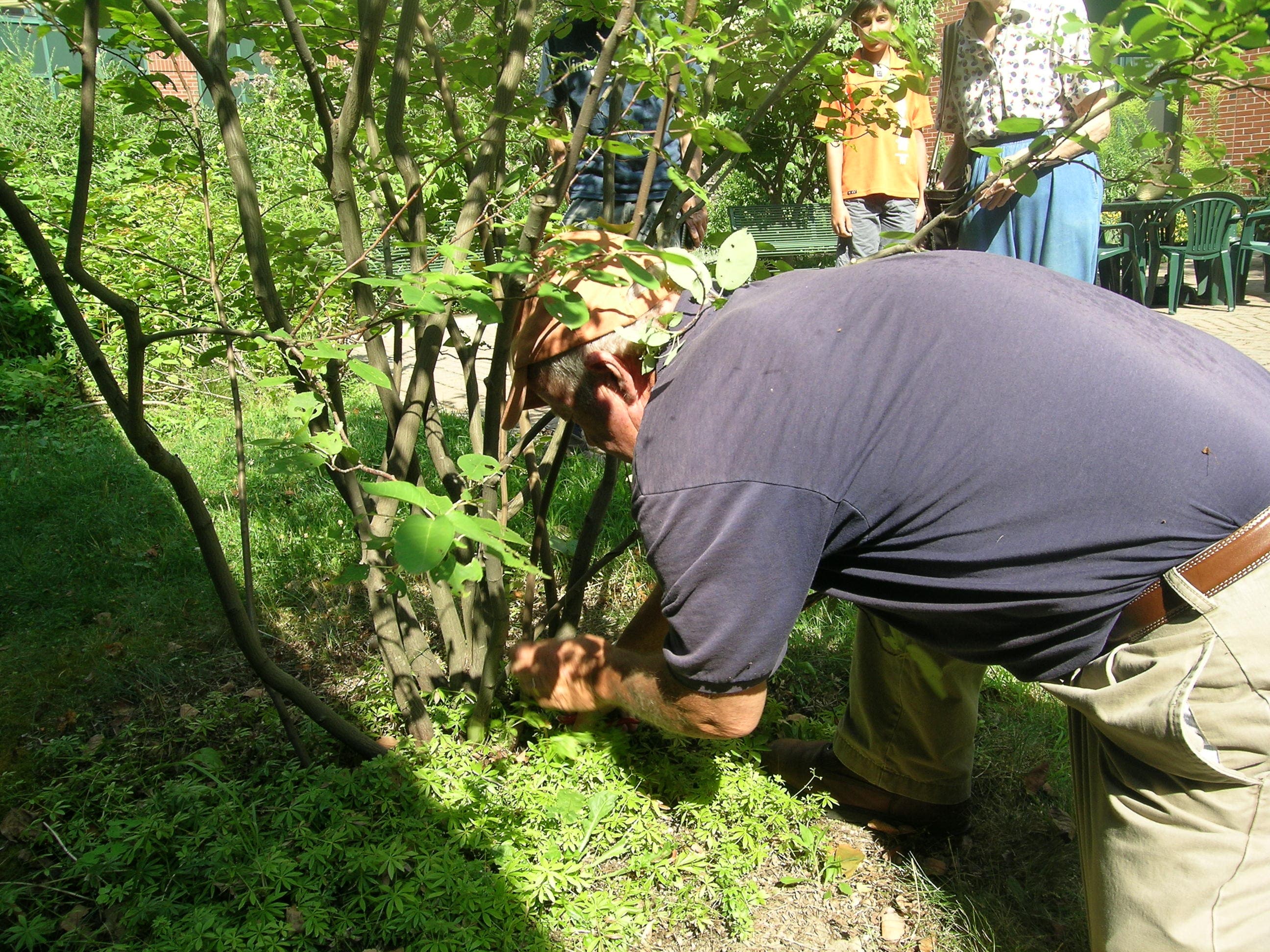


Angelica Scherp knows full well how important pruning is for gardens.
"It's essential," she said, describing how much better her tomatoes are doing in her Victory Garden plot ever since she recently discovered how to keep their foliage in check.
To learn even more, Scherp attended a pruning workshop sponsored by the Habitat Intergenerational Program (HIP) and Chenery Middle School on Wednesday, Aug. 10.
Find out what's happening in Belmontfor free with the latest updates from Patch.
Led by Massachusetts arborist Alton Cole of SavATree, the workshop was an opportunity for people of all ages to learn proper pruning techniques and practice them in the school's courtyard garden.
"To see something like this in a public school is wonderful," said Cole in reference to the many cultivated sections of the garden.
Find out what's happening in Belmontfor free with the latest updates from Patch.
"Most of what's here is in good shape and doesn't need what we call re-juvenating pruning," he said.
Rather, Cole said, because the trees and bushes in the courtyard have been well cared for and pruned on a regular basis, they just need maintenance pruning or what arborists call "crown cleaning."
Beginning with a shade bush, Cole demonstrated basic pruning techniques that clean up the inside of trees and shrubs, remove crossing or broken branches and clear away unnecessary "suckers" that grow at the roots and along branches.
"What is most important is how we make the cuts," he said, pointing out a spot where someone had pruned a branch in a spot that left a large stub on the bush.
"The correct way to prune is called crotch cuts," said Cole, showing how to find a V-shaped part of a branch and sniped the one he wanted to remove with a cutter.
"We want to cut deadwood and what's growing perpendicular or inward – wounds left by pruning that left a stub – to put all the nutrients into the ends of the branches," he said.
More than 20 people came to the workshop and picked up shears and cutters to practice techniques Cole taught them. They worked on a dogwood tree, inkberry and holly bushes, and a number of hedges.
"It was wonderful and the work we accomplished went way beyond our expectations," said Phyl Solomon, who co-directs the Courtyard Garden Club at the school with sixth-grade math and science teacher Ben Ligon.
"We have a pruning workshop each year and usually 15 people show up, but with this large group we were able to get all hedges and bushes trimmed," she said.
The adults who attended the workshop said they learned some new pruning techniques that will help them with their gardening at home.
Bonnie Friedman said she never knew it is unsuitable to shear hedges until Cole explained that the practice will weaken the plant and invite insects.
"Natural pruning to even the shape is much better," he said. "It just takes a bit more time."
When asked about the season to prune, Cole advised not doing so from late April until the middle of June.
"Trees and shrubs are stressed during those months because they are growing their leaves," he said.
"Late fall and winter are the best times for pruning," Cole said.
Maple and birch trees, he said, should be pruned before February because after they will produce sap,
"It won't hurt the tree but you'll have quite a mess with the sap dripping if you prune later than February," he said.
Working alongside adults in the group were four students: 14-year-old Ichiro Barita, who will be a freshman at Belmont High School; his brother, 10-year-old Shinpei, who is currently being home schooled; 10-year-old William Lozano who will be entering Chenery in the fall; and 11-year-old Erik Uhlmann who will be entering sixth grade at Chenery in the fall.
The boys are all interested in gardening and nature and have either participated in the Courtyard Garden Club or in the Pulling Partners program at Habitat.
At one point, Ichiro showed the others how to pet a bee without getting stung, stoking its back with his finger.
The Courtyard Gardening Project – founded in 2002 as a joint effort between the school and HIP – provides a wonderful opportunity for students to learn about the environment and plants, said Ligon.
He said student members of the club maintain it along with volunteers from the community and participate in new plantings.
The courtyard garden also provides other educational opportunities.
"Teachers use the space for art classes, creative writing and even math," Ligon said. "Students can learn math concepts by coming out to measure the plants."