Schools
Student's Crusade To Trash Foam Trays at Chenery
Eighth grader Barkha Scherp continues fight to halt practice despite town's assertion they are safe.
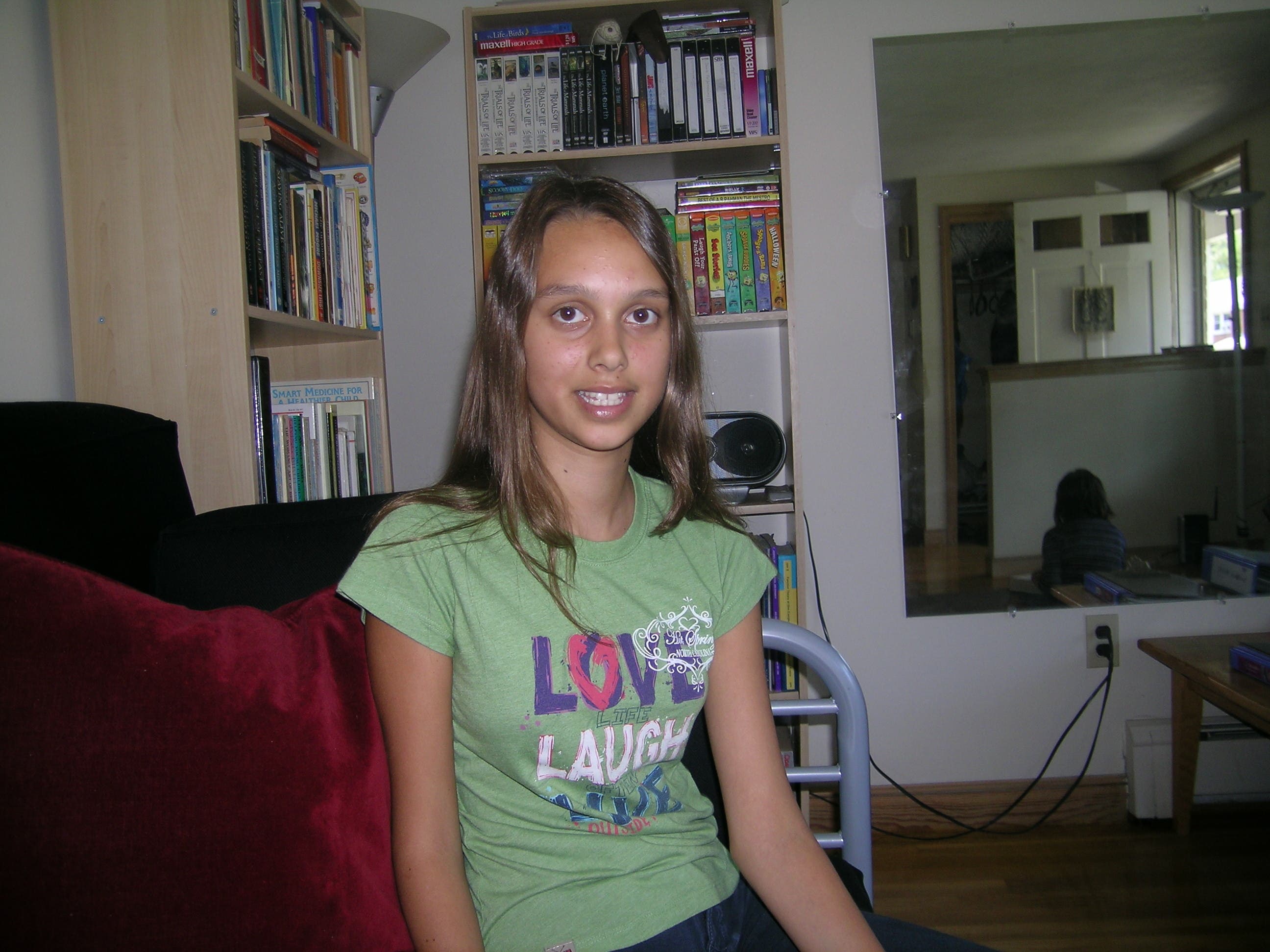
When Barkha Scherp came to the Belmont school system two years ago, she encountered something she found "disgusting."
The trays the food was being served on at the Chenery Middle School were made of foam.
The 13-year-old Chenery student, whose family moved here from California, said she didn't know exactly why the sight of the trays repelled her but it may have been in part because she was used to eating from paper plates in her former school.
Find out what's happening in Belmontfor free with the latest updates from Patch.
Barkha said she once heard the material the trays are made of are unhealthy but it wasn't until she began researching the topic for an article in the student newspaper, CheetahZine, that she realized the serious risks of styrene from which the trays are made.
"I had a feeling you shouldn't eat from styrene or let food touch it but after reading about this on the Internet, I was very upset by what I learned," said the eighth grader.
Find out what's happening in Belmontfor free with the latest updates from Patch.
"It's so bad for kids. Why would (the school) use it?" she said.
In her article published last spring, titled "Lunch Trays," Barkha outlined the make-up of foam and explained how it can get into food.
"Foam is made of styrene, which is made of oil. When foam is made it releases 57 chemical byproducts that pollute the air and create smog," she wrote.
"When a hot, fatty or acidic food is placed on a foam tray, the styrene can more easily seep into the food," she noted.
"Also if a liquid is put in foam trays or cups, the styrene is likely to seep into the liquid. This means that you are eating foam. Think of the hot, liquid cheese that comes with our nachos during lunch."
The most frightening part of her research, Barkha said, was learning the effects of eating off the trays.
"The Agency of Toxic Substances and Disease Registry say that styrene can irritate your skin, eyes, lungs, stomach, kidneys and intestines," she states in her article. "Styrene also sticks to the fatty tissues of the brain.
"This can cause nervousness, difficulty sleeping, weakness, depression and a lack of concentration, energy and motivation.
"Styrene gets in the way of blood formation. It can badly affect your reproductive system. Styrene can change your chromosomes and hormones and cause reproductive abnormalities.
"The International Agency for Research on Cancer and the EPA (Environmental Protection Agency) have said that styrene can cause cancer."
Barkha said she was disappointed that her article didn't draw more attention.
"I'm not sure a lot of the students read it, possibly because it was on Page 5," she said. "No students talked to me about my article but I did hear that some were concerned about the trays after reading it."
She pointed out in her article that there are several alternatives to the foam trays such as reusable plastic trays and renewable alternatives like post-consumer recycled paper, bamboo, and corn plastic trays.
"These products are better because they are biodegradable and won't affect our health badly," she wrote.
Barkha was surprised none of the teachers said anything about what she wrote.
A member of the Student Council last year, Barkha said she and several of the other officers brought the matter of foam trays to the attention of the group's advisors and asked why, given the health hazards, they are being used in the school's cafeteria instead of plates.
"One of the advisors told us the trays are stronger and hold food better as well as being less expensive," she said.
Paul E. Brown, supervisor of school food service for Belmont, said Barkha's article was excellent.
"She absolutely right about the importance of re-usable trays," he said. "And our goal is use them eventually."
However, Browne said, the cost and labor is an issue at this point. "The foam trays cost approximately three cents each and those that break down better in landfills cost more than twice that amount," he said.
Having reusable trays will require students properly scrape all the food off and then they could be run through washing machines.
Until such time that change can happen, Browne said, students should not worry about the health effects of the foam trays.
"They are FDA approved and we would never compromise the safety of our children if we knew they were harmful," he said.
"Often, polystyrene products are confused with complete Styrofoam. The foam trays are completely safe for holding food products."
Belmont Health Department Director Stefan Russakow also read Barkha's article and complimented it for being well written.
And, although he thinks she raises a valid concern, said research has not proven the trays contaminate food when used normally as is the case at Chenery.
"There are several groups/advocates out there that decry the adverse effects of foam, plastics and the like," Russakow said.
"There has not been any evidence presented to the FDA that would lead them to prohibit the use of these foam-based materials in take out or school trays and similar items," he said.
Currently, he said, there is no prohibition in either the federal or Massachusetts Food Code regarding its use.
The Board of Health certainly supports minimizing the waste stream and advocates for efficient and effective recycling, Russakow said.
"There are certain types of 'foam' products that are more biodegradable than others," he said. "Apparently some of the polystyrene compounds break down a bit sooner."
Those answers weren't satisfying enough for Barkha. She attended Meet Belmont in late August and went to any table where she thought people might be interested in what she discovered while researching her article on foam trays.
She explained her concern to members of the Solid Waste and Recycling Committee.
"I asked if they were doing anything about getting rid of the foam trays and they said they are already looking into alternatives and, once they find one, will contact the school," Barkha said.
"I was glad to hear they were trying to do something but also wondered if they're trying hard enough because alternatives are already known."