Bolton, MA|Local Classified|Gigs & Services|

What Marlborough Homeowners Should Know About Deck Material Performance This Spring
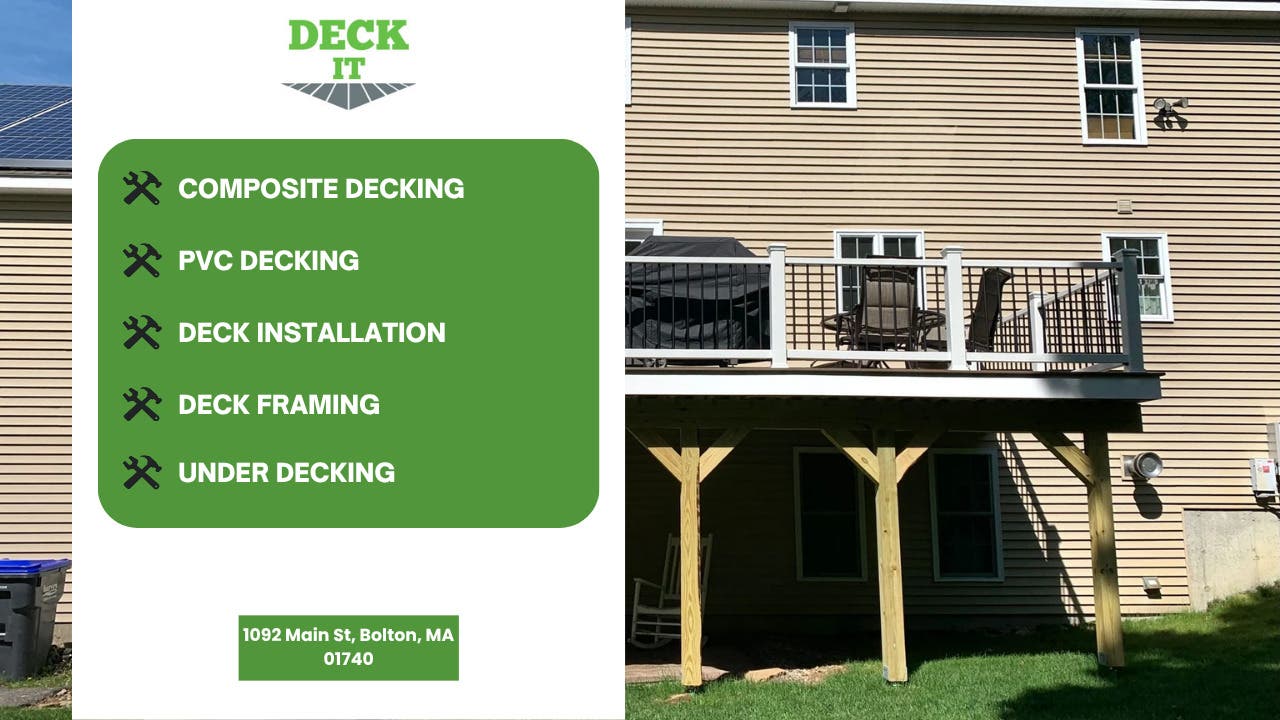
Spring is when Marlborough, MA homeowners who spent the winter watching their deck deteriorate start asking the same question: is the material the problem, or is it the installation? For anyone considering a replacement or a new build in Middlesex County, understanding how different decking materials actually perform in this region is worth knowing before the build season gets underway.
Wood decking, including pressure-treated lumber, requires annual maintenance in New England climates. The freeze-thaw cycles that Marlborough experiences between November and March cause wood fibers to expand and contract repeatedly, which over time leads to warping, cracking, and surface degradation. Without consistent staining and sealing each season, the process accelerates.
Composite decking is engineered to resist that cycle. Products from manufacturers like Trex, TimberTech, and MoistureShield are built with encapsulated cores that block moisture absorption, which is the primary driver of warping and rot in wood. Cleaning composite boards requires only soap and water, with no sanding, staining, or sealing needed from year to year.
PVC decking, such as TimberTech AZEK, takes moisture resistance a step further. As a fully synthetic material, PVC does not absorb water at all, which makes it particularly well suited for pool-adjacent or shaded deck areas where moisture exposure is higher than average. Color and texture options across both composite and PVC lines have expanded significantly in recent years, making aesthetics a less common reason to default to wood.
For Marlborough homeowners, the material decision tends to come down to long-term maintenance expectations and the specific conditions of the deck site. A south-facing deck with full sun exposure has different needs than a shaded, north-facing structure close to a tree line.