Community Corner
Boston's New England Aquarium Saves 14 Endangered Sea Turtles
And that was just this week.


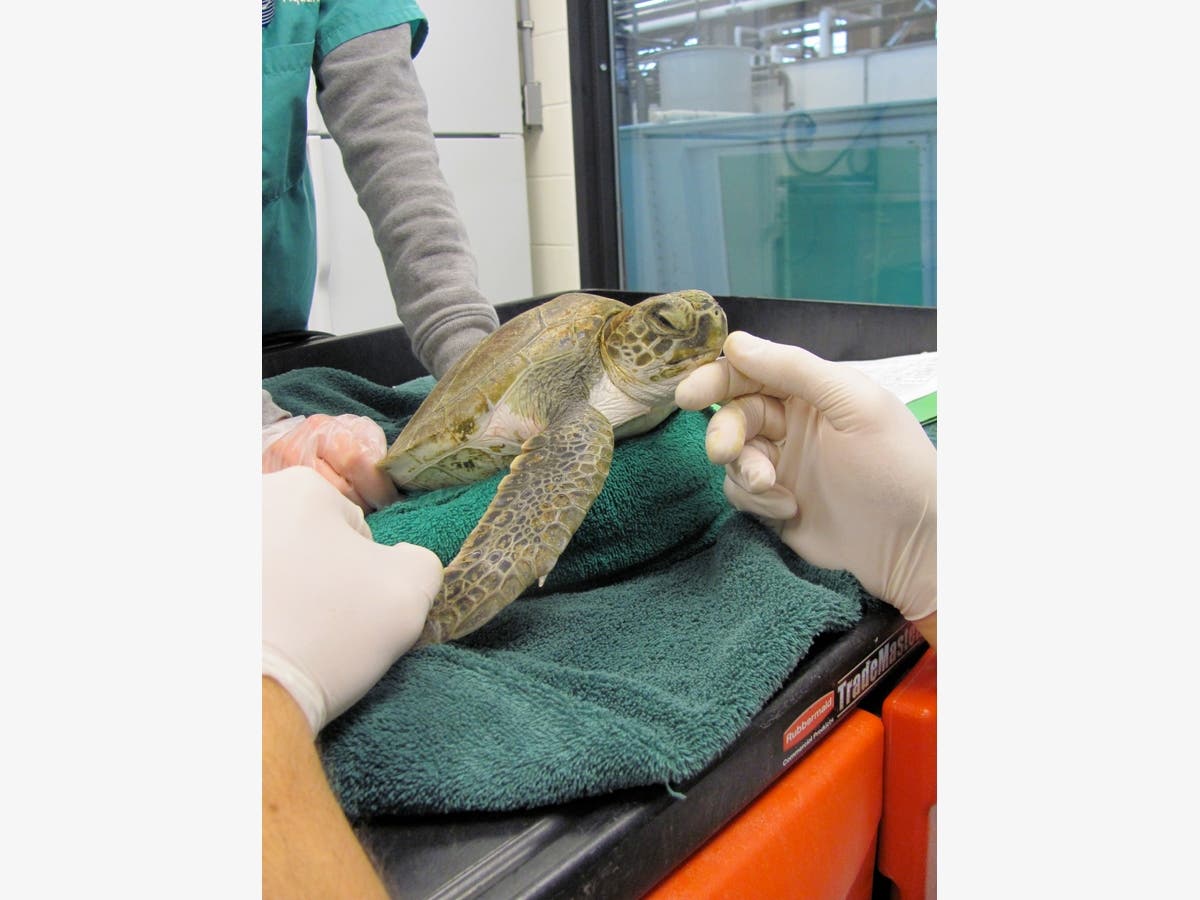
BOSTON, MA —Each year endangered sea turtles wash up on the shores just outside of Boston on the Cape stunned and helpless as wind and cold drive them out of the water. But waiting for them there are teams of volunteers and biolgists from Wellfleet Bay to Boston working to help rescue, help rehab and then release endangered and threatened sea turtles into the wild. This week, Boston biologists released 14 to the (warmer) Florida surf.
Rescuers from the New England Aquarium drove the 10 large Loggerheads and four Kemp’s Ridley sea turtles in a "turtle caravan" to just south of Jacksonville, where they release turtles once a year into the sand at a state park on Monday.
"Once placed on the sand, each turtle slowly and clumsily made their way back into the Atlantic Ocean for the first time in more than four months," the aquarium posted to its blog.
Find out what's happening in Bostonfor free with the latest updates from Patch.
For more information on this and other neighborhood stories, subscribe to your Free neighborhood Patch to receive daily newsletters and breaking news alerts.

These were part of the some 300 turtles stranded on Cape Cod beaches last November and December and diagnosed with severe hypothermia.
Find out what's happening in Bostonfor free with the latest updates from Patch.
As the waters get chillier turtles generally start to migrate south, but the shape of the Cape confuses them. and they get stuck, too cold to move on. All of the turtles rescued this week also had other life threatening medical conditions, such as pneumonia and emaciation, that required months of rehab at the Aquarium’s sea turtle hospital in Quincy.
Why Florida?
Well, simply put: Florida has the warmer water the turtles need right now. The ocean water up here is in the low 40’s this time of year. Sea turtles prefer water temperatures in the 70’s, and north Florida was the closest location with waters that warm.
This isn't the first time New England Aquarium has rescued a gang of turtles. And 14 is small compared with what happened last fall, when the Aquarium and its rescue partner, the Mass Audubon Wellfleet Bay Wildlife Sanctuary, rescued and treated so many sea turtles they had to send nearly 200 off by plane to other care facilities while the ones with the most severe issues stayed put.
The two have been working together for some 25 years, and during that time the partners have released more than 2,000 endangered and threatened sea turtles, according to the Aquarium website.
What's going on?
Sea turtles generally strand on Cape cod from November until mid- to late December, depending on the weather. Before 2011, an average year yielded about 90 live sea turtles being rescued and treated, but over the past several years, that average has moved to more than 300 sea turtles as the waters warm.
"It's part of climate change," said Tony Lacasse of the New England Aquarium.
Mass Audubon Wellfleet Bay Wildlife works the front end of the operation.
"We rescue the turtles when they're cold and stunned in Cape Cod Bay and then off Cape Cod beaches," said Michael O'Conner a spokesperson for Mass Audubon.
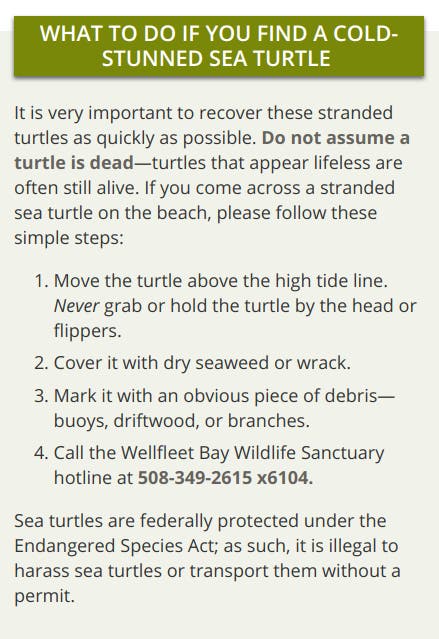
The Wellfleet Bay Wildlife Sanctuary trains hundreds volunteers on how to rescue the animals sending out who then walk the beaches on the days when the wind and the temperatures and the waves are just right. Volunteers gently pack the animals in seaweed and bring them to the sanctuary where they're treated.
After they're warmed up and treated the Aquarium sends most of the turtles by plane to be released in warmer waters. Biologists and interns make a trip to Jacksonville in the Spring to release the turtles that need a longer stay and then for the turtles who needed more intensive care there are one or two trips to the Mid Atlantic area in the early summer.
"It's a very unique event where you have this number of turtles that have this type of severe hypothermia accompanied by other health issues," Lacasse said.
Occasionally in the South there will be a surprise cold spell and turtles will wash up as their body temperature lowers with the water temperature and makes it hard for them to continue swimming.
But as the waters have been getting warmer up near Boston more sea turtles have been making their way up on the Gulf Stream highway to feast on the buffet of crabs and other turtle delights in Cape Cod Bay.
The problem happens when come fall, when the water starts to cool and their instinct tells them to head south, the sea turtles start to head south and run into the cape body. Especially disorienting to younger sea turtles, they'll try to explore a way out to the West and to the East. And for many by the time they figure out they have to swim the 25 miles North before hanging a right and heading back South the water out in the ocean is just too cold.
"They'll retreat thinking they'll just wait it out and get stranded," said Lacasse.
The Aquarium's budget for rehab is in the high six figure area, he said. And most of that comes from donations and from the ticket price visitors pay when they visit.
Check out more photos of the turtles on the Aquarium blog: Sea Turtles Head Home
And here is how the Mass Audubon's Wellfleet Bay Wildlife Sanctuary defines the two recently rescued types of sea turtles:
Kemp’s Ridley
Both the smallest and most endangered sea turtle in the world. Ironically, it is also the most common turtle to strand on bayside beaches each winter. Juvenile ridleys are typically only 5-10 pounds, but adults can grow up to 100 pounds. Several hundred typically strand each winter on Cape Cod in recent years.
Loggerhead
Has the largest geographic distribution of any sea turtle in the world. Similar to the green turtle, the loggerhead is endangered and is also becoming a commonly stranding species. Juvenile loggerheads are large, between 30-200 pounds, and adults can exceed 400 pounds. In recent years, two to three dozen loggerheads have stranded annually, with a high of nearly 150 in 2012.
For more information on this and other neighborhood stories, subscribe to your Free neighborhood Patch to receive daily newsletters and breaking news alerts.
haPHOTO: A rescued sea turtle is examined at the Aquarium's off-site Animal Care Center in Quincy, Mass. Credit: C. Leblanc via New England Aquarium.
Get more local news delivered straight to your inbox. Sign up for free Patch newsletters and alerts.