Neighbor News
Has Boston Failed To Progress Politically Under Mayor Wu's Rule?
Boston Is Still A U.S. City Which Has Never Elected A Black Man As Its Mayor--And 59% Of Black Renters Pay More Than 30% On Housing Costs.
Prior to being elected in November 2021 to become the current mayor of Boston, Massachusetts (one of the largest cities in the USA which, as of February 2025, has still never elected a Black man to serve as its mayor), a protegee of former Harvard University Law School Professor and current U.S. Senator Elizabeth Warren, Michelle Wu, proposed to "make Boston a laboratory for progressive policy," to "pare away at the power of the police union" and "to restore a form of rent control," according to an Oct. 28, 2021 article that appeared in The New York Times.
Yet, as the Bay State Banner weekly newspaper noted in an article that appeared in its Jan. 30, 2025 issue:
"Wu...has broken with many...progressive policies...including a push to cut spending on the police department and redirect funding to programs and city departments that prevent crime. In last year's budget negotiations...progressive-leaning majority [of Boston City Council] called for a $3 million cut to the [Boston Police] department's $454.9 million budget, with funding redirected to the Boston Center for Youth and Families, fire and transportation departments...Wu vetoed the amendments to the budget..."
Find out what's happening in Bostonfor free with the latest updates from Patch.
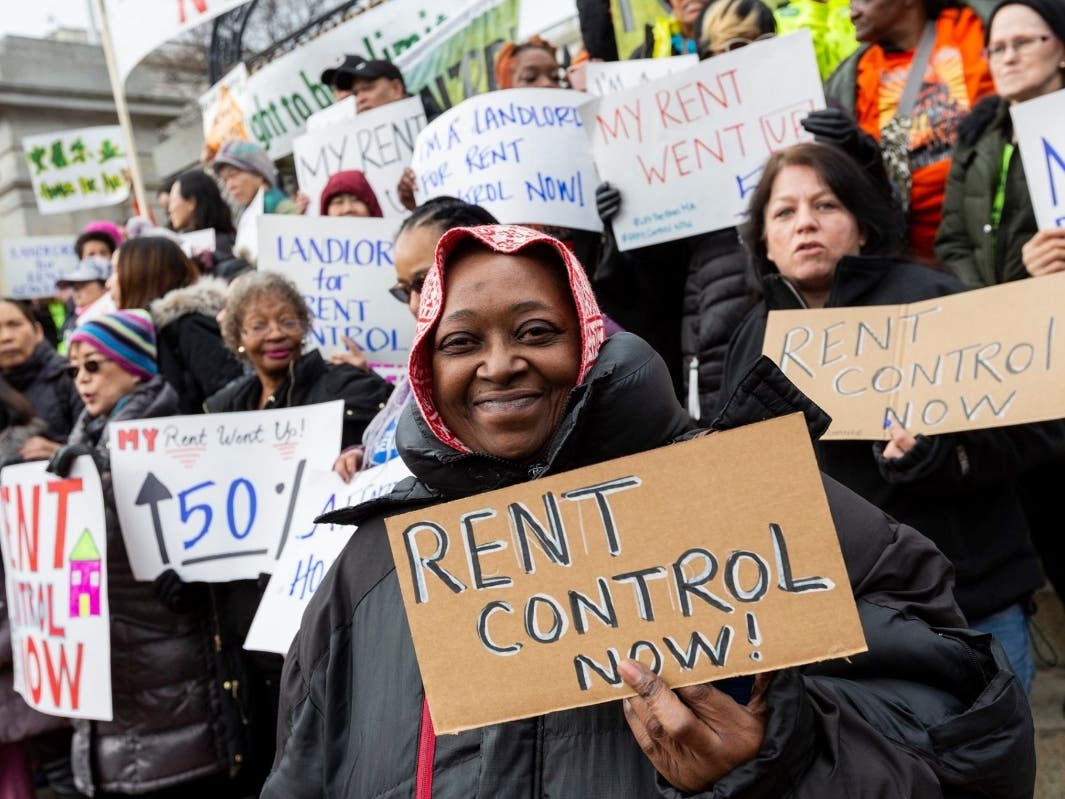
And in a city in which over 60 percent of all residents are economically insecure tenants and more than 59 percent of all Black Bostonians renting market-rate Boston apartments in 2023 were still paying more than 30 percent of their incomes each month on housing costs, no form of rent control has yet been restored in Boston, as of February 2025.
In addition, under the current mayor of Boston's administration, the extent of existing economic inequality and institutional classism within Boston is still greater than that existing in nearly all other large U.S. cities.
Find out what's happening in Bostonfor free with the latest updates from Patch.
As long ago as 2012, for example, the then "fifth largest hedge fund in the United States," the Bauport Group, was located in Boston and "hedge fund assets in Boston were" then "more than $130 billion in total," according to David Grayson Allen's Investment Management In Boston book.
Yet under the administration of U.S. Senator Warren's protegee in Boston's City Hall, over 16 percent of all Boston residents and over 12 percent of all Boston families still have below poverty-level annual incomes, according to the 2025 edition of The World Almanac and Book of Facts.
But the current Boston mayor has generally failed to produce either much progressive political and economic change in Boston or finally create an African-American-led municipal system of participatory democracy and economic democracy in Boston since January 2022.
One reason might be because Wu's chief political priority after she first began occupying a Boston City Council seat in 2013 was apparently to eventually occupy the mayor's office in Boston, herself (rather than to prioritize the long-time historical goal of most anti-racist progressive Boston Movement organizers of finally electing an antiwar Black man to serve as Boston's mayor).
As the then-GBH Radio Commentator Peter Kadzis told the New York Times reporter who interviewed him about Wu for an Oct. 28, 2021 New York Times article, which appeared prior to the Warren protegee's November 2021 election as Boston's mayor:
"This has been thought out and played out and planned out for years. She had a long game to get into the office, a much longer game than anyone I've ever known who has become mayor."
So just two months after announcing her candidacy in the 2021 Boston mayoralty election, for example, the current mayor of Boston was interviewed on Nov. 17, 2020 by a former New England AIPAC Deputy Director and then-Ruderman Family Foundation President named Jay Ruderman in a "special episode" of the Ruderman Family Foundation-produced "All Inclusive Podcast" show--which was titled "Boston City Councilwoman and Rising Star Michelle Wu."
And, according to Wu Committee financial disclosure forms, on Jan. 25, 2021, Wu's campaign committee later then accepted a $1,000 campaign contribution from Jay Ruderman; who, according to the Ruderman Family Foundation's website, had also, previously enlisted in 2005 in the Israeli Defense Forces [IDF] and become "the liaison between the IDF and Diaspora Jewry," before "after his service in the IDF" then returning "to AIPAC as the Leadership Director for AIPAC in Israel."
In addition, on Jan. 2021, Wu's campaign committee also accepted a $1,000 contribution from then-Ruderman Family Foundation Executive Director Shira Ruderman, who, along with her husband Jay Ruderman, was an honoree at a March 23, 2019 Israeli American Council Boston event, held at the Royale Boston, on 279 Tremont Street.
Then, following Wu's inauguration in January 2022, another $1,000 campaign contribution from former New England AIPAC Deputy Director and Ruderman Family Foundation President Jay Ruderman and another $1,000 campaign contribution from 2019 Israeli American Council Boston Honoree and then-Ruderman Family Foundation Executive Director Shira Ruderman were deposited by the current Boston mayor's campaign committee in its bank account.
According to campaign finance data posted on the Massachusetts Office of Campaign and Political Finance website, between Jan. 1, 2022 and Feb. 22, 2025, Mayor Wu's campaign committee has deposited over $3.1 million in campaign contributions in its bank account; and nearly $1.8 million of the $3.1 million in campaign contributions Wu's committee has collected since her inauguration have come from 1,795 contributions of $1,000.
And many of these $1,000 dollar per campaign committee contribution donors to Mayor Wu's campaign committee are either non-residents of Boston or individuals who are affiliated with real estate industry firms (like Chestnut Hill Realty, Related Beal, Beacon Residential Management, Tremont Asset Management LLC, New England Development, RISE, National Development, etc.) whose executives and real estate industry lobbyists have generally opposed, in the current decade, a restoration of a rent control system in Boston, a rent freeze or rent rollback in Boston, or any regulation of rents charged tenants in all newly-constructed residential units in Boston.
Hence, it's not surprising that, after being inaugurated in Jan. 2022, Boston Mayor Wu appointed a "Stalling Rent Stabilization" committee, which included real estate industry representatives of firms whose lobbyists generally opposed rent control and which only produced a watered-down "rent stabilization" proposal (that would allow Boston's corporate landlords to hike rents annually by 10 percent on pre-2010-constructed residential units and not prevent landlords owning post-2010-constructed apartment buildings from charging their tenants whatever inflated market rents they wished to charge), swhich Wu's administration was not even able to obtain permission to enact by the Democratic Party-controlled Massachusetts state legislature, as of February 2025.
So since the current mayor of Boston was inaugurated in January 2022, the average rent charged Boston tenants for a 1-bedroom apartment has increased from $2,720 per month to $3,403 per month in February 2025; while, between February 2024 and February 2025, the average monthly rent charged tenants in Boston still increased by $95.
And as the Apartments.com website noted, currently the average rent in Boston "is 119 percent higher than the national average rent price of $1,556 per month, making Boston one of the most expensive cities in the U.S.;" and "when you rent an apartment in Boston, you can expect to pay $2,859 per month for a studio, $3,403 for a one-bedroom apartment, and around $4,389 for a 2-bedroom apartment."