Sports
How Much Money Do Top Boston Marathoners Win? Sometimes $0
This year there were 16,587 men eligible for a cash prize - and only 46 women. But race organizers say it's not what it may sound like.


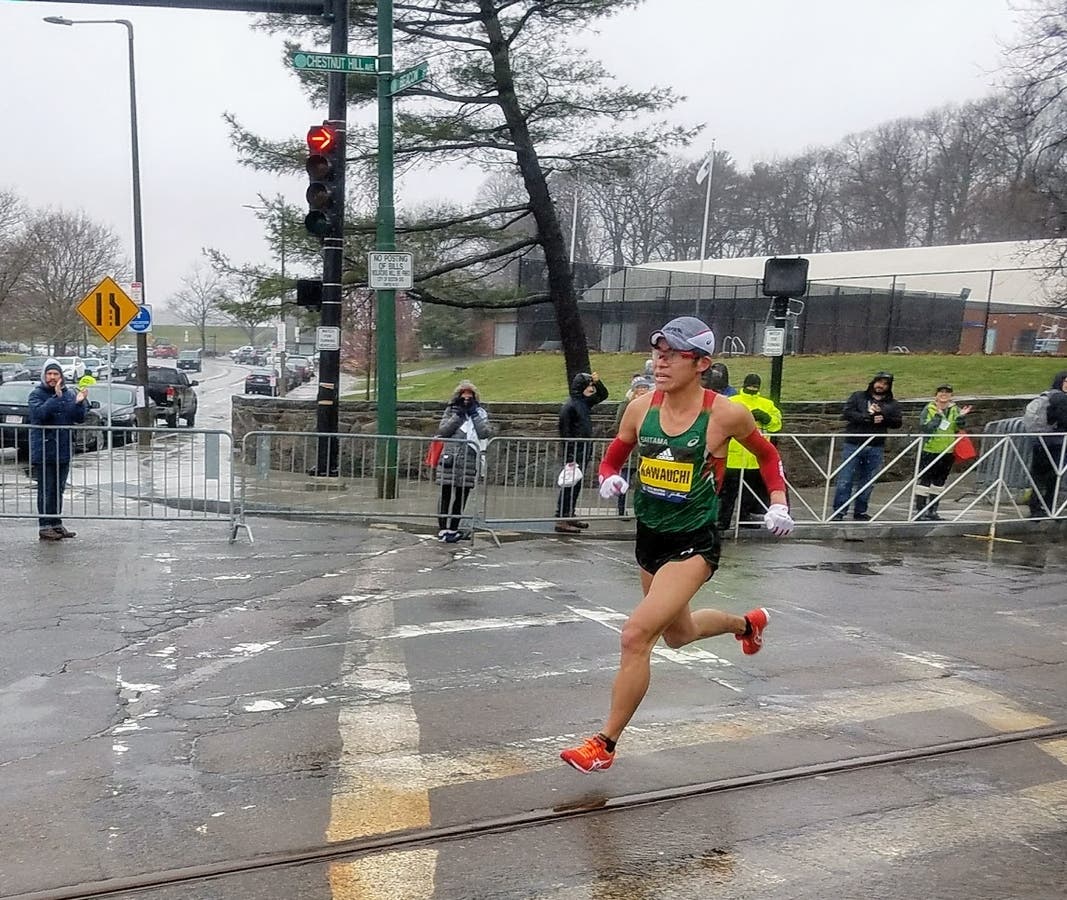
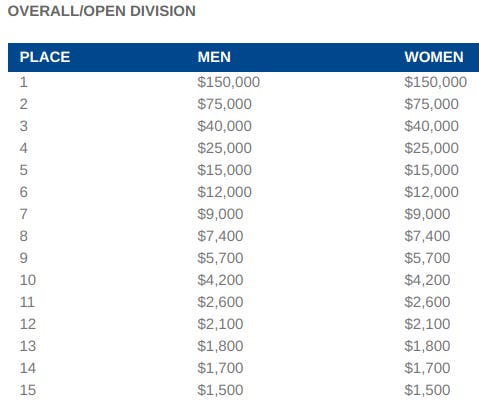
BOSTON, MA — If you win the Boston Marathon, you go home with a $150,000 check. So it went for Desi Linden and Yuki Kawauchi in April's race.
The prize money for the top two runners-up isn't so shabby either, with payouts of $75,000 and $40,000 for second- and third-place male and female finishers. In fact, the Boston Athletic Association has cash prizes for the top 15 men and women to place. But the rules, as BuzzFeed News reported this week, are different if you are a woman - and it can cost you prize money. And that's by design, say BAA officials.
This year, the men who came in 5th, 13th and 15th after crossing the finish line in their division went home with $15,000, $1,800 and $1,700 cash prizes. The women for those three places? They went home with no such prize. The cash prizes only went to women who had qualified and started earlier but technically finished a little later.
Find out what's happening in Bostonfor free with the latest updates from Patch.
"We are always trying for the race to be as fair for everyone who competes in it. The weather this year created an extreme circumstance of athletes not finishing the race that presented this issue that we’ve never really seen before," BAA Communications Director T.K. Skenderian told Patch in an interview Tuesday.
This year only 46 women were eligible for the cash prize, BuzzFeed reported. That number was 16,587 for men.
Find out what's happening in Bostonfor free with the latest updates from Patch.
On the surface, it looks like different rules for men and women. But the reason, according to Skenderian, is because the race is designed differently for elite women who qualify than those who run with the rest of the pack. The 5th, 13th and 15th-placed women did not sign up to run in the first wave - which has a 28-minute buffer before the rest of the pack start.
And that's what makes the difference, said Skenderian.
To be eligible for BAA prize money and a chance to run at the very front of the pack free of hordes of people, a woman must first qualify for the elite women's start, a professional-level starting group that required a qualifying time of 2:47:50 this year.
That's in addition to the qualifying time required for both men and women who want to run without having to fundraise for a charity. (About 80 percent of runners qualify.)
For example next year in order to qualify for Boston, men between the ages of 18 and 34 have to run a time of 3:05 and women have to run 3:34.
The BAA's website instructs women who are interested in qualifying for prize money to email for more information.
The Boston Marathon includes a separate start for top female competitors. Performances from the Elite Women's Start (EWS) will be scored separately from women starting in the open field. Open and masters division women who consider themselves eligible for prize money in the Boston Marathon must declare themselves as a contestant for the EWS start. They may email ews@baa.org for further details on format, eligibility, regulations, and instructions. Race officials can assist in determining which start - EWS or 10:00 a.m. - is most appropriate. Prize money will be awarded to contestants in the EWS only. Women who choose not to start in the EWS waive the right to compete for prize money.
The BAA also rounds up the fastest runners, the ones who meet that faster qualifying time and want to start ahead of everyone else. "Not everyone does," said Skenderian. It means having fewer people to block the wind for you and it means the elite men come from behind and pass you sometimes, which for some can be less fun than passing the men as you're sneaking up behind them.
Men who have also already qualified to run Boston have to qualify to stand on the start line at 10 a.m., said Skenderian, and about 50 of them did this year. But there's less of a buffer behind them and the next wave.
So why not exclude the rest of the pack of men from a shot at the prize money? Skenderian said the smaller buffer means that the sub-elites are actually running a more similar race to the elite men than the sub-elite women are running with the women.
"The Wave 1 athletes ran a different race. You can’t race against someone who you don’t know exist," said Skenderian.
Also, lest you wonder if no one gets the prize money. That's not the case.
"Everyone goes home with money," said Skenderian. It's just only given to those who ran the earlier race, he said.
Skenderian stressed this separation began in 2004 as a way to highlight women athletes - at their request.
The BAA this year praised the glass ceiling-breaking women from the 60s and 70s - from Bobbi Gibb who was the first woman to unofficially run the Boston Marathon in 1966 (she just hid behind a bush and hopped on) and Katherine Switzer (who was first to get a bib and run despite having the race director famously try to pull her off) to Cheryl Bridges (a woman know for breaking records in the marathon) - in its opening reception.
"I just wanted to change the way everyone viewed women," Gibb told Patch before the latest Marathon. Although her early days were not official, the BAA eventually retroactively considered them "sanctioned," and since 1972, women have officially been part of the Marathon.
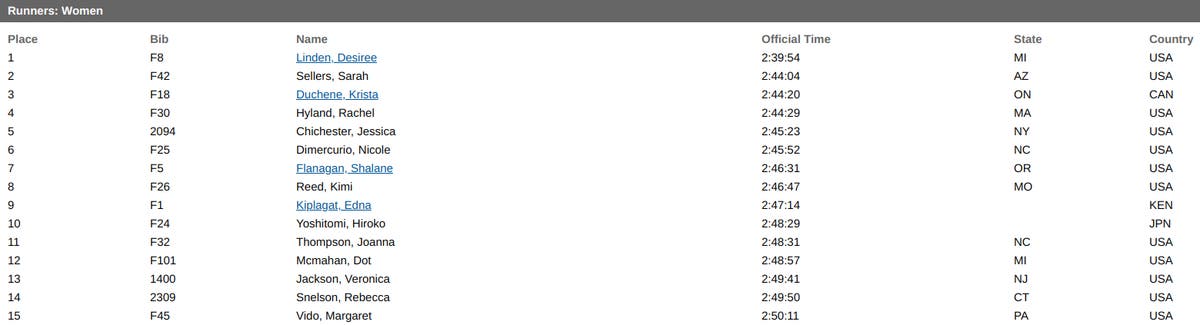
Read the full BuzzFeed Article: Boston Marathon Women Prize Money?
Related Patch Articles:
- 5 Top American Women To Watch: Boston Marathon 2018
- Boston Marathon 2018 Winners, Results: Desi Linden Raises US Flag
- Who Braved The Rain For 'Runner Christmas' Monday?
- Boston Marathon 2018: Less than ideal conditions send hundreds to medical tents
>>(For more information on this and other neighborhood stories, subscribe to your Free neighborhood Patch to receive daily newsletters and breaking news alerts.)<<
Photos by Jenna Fisher/Patch
Get more local news delivered straight to your inbox. Sign up for free Patch newsletters and alerts.