Health & Fitness
MA Coronavirus: 'Forceful Guidance' To Accompany State Reopening
New confirmed coronavirus cases have declined for five straight days, but not significantly enough to identify a trend.


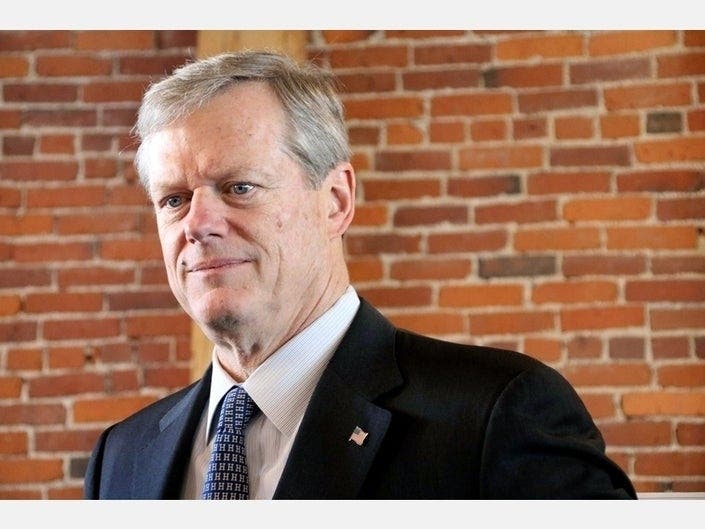
BOSTON — Gov. Charlie Baker said there are encouraging signs that the new coronavirus surge has plateaued in Massachusetts, but that it's too early to draw any conclusions about the trajectory of its spread.
When the state does begin reopening, it will be with "pretty forceful guidance," Baker said Wednesday in a news conference.
New confirmed coronavirus cases have declined for five straight days, but not significantly enough to identify a trend, Baker said. The Department of Public Health on Tuesday reported 1,556 new cases, a decrease of just 10 cases from the day before.
Find out what's happening in Bostonfor free with the latest updates from Patch.
"The last few days we've seen fewer or about the same number of positive cases day to day, but we think it's too soon to draw a conclusion from this data," Baker said. "A few days does not represent a trend. We've seen this data bounce around before."
Baker said it's too soon to talk about when Massachusetts can reopen its economy. Although the state's stay-at-home advisory expires May 4, Baker said conversations about opening businesses and easing social distancing guidelines won't happen until after the surge has passed.
Find out what's happening in Bostonfor free with the latest updates from Patch.
"We think the issue going forward is going to be less about the date and essential and non-essential and more about the rules of the road," Baker said. "The rules will be relatively comprehensive and uniform and defined more depending on space than industry."
He said businesses that require close contact, such as barber shops and salons, would have to go through a review process to determine if they can reopen safely.
White House officials recommended that states consider reopening parts of their economies after 14 straight days of declining numbers. But Baker, who described the state as "a national hot spot for COVID-19 infections," said hospitalization rates will be the most important factor. Hospitalization rates are still increasing slightly, according to Baker.
Baker said another important factor is the need for more COVID-19 testing, especially in some of the state’s most densely populated cities. This testing is expected to expand because of a partnership with Quest Diagnostics and the Massachusetts League of Community Health Centers.
Baker said Quest will send 2,200 tests per day to 12 community test centers in cities with the highest need. This includes centers in Boston, Brockton, Quincy, Worcester, Fall, River, New Bedford, Lowell and Provincetown.
Get more local news delivered straight to your inbox. Sign up for free Patch newsletters and alerts.