Crime & Safety
No Retrial For Man Accused of Killing Boston Police Detective: DA
The DA's office previously said it planned to retry Sean Ellis in connection with the 1993 slaying of a detective. Not any more.


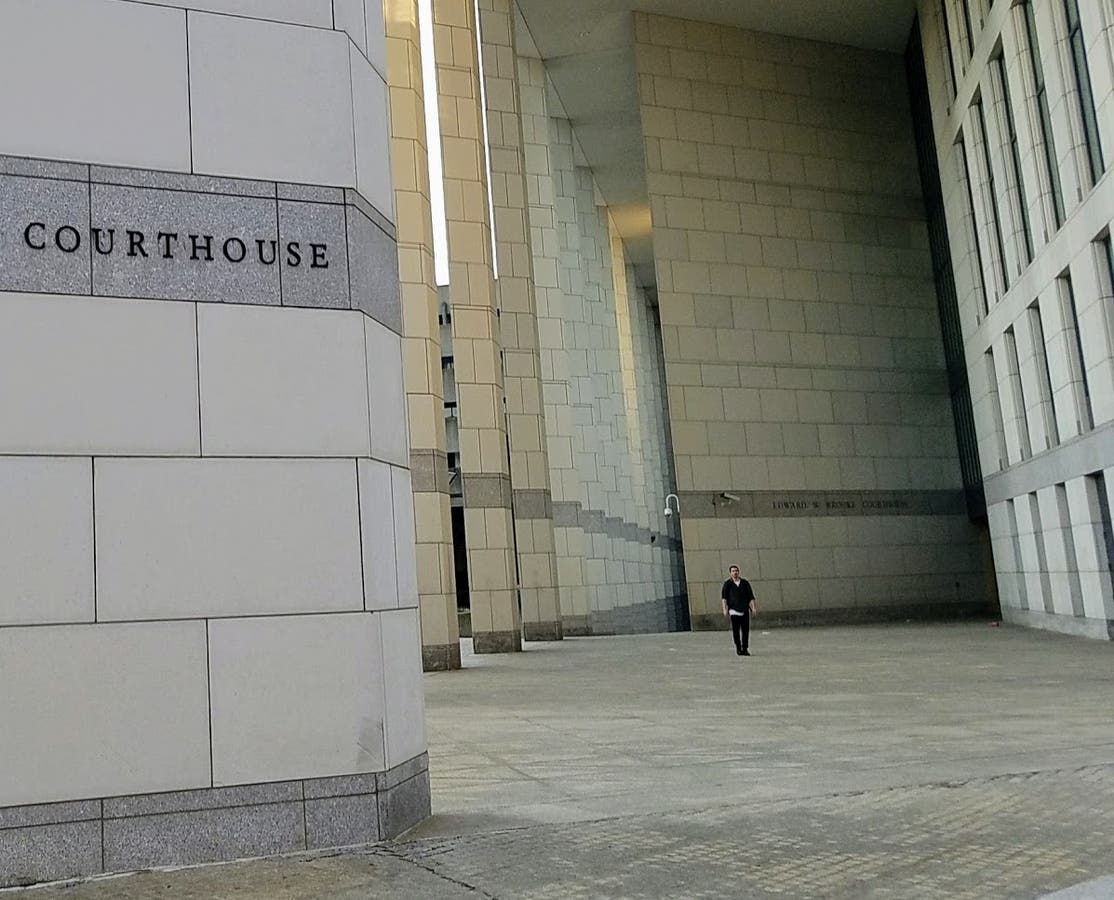
BOSTON, MA — Suffolk County District Attorney John Pappas announced that his office will not retry Sean Ellis in connection with the murder of Boston Police Det. John Mulligan in 1993 in part because of the potential involvement of corrupt officers.
Between having much of the case rest on eye witness accounts and the involvement of three corrupt officers who were potentially involved in this one, the DA said it couldn't prove that Ellis killed the Boston Police Detective a quarter century after the detective was killed by someone.
And for that reason, the office had an ethical responsibility to drop it, he said.
Find out what's happening in Bostonfor free with the latest updates from Patch.
“The Suffolk DA’s office has not shied away from exonerating innocent men. But let me be clear: that is not the case here. If at any point we had any reason to believe that Mr. Ellis was wrongfully charged or convicted, we would have acted on it immediately," he said.
Sean Ellis was convicted of first-degree murder in 1995 along with co-defendant Terry Patterson. In 2016 the Massachusetts Supreme Judicial Court ruled that Ellis was unfairly tried, although Patterson's convictions for possessing the murder weapon and the detective's gun stuck. The Suffolk DA's office then said it planned to try Ellis again.
Find out what's happening in Bostonfor free with the latest updates from Patch.
“The trial evidence and testimony in 1995 proved Mr. Ellis’ guilt beyond a reasonable doubt. Jurors at the time called the case against him overwhelming," said Pappas. "But the passage of more than two and a half decades has seriously compromised our ability to prove it again. For this reason, my office will file paperwork today ending the prosecution of Mr. Ellis for first-degree murder and armed robbery," said Pappas during a press conference.
But there was one more major sticking point to the DA's case against Ellis he said.
"The involvement of three corrupt police detectives to varying degrees in the investigation has further compromised our ability to put the best possible case before a jury," said Pappas referring to Detectives Kenneth Acerra, Walter Robinson, and John Brazil. Those three he said "disgraced themselves and tarnished their badges" in a wide variety of criminal conduct unrelated to this case – the extent of which was unknown to prosecutors or defense counsel in 1995.
“Perhaps more than any other factor, their shameful conduct presents a major challenge to our ability to put a successful case to a new jury," he said.
The Supreme Judicial Court concluded 18 years ago there was no reliable evidence that Acerra, Robinson, or Brazil procured or produced false evidence in this case, said Pappas.
"Based on the facts and circumstances known to us, we don’t believe Det. Mulligan was involved in their schemes. But a lawyer today would argue that he was involved, and that they had a motive to protect themselves and their criminal enterprise – even at the cost of fully investigating a fellow officer’s homicide. Unfortunately, no matter how irrelevant their corruption might be to John Mulligan’s murder, it is now inextricably intertwined with the investigation and critical witnesses in the case," said Pappas.
The most likely critical issue at a new trial would not be whether Ellis was involved in Mulligan’s homicide, but rather the level of his involvement with his convicted co-defendant Patterson, said Pappas, based on the previous trial.
Ellis’ defense at his trial was that Patterson committed the murder and robbery alone, while Ellis was buying diapers at 3 a.m. Ellis told his family that Patterson gave him the murder weapon and Mulligan’s gun after he left the store, and that they left the scene together.
Pappas said the prosecution would have to disprove that and prove he was the shooter or that he knowingly participated and shared the intent of the shooter.
“But that evidence could come only from eyewitnesses, including those who identified Mr. Ellis as the man they saw crouching by Det. Mulligan’s vehicle shortly before the murder. And those specific recollections have, understandably, faded over the decades," he said.
Before his case was overturned, Ellis served 22 years for the murder of Mulligan. His friend and co-defendant, Patterson, served 12.
"In a case of cold-blooded murder, the execution of a uniformed police officer, those sentences are, frankly, insufficient to most of us. But we as prosecutors must operate – always and unfailingly – through the evidence we can prove. And the state of the evidence today makes it very unlikely that we would prevail at a new trial."
Pappas said he met with Mulligan’s family last week to explain the decision what they could expect if the case went to trial.
"Over two decades later, the pain they feel over Detective’s Mulligan’s murder was still palpable. They were disappointed, as any family would be after enduring what they have," he said.
Boston Police Commissioner William Gross, Superintendent Paul Donovan, First Assistant DA Patrick Haggan, and Assistant District Attorney Edmond Zabin, chief of the Homicide Unit were all present at the Suffolk DA’s office, when Pappas gave the announcement.
Related:
- New Trial for Man Convicted of Shooting Boston Detective
- New Trial Ordered for Man Accused of Killing Boston Police Detective
Never miss another local news story: Get free local news alerts right to your inbox.
Sign up for the free newsletter and get more breaking Boston news and news alerts like this direct to your inbox. Did we mention it was free?
Got something to add?
Sign up to post to Patch and tell your neighbors what's going on in and around Boston.
Photo by Jenna Fisher/Patch Staff
Get more local news delivered straight to your inbox. Sign up for free Patch newsletters and alerts.