Neighbor News
About Time: Hourglass Boston Creates A New Aesthetic For The City
Hourglass brings an exuberant, outrageous and colorful aesthetic to Boston, a city that is known for being aesthetically conservative.


Nicole Fichera spent her career as an artist and entrepreneur in Boston. She thought the city’s art scene needed a business that wasn’t afraid to celebrate the works of women and non-binary artists. So, she created Hourglass, an organization that wants to provide a space for the aesthetic that she thinks the city desperately needs.
According to Fichera, Hourglass brings an exuberant, outrageous and colorful aesthetic to Boston, a city that is known for being aesthetically conservative.
“We are proud to be one of many organizations that support artists in Boston, each with their own particular sets of resources and ways of doing things," said Fichera. "Art means many things to many people, and we need more of it."
Find out what's happening in Bostonfor free with the latest updates from Patch.
Hourglass is different from any other organization or shop in Boston because Fichera fashions herself to be a strong advocate for local Boston women and non-binary artists, makers and writers by giving them a virtual and physical platform. It has tried many different techniques to spread its influence, from creating pop-up shops selling art to a publishing brand with a large community of followers on social media.
Hourglass has recently partnered with Runcible Studios to obtain office space in Medford. Fichera is excited about the new place, a one-story blue concrete building with great space, because it’s the first time she’s ever had a dedicated area to plan.
Find out what's happening in Bostonfor free with the latest updates from Patch.
“It's exciting on a kind of pretty practical level," she said. "We can logistically do a lot of things here. But kind of on a philosophical level and a strategic level for the organization, having a grounded permanent space is also speaking to a shift in how we're thinking about the organization."
Fichera's decision to partner with Runcible Studios comes from her relationship with the creator Marilyn Moedinger, who knew her through the architect world that Fichera comes from.
“Moving into this space for the both of us was kind of the right next step where we could each have our own headquarters, but we can also continue this like really symbiotic collaboration," Fichera said. “She is mentoring Hourglass and helping us build and hopefully, her clients will come in for design stuff, and they'll want to buy art by local artists that's here in our space.”
In Boston there has been a slow growth of creative and feminist organizations like The Caudron and The Wing. Hourglass is one of the first of those organizations that is trying many different marketing strategies in Boston. It's successfully produced pop-up shops, used social media to promote the artists’ work, and produced an Hourglass merchandise collection on its website. Fichera is creating space in the Medford building for artists to work, host events and possibly hold a conference.
Hourglass’s first pop-up shop in the Fenway area opened around 2018, and 2019 followed with two more successful pop-ups. Through the pop-up's, Hourglass has created a few connections with some local artists. One of those artists is Jordan Piantedosi, a Boston native from Braintree who went to school at MassArt with previous Hourglass co-owner Erin Robertson, winner of Season 15 of 'Project Runway.' Piantedosi does textile design and worked with Fichera and Robertson for an Hourglass collection in 2018.
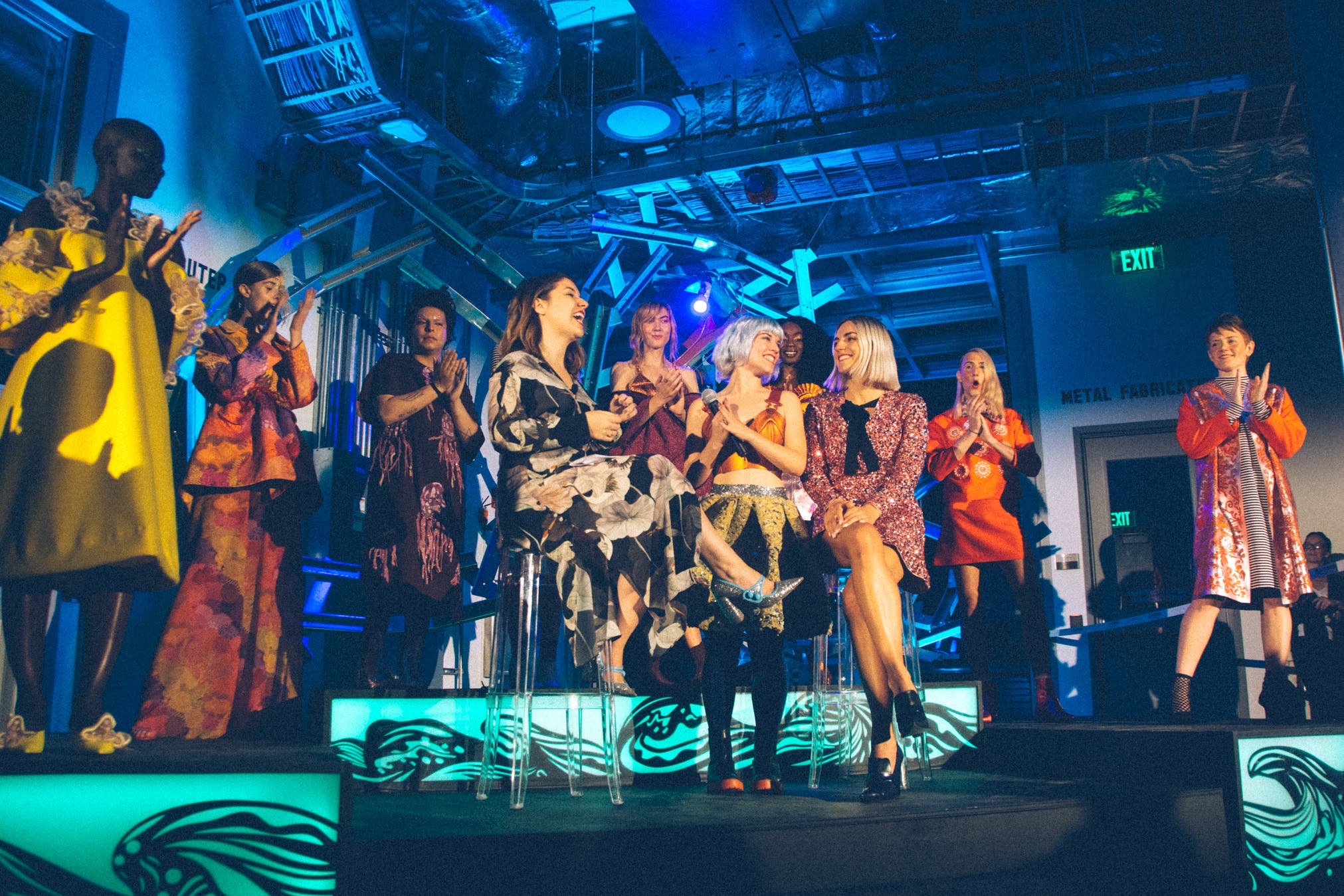
“One of the collections I did called Sexual Helix in 2018 was about sort of gender and sexual expression under the sea and that was to illustrate that having a really colorful gender identity or being trans, being pansexual. It's all so natural, so biological,” said Piantedosi. “Hourglass is emotionally centered around vulnerability, excitement and this really joyous femininity, and all about mental health and self-acceptance."
Hourglass has plans for new projects in 2020, beginning with the newest addition to the organization, Hourglass Press. Its Hourglass’s first independent publishing house intended to provide an outlet to the creative, marginalized women and non-binary voices that aren’t being heard.
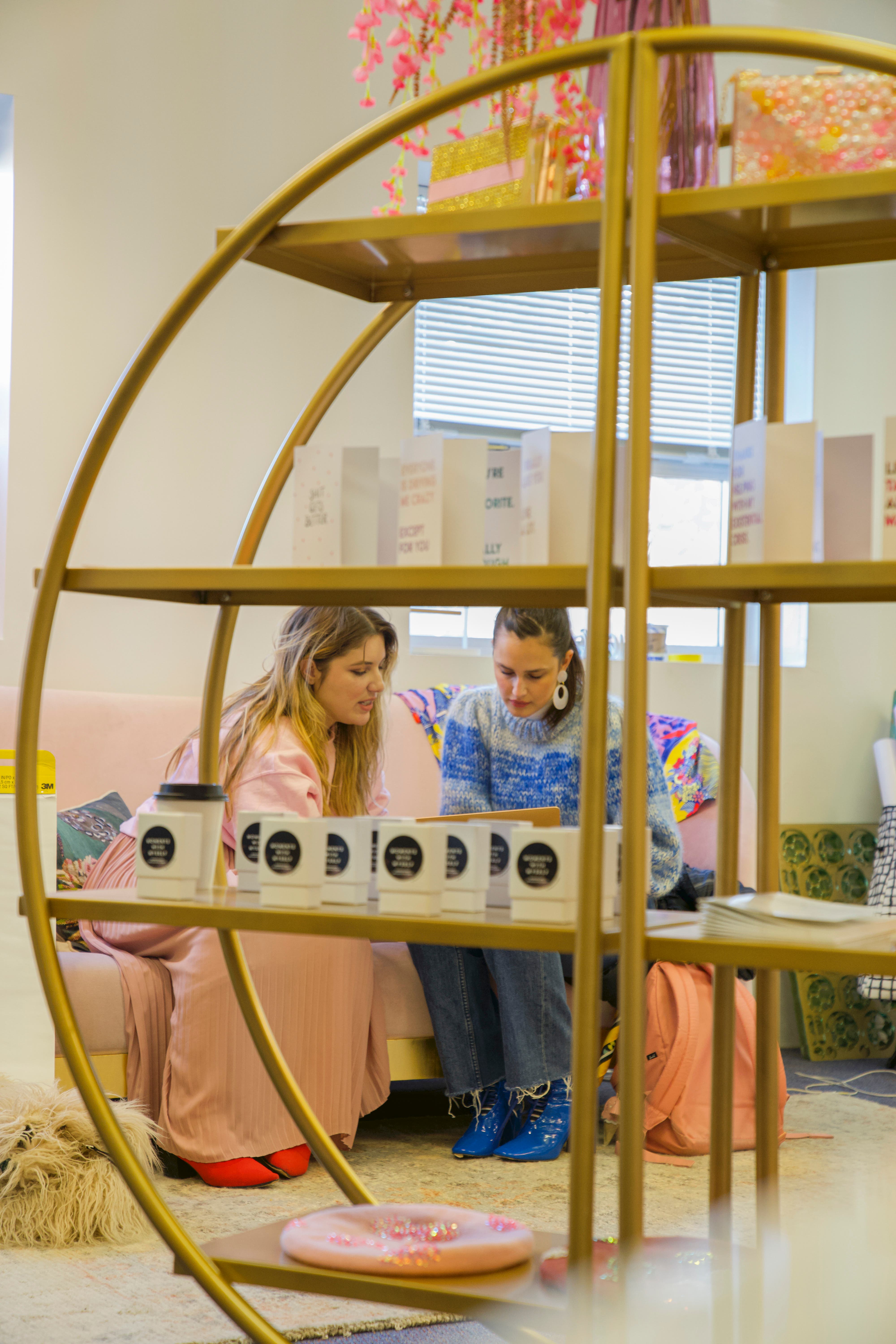
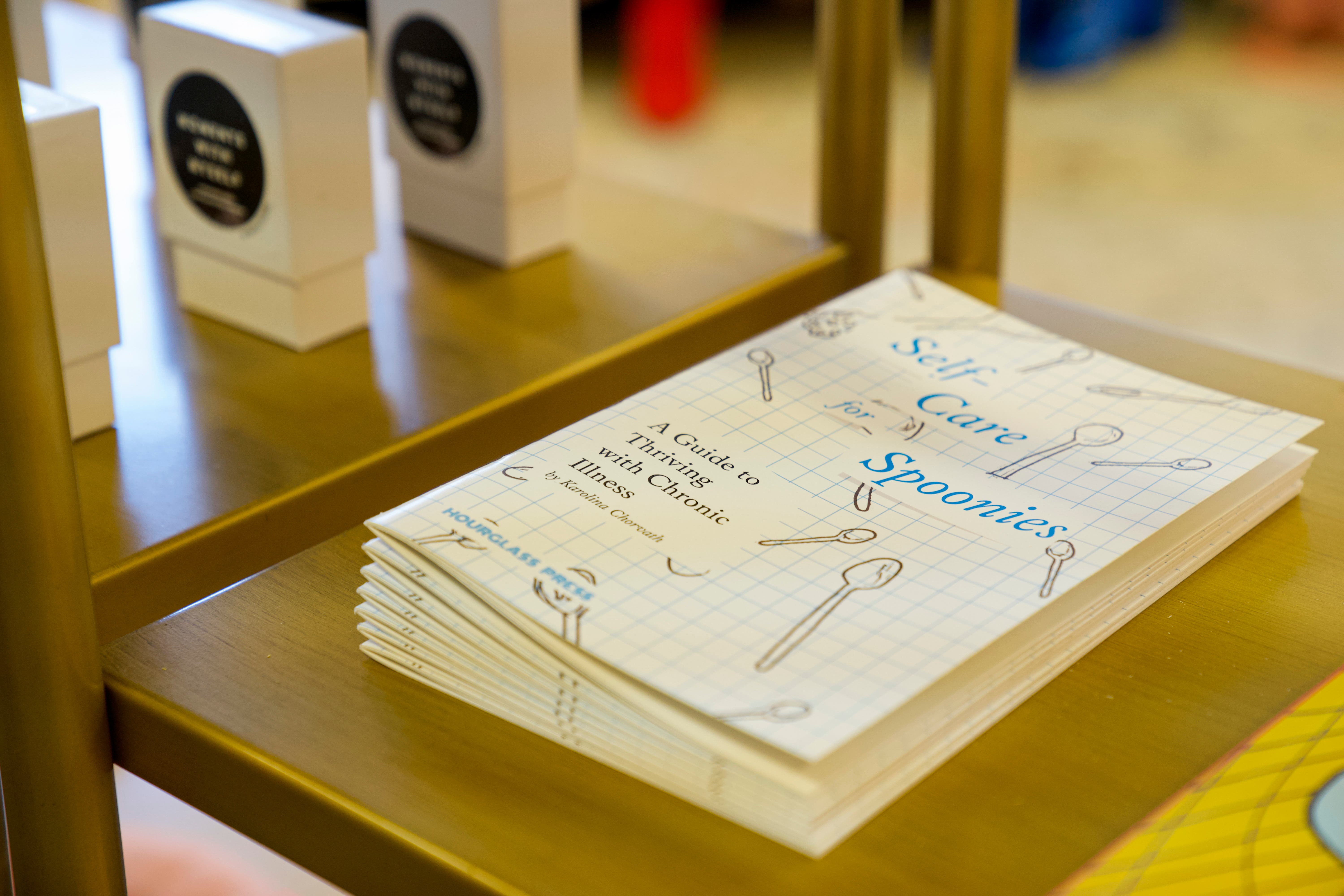
Karolina Chorvath, a freelance journalist, writer and influencer, helped Fichera start Hourglass Press. Their first publication, a mini-zine on how to deal with chronic illness and self-care called "Self-Care for Spoonies," was written by Chorvath.
“When it comes to Hourglass Press, we want people to be speaking their truth and speaking about these topics that they are inherently experts on because they are living that experience. And so that's kind of how we got it started,” said Chorvath. “We want it to be accessible and keep up with the tradition of zines, which is traditionally counterculture low budget, sort of ways to get marginalized voices out there, and validate not only those voices, but the fact that writing in itself is an art.”
Hourglass sold its first printed zine copies of “Self-Care for Spoonies” in November of 2019 at the Boston Book Fair, and it sold out faster than they expected. This November, Fichera and Chorvath hope to have an entire collection of zines from local writers to promote. Hourglass also has plans to produce a podcast about the creative process and what it takes to make art in today's world.
Fichera’s husband and business partner, Tyler Shannon, believes that one of Hourglass’s issues is scalability. Hourglass needs to exist in a physical location in Boston to build a community.
“We’ve been focusing on setting up systems, building a community, testing and vetting products through various channels: pop-ups, workshops, and online,” Shannon said. “The nature of this experimentation and prototyping of the business model has been feasible because of the smaller scale, especially with a small team. The next obstacle is to take all that hard work and scale up into a financially sustainable organization.”
Hourglass uses Instagram to promote itself on social media and it's planning to start up some writing workshops on their Instagram by posting a creative prompt once a week that can be used to inspire writers and artists working in all different types of media.
“Social media is a huge part of Hourglass, and our community lives mostly on Instagram. We share stories and visual inspiration, and we use our platform to give visibility to emerging artists,” said Fichera. “We’re super committed to civic action, encouraging people to get involved and build the beautiful, creative city they want to see. In the recent Boston City Council election, we put out a voting guide analyzing the various candidates and their commitment to issues in our community.”
Matisse DuPont, a non-binary visual and performance artist, worked with Hourglass as a model in a portrait series with photographer Allie Schmaling, also non-binary. What Dupont liked the best about Hourglass was the approach to creativity that it brings.
“It’s lovely that the way that Hourglass can be amorphous and take the shape of whatever it needs to at any given time. Nicole is also a really great advocate for my art, not just me as a model, makeup artist, or drag performer but also my visual art,” said DuPont. “She’s helped me with my writing, too, and has asked me to produce some content for Hourglass Press. I really appreciate the new space; I would love to go back to work there more.”
Something that makes Hourglass different in the Boston community, according to Fichera, is the unashamed celebration of color that is brought through its art, as well as the emotional imperative to connect with the community. Piantedosi said that Hourglass is all about a gleeful exploration of what she calls "the forbidden fruit " which is everything pink and sparkly in a city like Boston which she said doesn’t like to explore that.
“I resonate with a lot of the basic principles of Hourglass and the impetus behind it existing, which is mental health, the acceptance of very scary emotions that the dominant social paradigm goes against,” Piantedosi said. “When deciding to collaborate, Hourglass made sense to me because I have similar interest in deconstructing femininity – there was a mutually beneficial energy exchange, which is what you want when you collaborate.”