Politics & Government
Defunding MA Police: What It Might Look Like
Advocates of defunding Massachusetts police departments say some money put into law enforcement would be better used for social services.


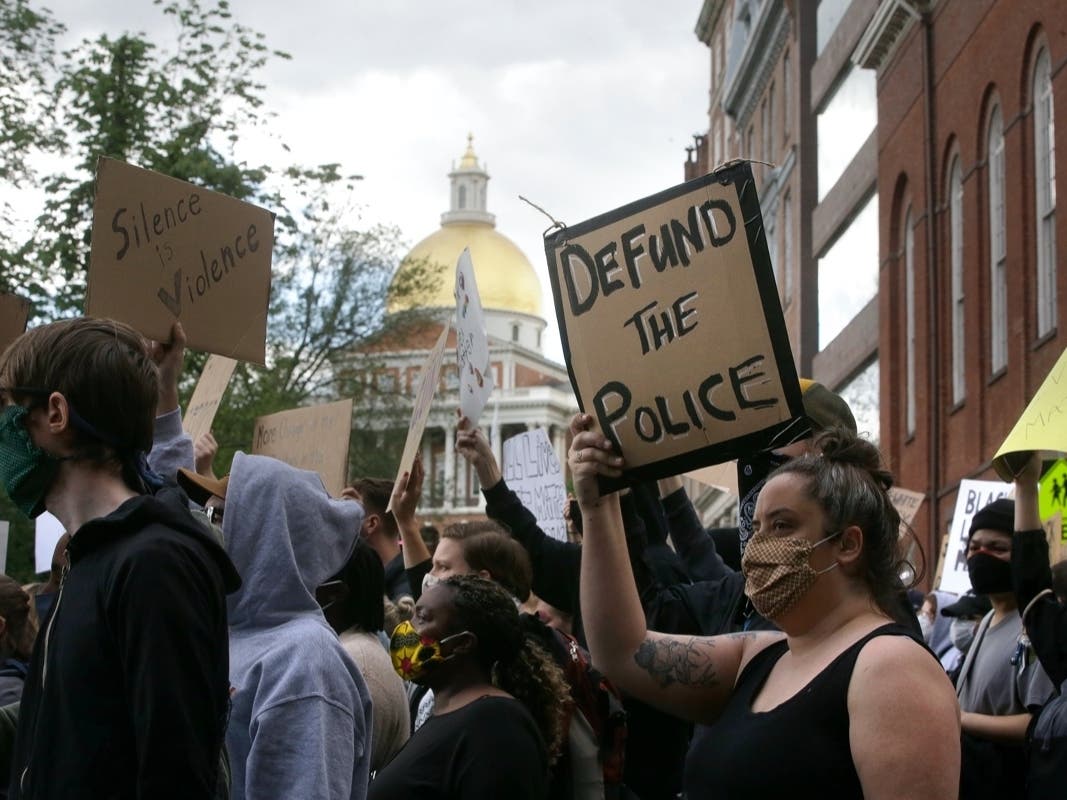
BOSTON — Defunding police was an idea many had never heard two weeks ago, but it is becoming commonplace as calls to reallocate public funds away from law enforcement have swept the country.
On Wednesday, protesters marched from Nubian Square to City Hall, demanding the Boston Police Department be defunded. Meanwhile, the Youth Justice and Power Union, a youth-led Boston group that cultivates leadership among low-income people of color, circulated a petition calling on Mayor Marty Walsh to cut the police budget by at least 10 percent and reinvest the money in communities of color.
Similar calls to defund the police have spread across the country as people protested the death of George Floyd, who died after a police officer in Minneapolis knelt on his neck.
Find out what's happening in Bostonfor free with the latest updates from Patch.
What does defunding the police mean?
The term “defunding” has confused some people, who believe it means to abolish the police. While a few proponents want to completely dismantle law enforcement, most of those who advocate defunding say it’s actually a push to reinvest money in community-based social services.
Find out what's happening in Bostonfor free with the latest updates from Patch.
Carol Rose, executive director of ACLU Massachusetts, put it this way:
“Divesting from police and investing in communities includes redirecting money to public health and welfare programs like harm reduction, substance use treatment, mental health services, and domestic violence support,” she said in an email to Patch.
For instance, Rose said, instead of assigning police officers to schools, especially those with large populations of students of color, the money should be used in programs promoting diversion, restorative justice and jobs for marginalized young people. The ACLU has said that having police in schools steers students into the criminal justice system for infractions that could normally be handled within schools.
James Machado, executive director of the Massachusetts Police Association and a sergeant on the Fall River Police Department, said that defunding isn’t the answer.
“We’re trying to gather data. We’re trying to be transparent. We’re trying to be accountable,” Machado said. “And those things all require resources.”
Machado estimates that about 80 percent of most police budgets in Massachusetts are salaries. He said that the problem needs to be addressed by working to “change the hearts and minds of everyone.”
“I don’t know of one police officer that doesn’t condemn what went on in Minneapolis,” Machado said. “But we know we need a thoughtful process and response to get to where we want to be.”
Machado said pulling funding can’t be a knee-jerk reaction, because legislation that is pushed through too quickly often leaves things out.
In Newton, some residents propose cutting the police budget by 10 percent and reinvesting the money in mental health, addiction and other social services. The City Council in Melrose recently denied the mayor’s request for $26,000 to upgrade police firearms and instead allocated the money to fund citywide training in "implicit bias."
In Hartford, Connecticut, $2 million was cut from a $46 million police budget and reallocated to beef up the investigative staff for the Civilian Police Review Board and expand training in de-escalation tactics and race issues.
The petitioners in Boston said money taken out of the police budget should be used for housing and jobs to people just released from prison and creating at least 5,000 summer jobs and 1,000 year-round jobs for people ages 14 to 22.
Defunding the police means reinvesting money in communities that need it, Alicia Garza, co-founder of Black Lives Matter, said on NBC’s Meet the Press on June 7.
“So much of policing right now is generated and directed towards quality-of-life issues, homelessness, drug addiction, domestic violence.” Garza said. “But what we do need is increased funding for housing, we need increased funding for education, we need increased funding for quality of life of communities who are over-policed and over-surveilled.”
What do Massachusetts leaders have to say?
Somerville Mayor Joe Curtatone said he is exploring the idea of defunding police, but wants to be certain it’s the best move for his city.
“I think these are important questions that we should think about," Curtatone said. "Should we reallocate more toward social services, or human services? We’re actually going through that exercise now, but it’s a much more complex question than just cutting pieces out of a budget.”
The Somerville police budget already includes funding for social services, such as anti-bias and mental health training, Curtatone said.
At present, 6.7 percent of Somerville’s yearly budget goes to law enforcement, the mayor said. He expects to present a new budget to the City Council by the end of June.
Boston spends about $414 million a year on policing, roughly 11 percent of the budget. Mayor Marty Walsh said he is considering what changes would be appropriate.
“I've spent the last week talking with my cabinet and employees at City Hall about how we make sure we are not just reacting to the events in Minneapolis, but how do we make sure that we are responding in a way that’s meaningful and brings about systemic change,” he said in a statement. “I'm continuing to have conversations with Councilors and my staff about what our budget will look like this year because now is a time to roll up our sleeves and get real work done, not separately as the Mayor and City Council, but together as one government.
“I am committed to making real change and making Boston a national leader in building a more just future.”
U.S. Sen. Ed Markey endorses the idea of shifting money away from policing and toward nursing and social work.
“This is a matter of values,” Markey said in a statement. “It's time we spend more on public health than punishment. We need to restructure our budgets away from simply policing Americans to building neighborhoods that are healthy, fair, and equitable.
“Let's fund healing, not harming. We can start with banning the use of tear gas by law enforcement, and to stop equipping police who are supposed to keep the peace with weapons of war.”
The Massachusetts Coalition of Police, the Massachusetts Police Association, the Massachusetts Municipal Police Coalition and the Boston Police Patrolmen’s Association did not respond to requests for an interview.
Get more local news delivered straight to your inbox. Sign up for free Patch newsletters and alerts.