Crime & Safety
Braintree Seminar Spreads Awareness of Drug Dangers and Overdose Response
The presentation was put together by Impact Quincy with assistance from the Cambridge Prevention Coalition.




Donna Keith's son left for Arizona last December, looking for a break from the turmoil of his life in Pembroke.
Following knee surgery in 2003, related to his years playing hockey, Paul J. DeVincent Jr. gained some weight, and eventually was prescribed OxyContin by a doctor. Like so many pain patients, DeVincent's legitimate use for the opioid – a synthetic cousin to heroin – transformed into an addiction. Just two months after arriving in Arizona, on Feb. 4, 2012, DeVincent used a highly potent batch of heroin and died of an overdose.
"I didn't know heroin was the alternative to that drug," Keith said. "How would I know?"
Find out what's happening in Braintreefor free with the latest updates from Patch.
That lack of knowledge about the drugs that have increasingly been killing people in cities and towns throughout the South Shore was the target of a day-long opioid training seminar in Braintree on Monday.
A few dozen people from across the region, including Needam police officers, school and town nurses, Braintree and county officials, community and non-profit advocates, and residents affected by addiction, attended the program at , hosted by Mayor Joseph Sullivan and the Braintree Community Partnership on Substance Abuse.
Find out what's happening in Braintreefor free with the latest updates from Patch.
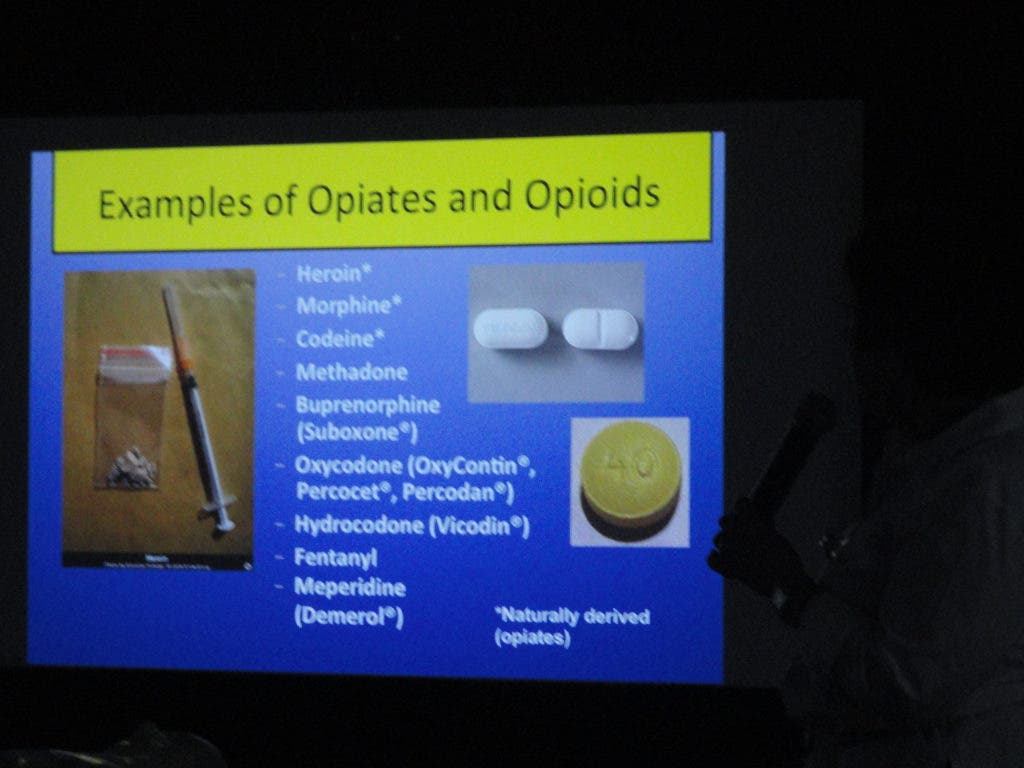
Monday's seminar, put together by Bay State Community Services' Impact Quincy and the Cambridge Prevention Coalition, presented information on the difference between various drugs – i.e. opioids like OxyContin vs. naturally-based opiates like heroin – and also the signs of overdose, how to react when someone has taken too much of a drug or too many different substances, and the benefits of Narcan, an overdose reversal drug.
"We have an epidemic," said Arlene Goldstein, an Impact Quincy Program Coordinator. "It isn't just a homeless person who is addicted. It's every socio-economic level. It's every age."
Four months after her son died of an overdose, Keith is planning to bring the kind of education presented in Braintree to a center in Pembroke that will offer addicts and their friends and family a place to learn about prescription drugs and other types of addiction and discover helpful resources.
"I need a ground zero in Pembroke," Keith said. "These kids need some help."
Over the past few years, knowledge about opioid and opiate use in Massachusetts has grown along with the statistics that show an alarming uptick in overdoses. When the issue initially presented itself as a serious problem five years ago, the state Department of Public Health and the federal government focused on the top 10 affected cities in the state, said Alejandro Rivera, the director of Impact Quincy.
But since then, public health officials have realized that collaborating as regions and communities works better to combat the problem, Rivera said. Braintree has ramped up its own efforts recently. Officials held , and are planning another for this fall. The town is also partnering with Weymouth, Quincy and Randolph to spread awareness, Rivera said.
"We are all in this together," Mayor Sullivan said. "There is no sense of ownership – that's your job, that's my job."
Get more local news delivered straight to your inbox. Sign up for free Patch newsletters and alerts.