Politics & Government
Women Veterans from Braintree and Beyond Honored in Local Exhibit
The Gilbert Bean Museum and Research Center presented "Honoring and Remembering All Women Veterans of the Past and Present That Served in the U.S. Armed Forces During Peace and War."
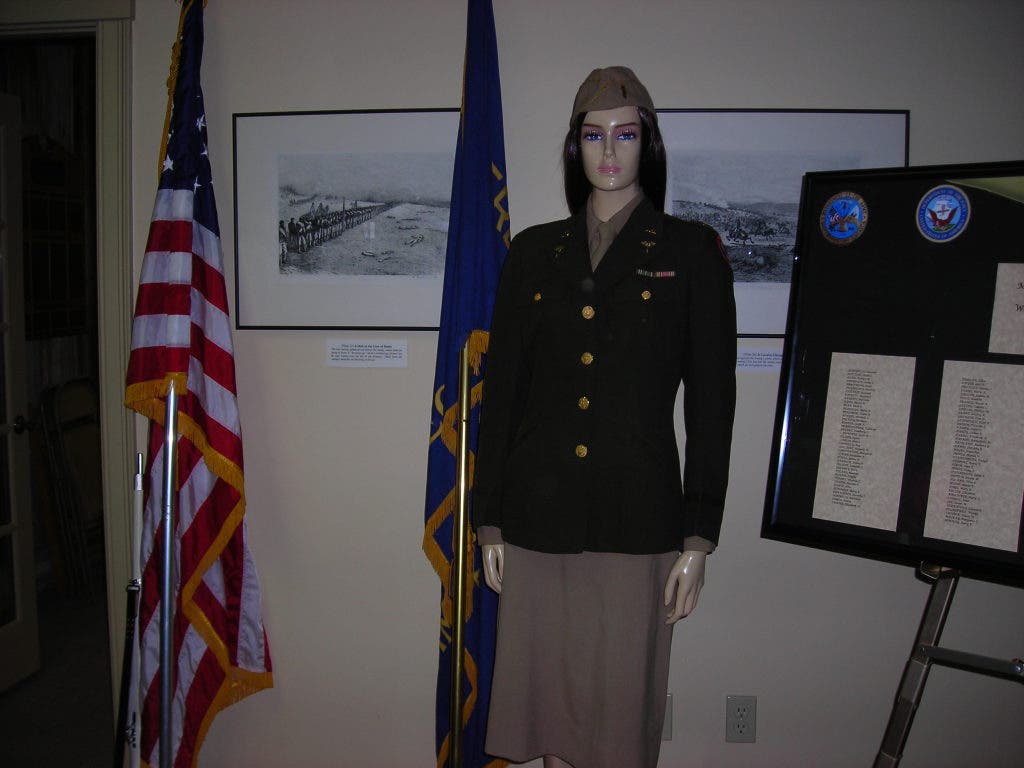


The distinguished itself Saturday with a special program and exhibit honoring women veterans of the armed forces throughout our nation’s history, with particular emphasis on the service of women from Braintree.
Special guest Catherine “Kay” Connolly of Braintree, a former U.S. Air Force nurse, read the names of 140 Braintree women veterans now part of a memorial roster on display until May 7 at the Gilbert Bean Museum and Research Center on Tenney Road across from .
Connolly, a graduate of the former Boston City Hospital School of Nursing, saw service in Southeast Asia, the Philippines and as a flight nurse during the Vietnam War. She emphasized the importance of also remembering civilian American women who died during that conflict as well as acknowledging the thousands of nurses who cared for wounded military.
Toward that end, Connolly distributed copies of “Celebration of Patriotism and Courage,” a 96-page program book from the dedication of the Vietnam Women’s Memorial in 1993, which tells the story of how the memorial came to be and the women it honors.
Her reading was part of a commemorative ceremony which featured opening remarks by Braintree Historical Society President Paul Carr, who introduced military archivist James Fahey, Director of the Research Center at the Gilbert Bean Museum.
Fahey, a former U.S. Coast Guard skipper, was inspired to organize this program after noting a lack of recognition for females in military service, even in light of Women’s History Month observations begun nationally in 1987. “With the emergence of American women in the military, serving right next to men, they are subject to the same casualties and suffering,” he said.
When Fahey put together all the photos, documents and other resources he had accumulated, both personally in his military career and through his work for the historical society, he realized he had an impressive collection. Add to this two vintage women’s military uniforms from World War II on loan from a private collector, and he knew he had a valuable presentation.
Braintree Historical Society Board Member and longtime town historian Nancy Nicosia produced many of the names on the memorial roster by researching old census records. “I was surprised at how many women from Braintree had served in the U.S. military over time,” she said. Both Nicosia and Fahey noted that names were still being added to this list as of last week.
Following the reading by Capt. Connolly, guest speaker June Newman, a Braintree native and U.S. Air Force veteran, provided a narrative of historical highlights from her research about women in the United States military. Even considering her own experience, she said, “I was amazed at some of the accounts I read.”
She reported that there are two million women veterans in the U.S. overall, with historical accounts dating back to the “camp followers” of the American Revolutionary War, the women who disguised themselves as men to serve in the Civil War, and the beginning of the WASPs (Women Airforce Service Pilots) during World War II.
Newman, a former interim veterans’ services officer in Braintree, also paid tribute to the women during World War II who made their contribution by working in shipyards and other military-related industries while their male family members were on active duty, as well as the important role played by female USO performers and field canteen workers during that time.
Newman’s comments also focused on Vietnam-era nurses, photographers, interpreters and other skilled women who served our country during that period, right up to the more recent Persian Gulf engagements, which she said saw the largest number to date of female military deployed.
Speaking of the women in today’s military who are seeing action in places such as Iraq and Afghanistan, Newman concluded, “securing our freedom is everyone’s responsibility. The women who have served in our military, whether it’s your sister, wife, mother, daughter – they all deserve our respect and appreciation.”
One member of last Saturday’s audience was Ruth McDonald of Braintree, who joined the U.S. Army Nurse Corps two weeks before the attack on Pearl Harbor in 1941. “I served through January of 1946, at field hospitals in France, Germany, Luxembourg and Austria,” she said, adding, “I’m proud to be a Braintree resident, and to be remembered after such a long time.”
McDonald was one of approximately 50 people in attendance Saturday who toured the related exhibit downstairs in the Gilbert Bean Research Center military room. Among the items on display are photographs and documents telling the story of the World War II USO Service and Recreation Center at 17 Quincy Ave. in East Braintree, which includes a log book with all local military personnel who visited there from June 20, 1943 through October 4, 1945.
There is also a photograph of Dr. Mary E. Walker, significant because she was the only woman to receive the Medal of Honor for her service during the Civil War. A copy of the citation letter awarded to her on November 11, 1865 is also displayed.
Nearby are photographs of nurses from Massachusetts General Hospital and the former Boston City Hospital, returning from overseas service during World War I, as well as World War I women’s militia cadets from Lowell.
In addition is a panel about the so-called “Hello Girls.” The “Switchboard Soldiers,” as they were also known, were members of the U.S. Army Signal Corps of female telephone operators recruited by U.S. Army General John J. Pershing in November of 1917.
The entire exhibit will be open through this week during regular hours at the Gilbert Bean Museum: 10 a.m. to 4 p.m., Thursday through Saturday. Museum admission is $5 for adults, $3 for children under age 12, which includes the exhibit. Braintree Historical Society members are admitted free.