Community Corner
Think Inside the Box: A Peck of Bitter Peppers
Green peppers may not be the ideal foil for bean dip, but they can shine in stovetop recipes.
Last winter, whenever I saw green peppers in our Enterprise farmshare box, I knew there were a few more coming to me the next morning, when my friend Adina would hand me a small bag at preschool drop-off. Enterprise included the peppers regularly in our winter CSAs (community-supported agriculture), in part because these underripe peppers travel well with minimal cushioning and can last about two weeks after harvest. They are also packed with Vitamin C, a welcome dietary supplement during cold and flu season. Hardiness and nutrition is not everything, though, and Adina and her husband are in the not-very-exclusive club of people who eschew green peppers. She was always more than happy to offload her share of peppers on someone who would actually eat them.
Though I try to enjoy every type of produce that comes my way, I can understand why green peppers are much maligned. This bitter nightshade is essentially a less flavorful version of its red or yellow cousins. But while green peppers are merely unwelcome filler on a crudite platter, they are delicious in many cooked dishes and are prominent in Cajun and Mexican cuisine.
So whenever we have a large supply of green peppers, whether from a bountiful late-summer harvest or our winter farmshare, I make sure to slice and freeze a pepper or two. Though their skin will not black and blister the same way as that of fresh peppers, it’s so convenient to have handfuls of pepper ready to toss into a pot of chili, fry for burritos or round out the Holy Trinity for gumbo.
Find out what's happening in Brooklinefor free with the latest updates from Patch.
One of my favorite cookbooks, Raghavan Iyer’s "660 Curries," introduced me to the use of bell peppers in . Their subtle bitterness marries beautifully with the pungent, bitter and sour notes in many characteristic spices of this cuisine: turmeric and cumin, mustard and ginger. Green peppers play a wonderful supporting role in some lentil curries, occasionally replacing onions and garlic entirely (as in the recipe on page 401). But my usual goal is not to hide a food, to sneak bell peppers into the mouth of some unsuspecting capsicum-hater; rather, I aim to feature the vegetable and attract loyal members to the green pepper fan club.
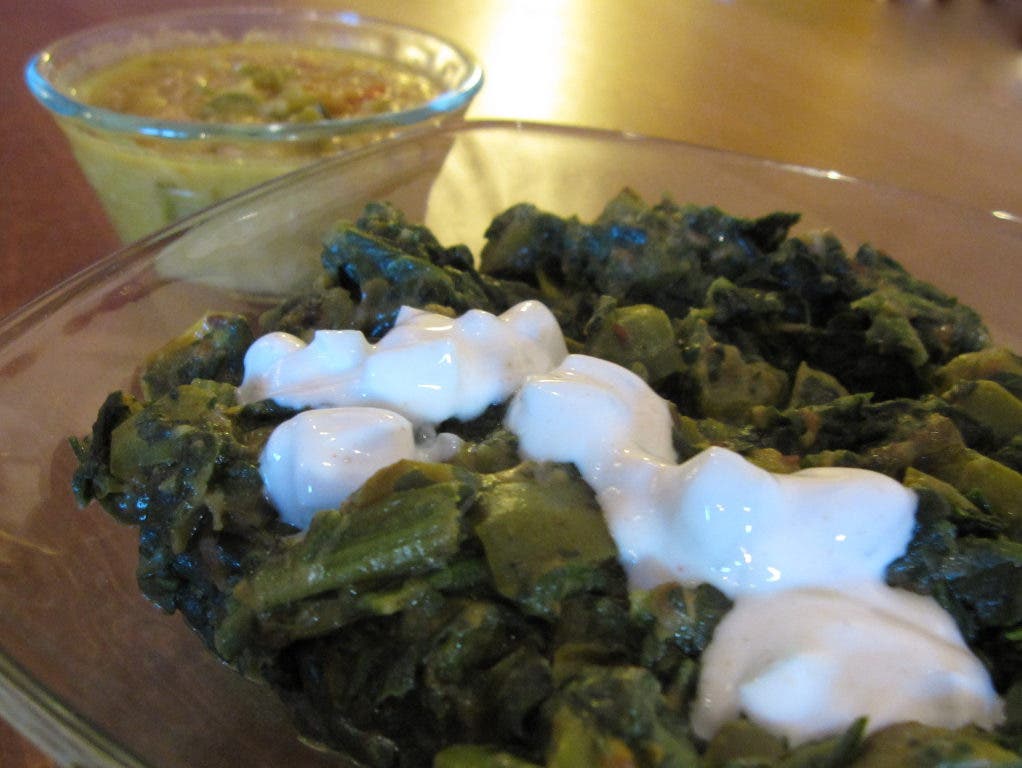
That’s why one page a little further along in the cookbook is spattered with oil and yellowish streaks of turmeric; the “Chile-Spiked Bell Peppers and Spinach” is the dish that pepper-haters take second and third helpings of—if they can only get over their initial hesitation. The first time I made this very green curry, my entire family fell in love with it. Although it comes from an Indian cookbook, I have found that this dish complements a wide range of foods, from quesadillas to miso-glazed salmon to roasted chicken.
Find out what's happening in Brooklinefor free with the latest updates from Patch.
While everyone likes the taste, I adore the recipe’s simplicity: the short ingredient list includes freezer staples and only a couple of spices. The original recipe calls for fresh spinach, but frozen chopped spinach is much more convenient and works almost as well, as long as you make sure to squeeze out the excess liquid after it thaws. When working with frozen peppers, I have better results if I also let the diced peppers defrost and drain thoroughly before sauteing. If you are pressed for time, the results are passable with still-frozen vegetables, though you may have to turn up the heat a bit and cut back on the water you add to the pan.
A mix of red, yellow and orange peppers would make for a slightly sweeter dish with a far more colorful presentation—but why waste those peppers in a cooked dish? Slice up the sweeter bell peppers for a , and throw their more plentiful underripe counterparts into the frying pan. Granted, the high-heat cooking diminishes some of the peppers’ nutritional benefits, but it’s still better than not eating them at all.
Adina and her family have moved away, which means I can’t expect a double supply of peppers again this year. It also means that I won’t have the chance to convince her of peppers’ worthiness with this dish...but I do hope to convince you.
Curried Green Peppers and Spinach
Adapted from "660 Curries," Raghavan Iyer
Serves 4
Time: 25-30 minutes
- 2 Tbsp canola oil
- 1 1/2 tsp whole cumin seeds
- 2 large green bell peppers (about 1 pound)
- 1 fresh serrano or cayenne pepper
- 2 cloves garlic
- 2 Tbsp chickpea flour (also sold as “gram flour”)
- 1/4 tsp ground turmeric
- 1 tsp sea salt
- 8 ounces fresh spinach leaves, rinsed and chopped, or 8 ounces frozen chopped spinach, thawed
-
Halve bell peppers and remove stems, ribs and seeds. Chop into pieces about 1 inch square. Halve serrano pepper and remove stem; for milder flavor, remove ribs and seeds as well. Mince serrano and garlic.
-
Heat oil in a large saute pan or skillet over medium-high heat. Add cumin seeds to hot oil and let sizzle for about 10 seconds. Add bell peppers, serrano pepper and garlic and saute for 7-10 minutes, stirring occasionally, until peppers are blistered and blackened in spots.
-
Sprinkle chickpea flour and turmeric over peppers in pan. Cook, stirring, for about 1 minute until flour is lightly browned.
-
Pour in 3/4 cup cold water and scrape browned vegetables and spices from the bottom of the pan. Stir in salt and another 3/4 cup water, bring to a boil, cover and reduce heat to medium-low. Simmer peppers for 7-8 minutes or until tender but not falling apart.
-
If using fresh spinach, add a few handfuls to the pan, cover and let cook for a couple of minutes, and then stir partially wilted spinach into peppers. Repeat until all spinach has been incorporated. If using frozen spinach, squeeze out any excess liquid, then stir thawed leaves into peppers all at once.
Raise heat to medium and simmer, uncovered, for 5-8 minutes or until somewhat thickened, stirring once or twice. Serve hot with rice and a drizzle of raita or plain yogurt.