Health & Fitness
Easter Egg Dying for Vegans!
Dying Easter eggs doesn't have to be something vegans can't do. Try this technique of using wooden eggs instead of the real eggs!
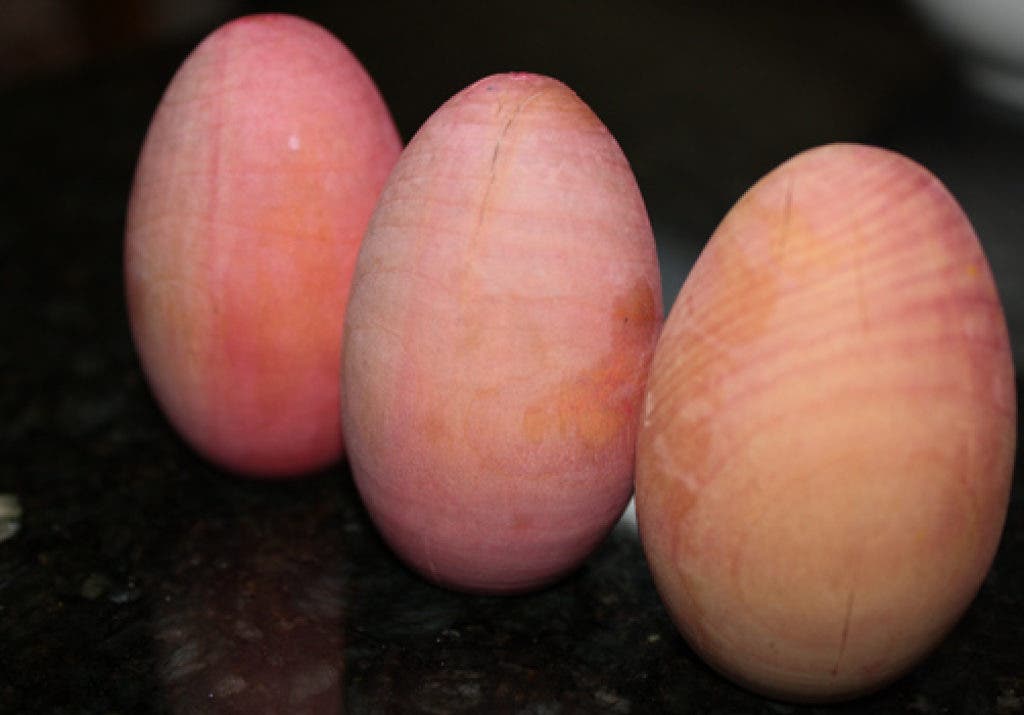


My neighbor has an awesome little Easter party every year for the kids. They have a blast dying eggs, decorating cookies and hunting for Easter eggs. This year she can’t have it and I was left wondering what I would do about the whole “egg” dying process. Especially since my daughter asks every day, every hour, when we can dye Easter eggs. So I went looking around AC Moore trying to come up with something for her to do, when I spotted wooden eggs. What a brilliant find! I had no idea these existed.
I wasn’t sure how these would take the dye, but I figured it was worth a try, at $1.19 each they are cheap enough, plus I think they are down to about $.50 right now! I got both white and wood finished. The white is really only useful for painting on, because it doesn’t take the dye very well, and they don’t sink into the water.
In general, the eggs aren’t as vibrant as real eggs but they are a nice, subtle shade. I experimented with some all natural dye recipes for the red and yellow eggs. (I can’t wait to use these techniques for baking, so much better than food coloring!) I also used some of the regular dye that you buy for Easter egg dying and some Rit dye. The Rit dye worked the best, but in the future I’m only doing the all natural techniques. They are more fun to make and no chemicals to worry about!
Find out what's happening in Burlingtonfor free with the latest updates from Patch.
For red eggs:
Chop of one medium beet.
Put it in a large bowl, add 4 cups of boiling water to the bowl plus 2 tablespoons of vinegar.
Find out what's happening in Burlingtonfor free with the latest updates from Patch.
Once the water cools down, remove the beets and dunk your eggs.
For yellow eggs:
Add 1 cup of boiling water to 2 tablespoons of tumeric, plus 2 teaspoons of vinegar, use right away.