Health & Fitness
What Massachusetts Food Pantries Are Doing About Coronavirus
Food pantries and soup kitchens around the state are ending dining in and individual shopping, switching to pickup and delivery.


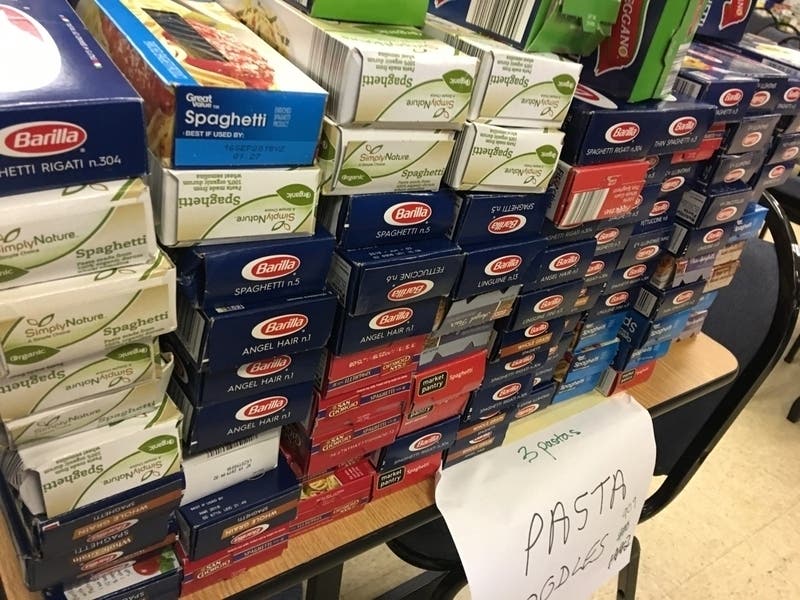
BURLINGTON, MA — Food pantries and soup kitchens are facing a multi-pronged challenge from the new coronavirus. The new virus is forcing them to restructure to reduce its spread, abandoning eat-in options and personalized shopping for grab-and-go and delivery. They are losing volunteers, often seniors, who are staying home to protect themselves.
At the same time, need is ramping up, as students in low-income families lose their free and reduced-price lunches at shutdown schools. The need is likely to keep rising, with workers losing pay as businesses cut back hours or even begin to shut down, according to Jane McIninch of the People Helping People food pantry in Burlington.
"We fully anticipate we will see an increase in clients as a lot of people who rely on hourly wages are seeing their wages diminish," McIninch said. "We are here to hopefully help fill that gap."
Find out what's happening in Burlingtonfor free with the latest updates from Patch.
Some school districts have stepped up to provide meals for students during the shutdown, and many town elderly services departments are keeping their Meals on Wheels programs in place while their senior centers are closed. But that's not the case everywhere. People Helping People and the Greater Boston Food Bank have both already launched programs to provide meals to kids on free and reduced-price lunch during the school shutdown.
Find out what's happening in Burlingtonfor free with the latest updates from Patch.
What are pantries and soup kitchens doing to slow the spread?
The Bread and Roses soup kitchen in Lawrence has closed its dining rooms to guests and community volunteers. Instead, it is providing bagged lunches during its evening dinner service, 5 to 7 p.m. Monday through Thursday and Saturday.
At People Helping People, clients can no longer enter the pantry and pick out what they prefer. Instead, they are asked to fill out a list and wait in their cars while volunteers pack their groceries. According to McIninch, the changes have been embraced by clients, several of whom have suggested the pantry prepare "generic" food bags to save time. The pantry's hours have not changed. The school lunch program distribution is Tuesdays, 2 to 7 p.m.
All four of Newton's food pantries have gone to a delivery-only model, as has the Walpole Community Food Pantry.
The Greater Boston Food Bank is still allowing visitors, but it has imposed strict cleaning protocols and asked volunteers and employees with potential contact to the new virus to stay home.
What can you do to help provide food?
McIninch said the best thing people can do is contact their local food pantry and find out what it needs. Otherwise, you can make financial donations, so the pantry can buy what is most needed. Financial donations have an added benefit at the moment, because they do not require anyone to come to the pantry in person. Bread and Roses has asked that donors avoid the pantry unless they're dropping off food.
You can find food pantries in your area here.
People Helping People has been proactive, launching a fundraiser to respond to increased demand.
Pantries that switch to a delivery model will have more need of volunteers, McIninch added.
"We'll probably be looking for additional volunteers," she said. "There's potential of them tightening restrictions even more, and we'll go to a point of deliveries, which will be far more volunteer-dependent."
People who are now working from home may find they have more time on their hands that they could use by volunteering, McIninch pointed out.
Larger nonprofits in the area have also launched funds to respond to the outbreak. The Boston Foundation created a fund for nonprofits that help the elderly and other vulnerable populations, while the United Way of Massachusetts Bay and Merrimack Valley plans to work with local nonprofits to give cash assistance to families in need.
"One-time grants of up to $2,000 will be made to help families impacted by the COVID-19 crisis meet their basic food, child care or housing needs," according to the United Way announcement.
Small nonprofits hit by the outbreak can also submit information to the state as it prepares to activate the federal economic injury disaster loan program.
Don't miss updates about precautions in your area as they are announced. Sign up for Patch news alerts and newsletters.
Coronaviruses are a family of viruses that include the common cold as well as much more serious diseases. The strain that emerged in China in late 2019, now called the COVID-19 virus, is related to others that have caused serious outbreaks in recent years, including severe acute respiratory syndrome (SARS) and Middle East respiratory syndrome (MERS). The first confirmed case of COVID-19 in the U.S. was on Jan. 21.
The disease, which apparently originated in animals, is now being transmitted from person to person, although the mechanism is not yet fully understood. Its symptoms include fever, coughing and shortness of breath, and many patients develop pneumonia. There is as yet no vaccine against COVID-19 and no antiviral treatment.
According to the CDC, the best way to prevent the disease is to avoid close contact with people who are sick, avoid touching your eyes, nose and mouth with unwashed hands, wash your hands often with soap and water for at least 20 seconds, and use a hand sanitizer that contains at least 60 percent alcohol if soap and water are not available.
To avoid spreading any respiratory illness, the CDC recommends staying at home if you are sick, covering your cough or sneeze with a tissue and throwing the tissue in the trash, and cleaning and disinfecting frequently touched objects and surfaces.
Get more local news delivered straight to your inbox. Sign up for free Patch newsletters and alerts.