Health & Fitness
London Calling!
If you've ever wondered what it would be like to serve on an Olympic medical team, check out this interview with Spaulding's Erik Brand!
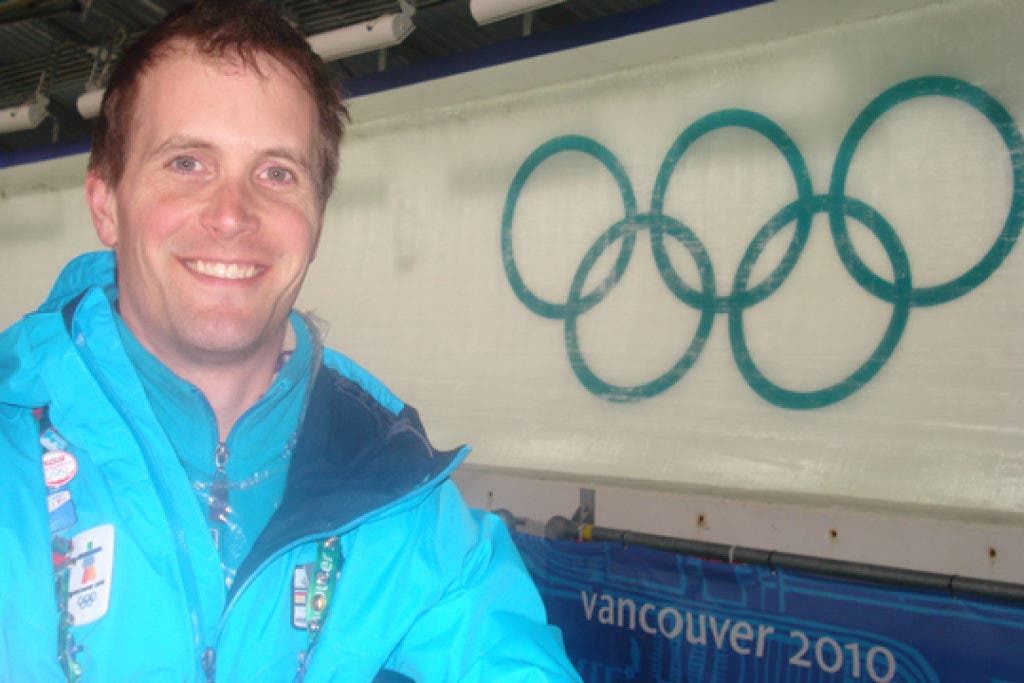
My colleague Erik Brand, M.D., M.Sc. has just completed a stint as a Sports Medicine Physician at the 2012 London Olympics. Nice work if you can get it, right? Would you believe that Erik was selected from a pool of 250,000 volunteer applicants?! He has a unique background in sports medicine, so maybe that’s what catapulted his application to Olympic glory. You see, before Erik earned his medical degree, he was an elite athlete himself, rowing for the University of Washington and the University of Oxford.
From the moment I heard about Erik’s amazing temp job, visions of “cool Britannia” started dancing in my head: Double decker buses! Shopping on Portobello Road! Perfect plates of fish and chips! William and Kate! William and Harry! Elton Johnnnn!!!!
As much as I would have loved to visit London for a live meeting with Erik, in the end I had to settle for interviewing him by email and phone. Enough about me and my acute case of Anglophilia. Here’s what this fascinating rower-turned-doctor had to say about his experiences in London last week…
Find out what's happening in Charlestownfor free with the latest updates from Patch.
This year you are volunteering your medical skills for both the Olympics and the Paralympics. What has been your most exciting professional experience thus far?
Serving in the Athletes’ Village Polyclinic was my most exciting professional experience thus far. The Polyclinic is staffed with a multidisciplinary team of physicians, physical therapists, massage therapists and other specialists from around the world. Many are international leaders in their respective subspecialties.
Find out what's happening in Charlestownfor free with the latest updates from Patch.
If you asked for my most exciting personal experience at the Olympics, it was holding the gold medal of a fellow rower from Oxford while waiting outside the Opening Ceremony. I hadn’t seen the guy in thirteen years!
For the 2012 Paralympics, which begin on August 29, I will cover rowing at Eton-Dorney. I am really looking forward to covering the Aquatics Centre, where seven-time gold medalist swimmer Jessica Long will compete. A few years ago I actually ‘raced’ Jessica in a pool, and she won without trying, obviously!
What was a typical day like when you were working in the Athletes’ Village?
There was no such thing as a ‘typical day’ in the Athletes’ Village Polyclinic – that’s what made it so interesting! The needs of the athletes and national teams were very dynamic, and my daily assignment varied accordingly. Most of the time, I was assigned to cover training venues throughout London, including taekwondo, gymnastics, wrestling, judo and badminton. On the days when I stayed in the Athletes’ Village Polyclinic, I was responsible for attending to the medical needs of any athlete who walked in the door.
How does your background as an elite rower influence your approach to treating patients?
My background as a rower helps me connect with athletes because I speak their language. Rowing is a team sport and an individual sport; an aerobic sport and an anaerobic one as well. The diversity of training necessary for rowing helps me relate to athletes of all stripes. Rowing also trained me to focus individual effort toward group objectives. This skill is very useful on the multidisciplinary sports medicine team. And of course rowing taught me to listen to my body. I encourage all my patients to do the same!
What advice would you give to an athletic person who has just sustained an injury from which there will be no complete recovery?
I would encourage the athlete to maintain hope and to focus on the elements of recovery that are under their control. These elements might include attention to therapy recommendations, health maintenance, psychological adjustments, and even simple things like diet and sleep.
Goal setting is another very important element of recovery. Sport is not about being the best, so much as being the best we can be. In this way, sport can be viewed as a journey of exploration, in which the athlete seeks to actualize their greatest potential. An injury may signal the need to reset appropriate goals. However, even if the athlete’s potential for athletic performance is altered significantly, the mission of sport can remain very similar: to become the best we can be.
In situations where a complete recovery was deemed “impossible” given our current body of medical knowledge, it is important to emphasize that this body of knowledge is continuously expanding. As a physician, I would not want to predict limits on the amount of functional recovery that the athlete might achieve. Each case is unique, and there are exceptions to every rule. Our patients surprise us all the time! There is always room for hope.
Are you and your colleagues at Spaulding’s Exercise for Persons with Disability (ExPD) program helping to prepare athletes for the 2012 Paralympic Games, which begin on August 29?
Spaulding’s ExPD Program aims to improve the health and quality of life for individuals with disability by providing them with opportunities to participate in effective exercise and active lifestyles. Using innovative training techniques such as Functional Electrical Stimulation (FES), this program has aided some athletes with paralyzed muscles to achieve exercise intensities comparable to able-bodied rowers! Working in partnership with Community Rowing Incorporated in Newton, the ExPD Program has successfully trained athletes with spinal cord injury, multiple sclerosis and spina bifida to compete in the Head of the Charles Regatta, which is one of the most prestigious events in the sport of rowing.
While we haven’t yet prepared an athlete for the Paralympic Games, we are already looking ahead to Rio in 2016! We really hope to train an ExPD athlete who will compete there.
Is there anything more you would like to add?
ExPD athletes and Paralympians alike have the potential to inspire each of us, because they address adversity with incredible ingenuity and determination. If you’ve never seen the Paralympic Games before, please do tune in or log on later this month! And if you’d like a preview, take a look at the attached video! Very cool stuff.