Health & Fitness
Productivity In Business
What does that mean when thinking about how to be a more productive? Identify what 20 percent of your activities make you the most money and then focus on doing more of those activities
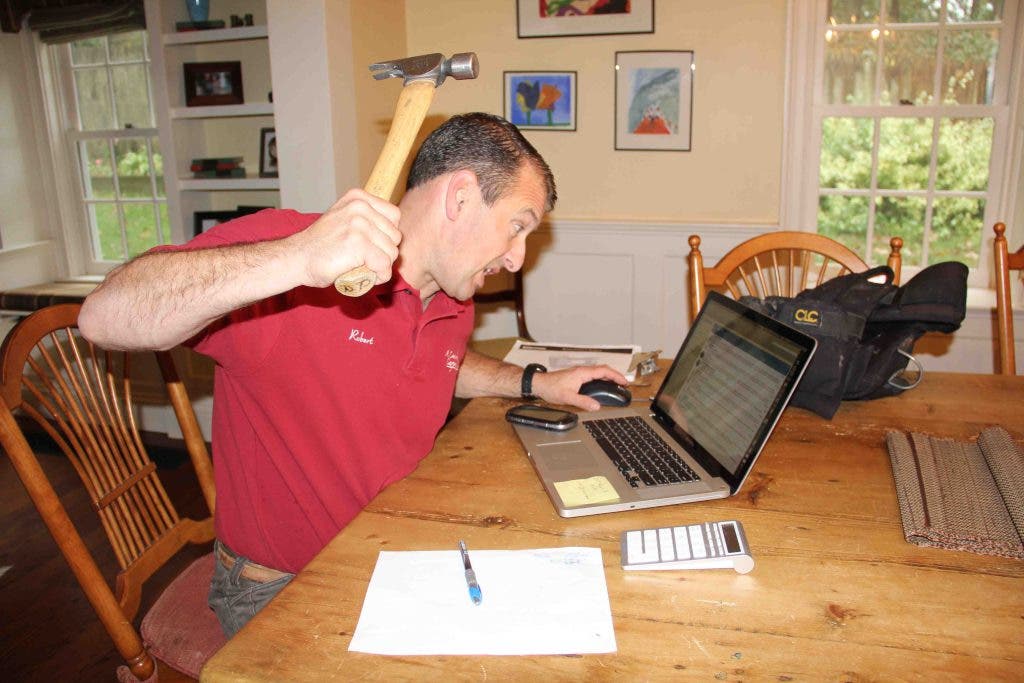
When you’re banging nails for 30 to 40 hours a week and trying to perform estimates, typing proposals and dealing with payroll and employees, you have to prioritize your time and get organized. Or accept the alternative and hang up your tool belt and becoming a pencil pusher.
I prefer to bang nails, and this article shares how I stretch my days as far as I can and tips on how to be a more productive contractor.
Find out what's happening in Concordfor free with the latest updates from Patch.
Every day is a battle for productivity when you’re running a small remodeling business and still performing the work.
Have you ever heard of the 80/20 Principle?
Find out what's happening in Concordfor free with the latest updates from Patch.
It definitely applies to contractors running a business. The 80/20 rule basically states that in any situation only 20 percent of your business efforts are critical to making money, which means 80 percent of your efforts are insignificant, wasted. In the 80/20 rule, the input and output relationships are not balanced, so 20 percent of your efforts make 80 percent of your money!
What does that mean when thinking about how to be a more productive contractor? Basically, you need to identify what 20 percent of your activities make you the most money and then focus on doing more of those activities or being better at whatever that 20 percent is.
Part of being able to focus on that 20 percent is freeing yourself up to identify and work on it. If you’ve ever sat back and wondered what happened to the day, you’re not alone.
Let’s talk about that for a minute, “Where did my time go?”
According to surveys, the top five “time suck" killers are:
- Email (47 percent)
- Procrastination (42 percent)
- Social Networking (36 percent)
- Meetings (34 percent)
- Surfing the Internet (30 percent)
Add up the high end of those numbers, and it’s pretty easy to understand why some of us leave so much unfinished work on the desk each night, or worse, end up working in the office until midnight.
Here are some additional ideas to help you become more productive.
1. Plan your month, week and day
Every month I make a rough calendar, and each Sunday I define my work week. Both of these calendars and lists roughly lay out how and when each task is going to get accomplished. Be flexible, becuase it’s inevitable that other things will pop up or the weather changes and plans change, but going into the week with a set structure helps me to focus in on the work that’s really important.
Plan every day in advance by making a list the night before for the next day. Know what you need to get done in your day and your week, and hold yourself accountable to get the most important things done first. Set priorities and concentrate on the MOST IMPORTANT thing first or maybe the most difficult tasks.
I also try to make my list flow in such a way that I don’t back track or waste time. For example: Meet customer at job site, stop at bank when it opens, stop in at lumberyard, which is on the way to the next estimate, and then bring materials back to the job site. Being efficient and methodical is key.
One thing that is super important is to schedule in lunch. Studies have shown that folks who take a regular lunch are more effective and less stressed. Lunch can be as short as 15 minutes, but it definitely is not a 15-minute business phone call.
Remember to schedule in personal time, family time and exercise time into your schedule, as well as time to do payroll and estimates. If you don’t schedule it in on your list you’ll end up not doing it, missing tasks or cramming it in at night when you should be relaxing. A good rule of thumb is to schedule 60 percent of your time as “planned” time and leave 40 percent for unplanned, unexpected issues and events.
2. Schedule Email
This is a big one especially today with smart phones. When thinking about how to be a more productive contractor consider how you use email. One option is to arise two hours early and get your office work done. That means type proposals, read and respond to emails. Email is the biggest enemy of productivity.
You should NOT be checking emails on the job site unless you’re expecting something important. It’s a major time suck!
Figure out a plan for email, maybe you handle email for an hour in the morning and then check in for 20 minutes before lunch and and again in the evening. Choose whatever works for you, but get to the point where you’re managing your email, not the other way around.
Take the time to unsubscribe from emails you no longer are interested in, as well as get familiar with the delete button. Look at the name and subject and determine if that email is even worth opening. You can also utilize your “email reading pane” for a quick glace, then delete what’s not important. When in the office working on estimates and payroll, turn off your cell phone and email. Control disruptions and get-er done!!!
TIP: A phone call is faster and more efficient than an email and allows for faster feedback, clarity and follow up. If your email requires two or three back-and-forth responses to solve an issue, pick up the phone.
3. Consider Using Accounting/Tracking Software
Online time tracking tools and software can be incredibly useful to help accurately track time and analyze how you’re spenting money. Other tracking and scheduling programs can track employees, jobs and materials. They save time and can create concise, clean and fast reports for your accountant.
4. Identity and Limit Distractions
Some distractions are easy to identify, like the cell phone voice mail beep, others are not. I know a guy who lets all of his cell phone calls go to voice mail. His voice mail message says that he returns all calls at a certain time and to leave a message with all the necessary information he needs to respond back to the call. This allows him to listen and choose which call to react to.
Let’s face it, we’ve all had those days that were going perfect until someone calls you with “an emergency” and you end up shifting gears and make that emergency your problem. Not every one’s emergency is your emergency, so listen to the voicemail and make your own decision. You need to figure out what distracts you and put first things first.
Here are a few distractions you may want to look at:
- cellphone / phone
- voice mail
- Social media / Internet
- TV
5. Schedule Estimates
I try to schedule estimates all on the same day and also try to have my proposals typed that same day. Clients have told me they’ve been super impressed with the professional and fast return of my proposals. To do this you need to know your numbers, pricing, overhead costs and maybe consider using past project pricing as a base for allowances.
Using allowances means you can price items that are out of your control, such as subcontractor pricing, unknown costs for fixtures or appliances. More on how to utilize and manage allowances later. Many a client has told me they waited weeks for the other contractors to get back to them and they hired me because I responded faster and seemed more organized.
6. Identify Your Prime Time
Each of us has a particular time of the day when we have the most energy and are most creative. If you’re already aware of when this time is for you then schedule you TOP PRIORITES at that time. If you’re not aware, figure it out and utilize your strengths.
7. Break Up Difficult Tasks
Sometimes it makes sense to break up difficult or large tasks into two days. Instead of trying to get a huge estimate done in one day spread it out over two days and schedule four hours each day to work on it. You’ll find that you’ll have more energy and focus, plus make fewer mistakes.
8. Handle Paper Once
When in the office, no one has time to muddle around. I use the 3-F’s for paper work:
- File it
- Forward it
- Forget it
I pay my bills twice a month. Until I pay them they sit in a tray waiting for me to open them. Once opened I pay them, record them in my Quicken software account and file them. At that time I also invoice for any jobs that those bills may be related to. A quick hand-written note on each invoice such as “paid” with date, or “paid – need to invoice” helps me keep track of things while doing this.
9. Sharpen Your Saw
I’m sure you’re all great contractors, mechanics and carpenters who have long since mastered the craft, techniques and tools. But can you navigate a computer, create customer files, type and email estimates, type and email invoices, search and find these files quickly? How about emails? Online calenders? Accounting software?
Let’s face it, unless you have an office manager, as a business owner you need to be able to do these tasks and do them well. If not you’re WASTING a ton of time hunting and pecking your way through this stuff. Take a class, read a book and learn computer shortcuts that make your miserable time on the computer and in the office go faster, be more efficient and ultimately be more professional. You should no longer be hand-writing estimates, invoices or anything for that matters except a thank you card. Let’s stop pissing on our profession and raise the bar!
So, what’s the goal here?
The goal to doing all of this is to increase your productivity, performance and business output while reducing stress and missed opportunities. Let’s not forget to be more professional and make more money! Sounds easy right? Get started!!