Health & Fitness
Controlling Dietary Sodium
The recommended limit on sodium intake and some tips to stay in that limit.
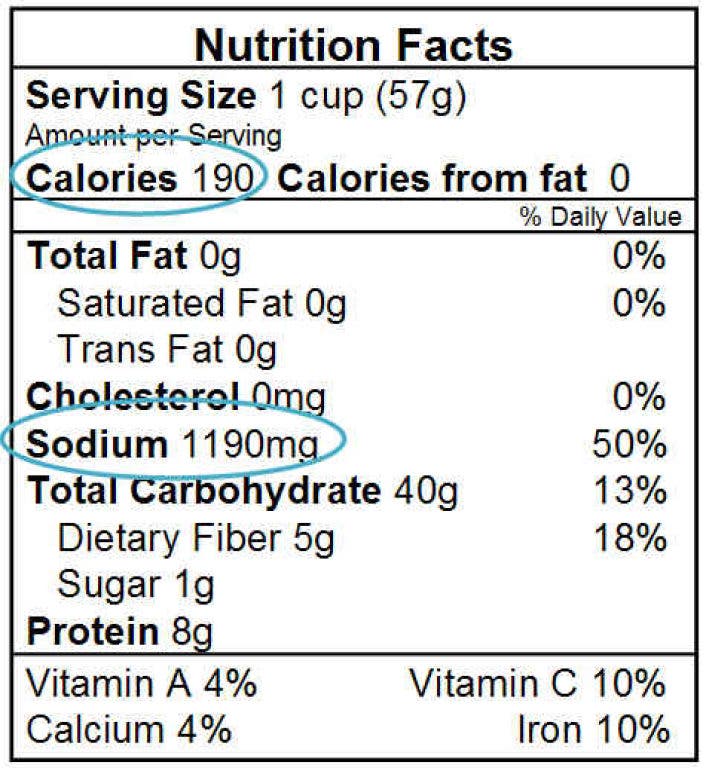
Sodium was in the news last month after the CDC released a report confirming something that we’ve known for a long time -- most Americans consume much more sodium than recommended.
Sodium is a mineral which is part of processed food as a variety of ingredients. For example:
- table salt (sodium chloride)
- flavor enhancers (monosodium glutamate)
- conditioners (sodium hexaphosphate)
- preservatives (sodium sulphate)
- leavening agents (sodium bicarbonate or baking soda)
The basic recommendation is that most people should consume less than 2300 milligrams (mg) of sodium per day. For some people the recommendation is an even more restrictive 1500 mg per day. People who lose a lot of sweat through exercise may need more sodium than the recommended limit.
The CDC report confirmed that the average American consumes about 3300 mg per day. That's more than twice as much as necessary and about 50% more than the recommended upper limit for most people. The concern about too much sodium primarily concerns the long term and short term effect on blood pressure, the silent killer.
A good general strategy to keeping your sodium intake under control is to aim for less sodium than your calories. This strategy helps individualize how to think about your sodium needs. As mentioned, someone who loses a lot of sweat through exercise needs more calories to support the exercise and more sodium to replace what is lost through sweat. On the other hand, as we age, our blood pressure tends to be more sensitive to sodium. We're likely to both need fewer calories and less sodium.
The strategy also simplifies determining whether a food is high in sodium or not.
When you read a food label try to make sure most foods you consume have fewer sodium milligrams than Calories per serving. For example, if your food has 100 Calories per serving, and the sodium is less than 100 mg, you can consider it as a low sodium food and likely to fit into your diet. On the other hand, if the food has 200 mg sodium for 100 Calories, some quick math tells you that it is harder to fit into your diet. (If you were to eat 2000 Calories of food with that ratio, you would have 4000 mg of sodium.)
You don’t have to be very strict with this rule. Some of the foods you consume -- your fresh fruits and vegetables -- will be very low to no sodium. So, as long as most of the foods with sodium are in the ball park of similar to Calories, you’ll be doing okay.
Consider canned soup as an example. Canned soup is typically 600-800 mg of sodium per serving. But it is also typically under 100 Calories. Imagine just three servings of the soup will get you to the top of your sodium budget, but you’ll still need a lot more calories to survive.
There's nothing wrong with commercial canned soup now and then. But if you have it, consider diluting the sodium by adding some extra water and your own vegetables, pasta, and herbs or spices. It won't be less convenient or take much more time, but you can cut the sodium in half pretty easily while simultaneously stretching your dollars. Even better is to make your own soup from scratch so you have complete control over the ingredients.
As another example, a slice of bread is typically about 100-120 calories and typically about 140-160 mg of sodium. That’s reasonably close. A couple of slices a day would not be a problem fitting into your meal plan. But you can see how that can add up to quite a bit of sodium since you may have several slices in a day. So, watch breads carefully. It is not unusual to find breads that are over 200 mg per slice which makes it more difficult to stay in your sodium budget. Other grain foods such as pancakes, crackers, and cereals can be quite high in sodium, so read labels carefully.
Other foods to watch carefully are:
- deli meats -- make an effort to switch to fresh meats,
- sauces like ketchup or spaghetti sauce -- keep amounts small,
- flavored rices and pastas, boxed or canned -- It is not unusual for flavored rices and pastas to have more than 1000 mg of sodium per serving. Two servings and you're done your sodium allocation for the day. Better to make your own rice or pasta and add your own flavorings.
Stay in the habit of checking sodium when reading labels. For most of us we don't have to be too cautious about sodium as long as we consume some fresh foods daily. But those of you who have a strict sodium limit, or care for someone who does, know that the current food system adds a lot of unnecessary sodium which makes it a challenge to keep total sodium low.
Eric is a registered dietitian (RD) with a Master of Science in Nutrition