Health & Fitness
Why a Child Needs Swimming Lessons: What to Look for to Ensure Fun and Safety
Summer is right around the corner, and with summer comes swimming -- and swimming lessons.
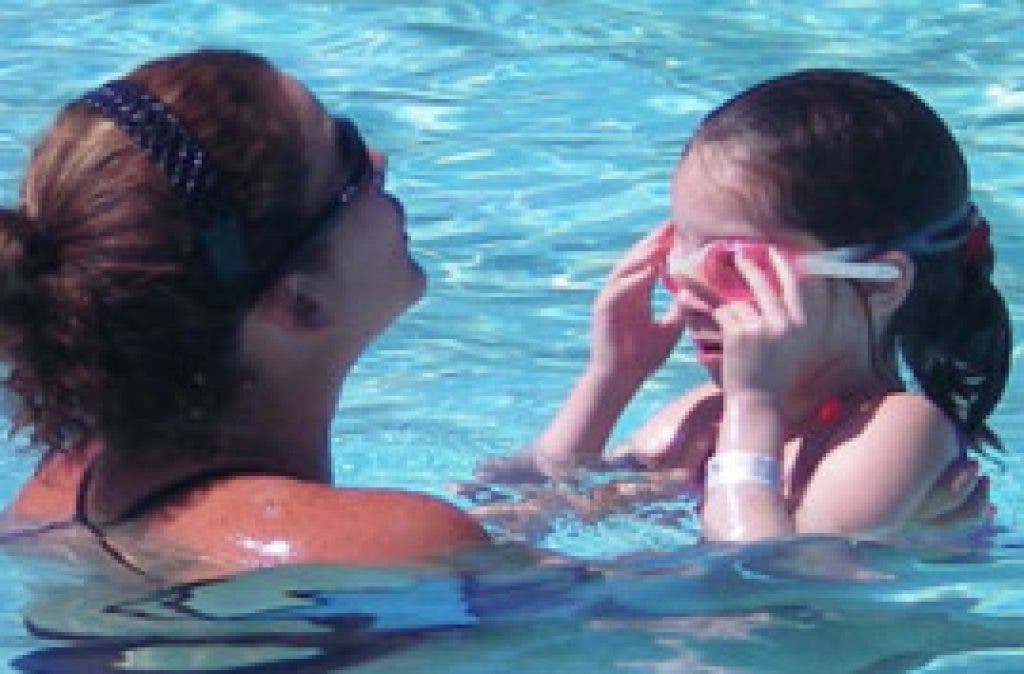

It's the winter, but parents are already planning to ensure that their children are enrolled in the right summer camp program, and a key concern is the quality of the swimming program.
It's easy to understand why swimming is such a popular activity: it's a great exercise, it instills confidence, and perhaps most of all, it's just plain fun.But it is important to learn the proper techniques in the proper environment to maximize the enjoyment and the safety of children.
Swimming is like riding a bicycle — once one learns how to do it, the skill will last forever. However, the initial training is critical, and that's why parents should be careful about finding the right kind of swim program.
Find out what's happening in Eastonfor free with the latest updates from Patch.
Based on my 25 years of experience teaching swimming, I believe the most important aspect of any swim program is safety. Parents should understand that the best programs need the right instructors, and they should ask questions about the staff:
- Are instructors properly trained and certified in Lifeguarding, CPR, First Aid, and Water Safety?
- How many years of teaching experience do they have? (The more seasoned and experienced swim instructors on staff, the stronger the program will be.)
- What is the staff-to-camper ratio, with four-to-one an ideal equation.
What else should one look for before signing up their child?
Find out what's happening in Eastonfor free with the latest updates from Patch.
- Parents should make sure their child is getting individualized, personal instruction in a small group setting.
- Instruction should be progression-based, building on each skill that is learned. The program should also follow a set swim curriculum such as a Red Cross program to ensure the child is mastering the essential skills at each level.
- If the child is new to swimming or has a fear of the water, make sure the instructors know how to work with those who need water adjustment skills, such as blowing bubbles and going underwater.
It is essential that the instructor knows how to make each child feel comfortable and secure not only in swallow water but also in the deep water.
Research shows that children learn best when they can comfortably stand in the water. So make sure the swim program has an area where children can plant their feet firmly on the ground with their heads above water. This will promote their sense of security and lead to greater success in learning how to swim.
Parents should ensure that the swim curriculum accents the swallow-water program, focusing on the basics, but that also allows the children to swim in water over their heads. It is wonderful when a child learns to float on his or her front or back and perhaps master the breast stroke. But it is essential that they also feel comfortable swimming in deeper water, and this may occur as early as pre-school and kindergarten. To be sure, when children can float and tread in water where they can’t stand, they can have complete control in the water. And parents will have peace of mind, knowing that their kids feel comfortable swimming at any depth.
Parents often ask us which is a better place to learn how to swim: pool or lake? While we have taught swimming in both, we have found that a pool provides a better teaching environment. Children feel safer and warmer in a pool, where they can stand and actually see the bottom, and they tend to enjoy heated pools. Also, the clarity of the pool allows the instructor to view each child's strokes and make corrections as needed.
Swimming is a skill that can provide children with additional opportunities as they grow. Many of our campers participate in competitive swim team programs and also become swim instructors.
But the most important thing about swimming is the sheer fun. Most of us have memories of our parents dragging us out of the pool with our fingertips all pruned and our noses and cheeks bright red from the sun. While adults tend to go in the water just to cool off, for children, the water affords endless possibilities for play and pretend. This is the aspect of swimming that we love the best. We love to watch campers interact during free swim, with some practicing their strokes and others playing "tea party" or "Marco Polo." Most are just jumping and splashing and having a ball with their friends.
At the end of the day, the fun is what children remember most. But as parents, we must first ensure that the fun is responsibly grounded in safety.