Politics & Government
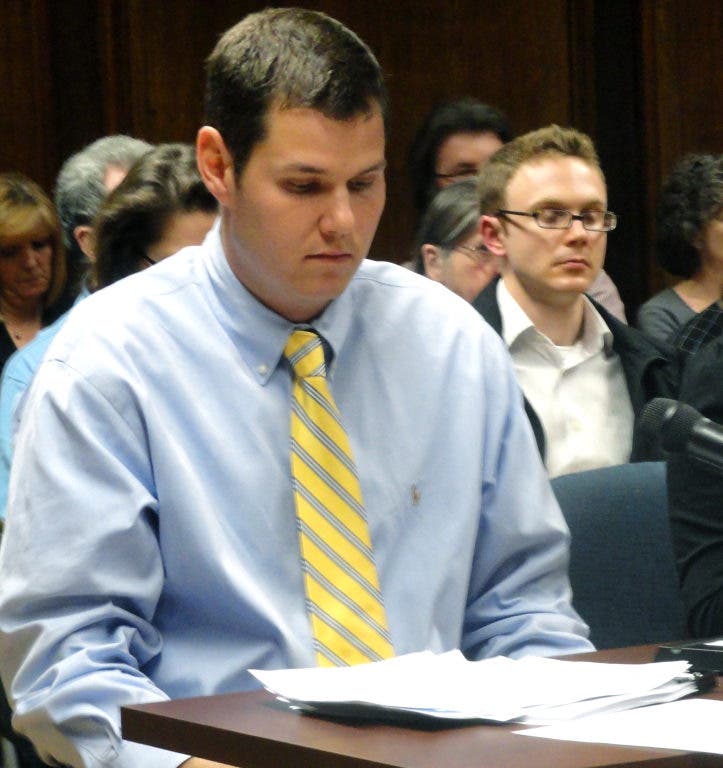
Patch Q&A: Easton Planning Director Brad Washburn
Patch recently sat down with Easton Planning Director Brad Washburn.


Please join us in celebrating the return of Patch Q&A: a feature in which we allow you to get to know the movers and shakers that help make Easton tick.
Today we'll feature Easton Planning and Community Development Director Brad Washburn.
Patch: What did you go to school for?
Find out what's happening in Eastonfor free with the latest updates from Patch.
Washburn: I’ve got a masters degree in city planning from University of Massachusetts Amherst. My undergrad degree was in political science so I looked at public administration, urban planning and law, potentially. I really gravitated to planning. I was originally from Florida living in New Orleans at the time I applied to grad school and so I applied to a couple different schools and ended up with UMass.
Patch: What got you into municipal planning?
Find out what's happening in Eastonfor free with the latest updates from Patch.
Washburn: I started off in the private sector. As soon as I graduated I worked at an engineering firm, and multidisciplinary engineering surveying planning so I was in the planning staff and through that our primary client was the City of Boston. We also had other municipal clients so it really got me interested in working on the municipal side.
It took me a little while and I had a few other jobs in the private sector. My first break in the public sector was with the City of Boston Planning Department. More or less and ever since then I've stayed in the public sector. I think you're just able to see more change and have more control over your projects and really see things from beginning to end.
Whereas, in the private sector you have a defined task and when that task is over you may or may not be able to see that come to fruition.
Patch: What led you to Easton?
Washburn: I had done a lot of waterfront planning in the city and hadn’t really done any town planning. When Easton came up - it’s a town with a great history I thought it was a great opportunity to cut my teeth in a true town planning municipal government. It was just a great opportunity that came out of the blue.
Patch: What did you know about Easton before you came here?
Washburn: I'm originally from Florida but I had lived in Norton for a couple of years when we moved back from New Orleans so I actually spent a fair amount of time in Easton and way back my family has roots in Brockton. So, I knew a little bit definitely knew about the Ames' and all the historic aspects of Easton.
Patch: Is it hard in this town to balance history and progress?
Washburn: Its definitively a challenge but I think because of the history you’re able to drive development in the right direction. Because you have a high standard of development with what already exists so you’re able to influence the type of development you get. It complements what you already have rather than having a blank slate when its harder to hold folks to a higher standard.
The town has already done a lot of great historic planning, mostly led by the Historical Commission that designated local historic districts that use CPA funds to protect historic buildings that are already established here in town.
Patch: What are some other challenges that you deal with?
Washburn: Lack of funding. You don’t want to overburden taxpayers. There are so many grants you want to be responsive to what residents need and want. You also want to do projects and complete projects that are in the best interest of the town like sewering the town and streetscape improvement projects like what we’re doing with Main Street. But, you also want to address residents concerns that there are potholes on the street or that sidewalks are cracked so you're trying to balance wants with basic needs.
Also, just not having enough time. I feel like the town planning department is well staffed so I cant complain about that but just trying to divide my own time.
Patch: What's the biggest issue or project you've worked on?
Washburn: I think it will be the master plan. To date, we’ve worked on a number of significant projects, like the shovel works, although we had a lot of help on that project with outside attorneys and outside engineers so I had a very well defined role in that project.
But, a lot of the zoning initiatives are pretty big in terms of all the zoning bylaw changes.
Patch: Tell us about the Master Plan.
Washburn: It’s going to be an all hands on deck effort here - probably about 18 months.
The community visioning project that we started in 2008 - you can consider that like a master plan that in a very general sense touched on a lot of the topics that will be going over to the master plan but we’ll be going into a much more comprehensive process where we really dig in.
We’ll have several community meetings. We’ll have master plan planning committee meetings. We'll have consultants on board to collect data draft reports, facilitate public meetings and other stakeholder meetings.
So it’s a really intensive public process to make sure that we translate the resident’s interest and desires into a 20 year workable document we can use for guidance in all things.
Patch: Where do you see the town in 10-20 years?
Washburn: I hope it continues the value of strong preservation, I'm sure it will. And, I hope it continues to value the preservation of open space. I'm sure it will.
But, I do hope we or the town reconsiders some of our land use policies; particularly zoning. Right now our zoning bylaw is kind of a one size fits all. it's 40,000 sq feet for a single family home - 40,000 sq feet and 150 to front entrance. And, as land becomes more scarce and just in terms of wanting to develop and keeping within smart growth, you just can’t have that be your one style of development. You need to have more compact development in which areas of the town you decided to have more compact development. We’ve done that to a certain extent with Queset commons the Shovel Works, but we need to do that on a bigger scale so that we are able to preserve areas for open space and keep the semi rural character.
I think we could rethink our land use, I think that’d be the biggest thing but if we could do that in 20 year I think I see Easton continuing to grow, but retaining the things we care about.
Washburn: Is there anything you want the residents to know?
Washburn: Just that planning is a public process and we like to be as open and transparent as we can so we invite you to attend Planning and Zoning Board meetings, attend community meetings and always feel free to contact me Stephanie [Danielson] or Tim [Harrigan] with any questions. We’re always available.
Get more local news delivered straight to your inbox. Sign up for free Patch newsletters and alerts.