Sports
Fenway's Yawkey Way To Be Renamed? For Now It Stays
The owner of the Red Sox wants the street where Fenway Park sits renamed to something with less complicated ties to racism.


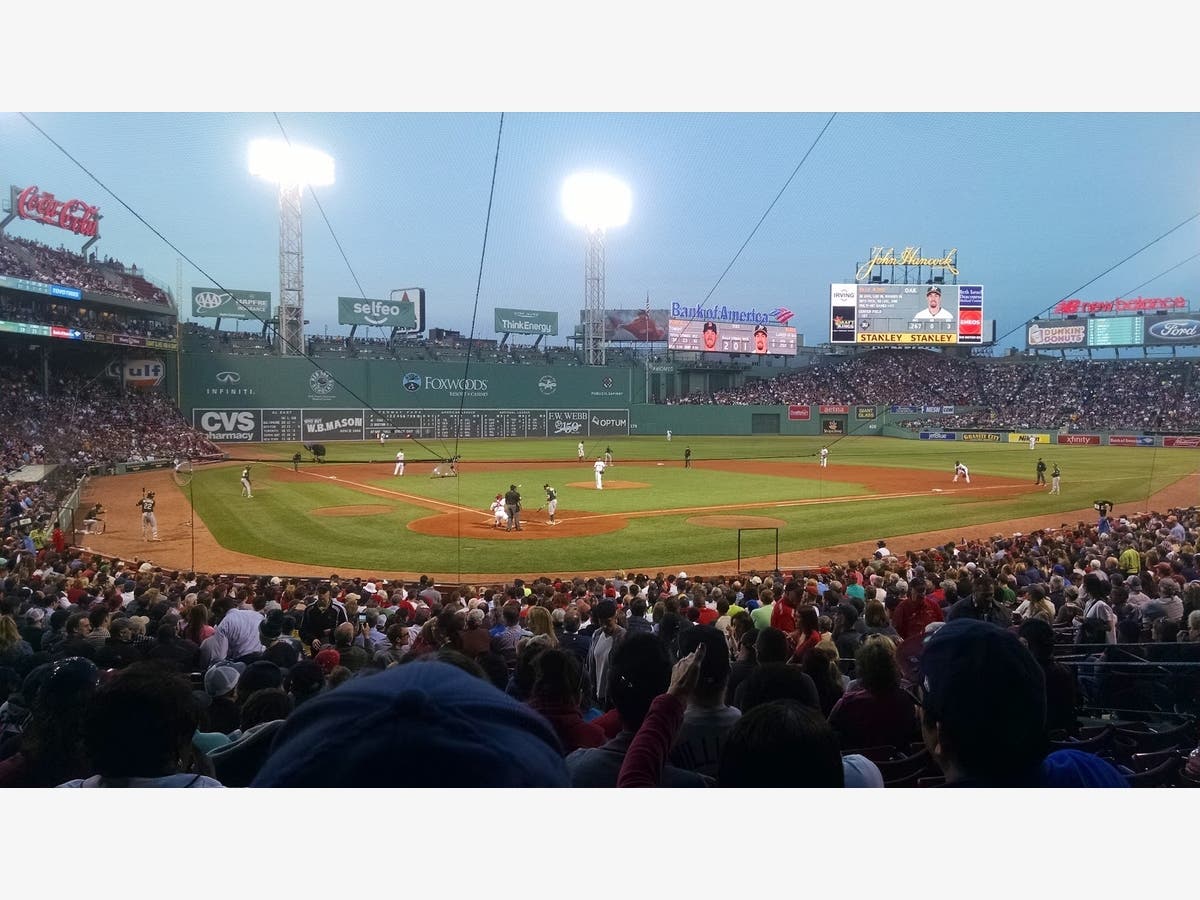
FENWAY, MA — Yawkey Way, the famous street where you can find the Red Sox's Fenway Park, keeps its name — for another few weeks at least. The street may have its name changed next month in an effort to distance the team from its racist past. The Boston Public Improvement Commission is set to vote on whether to change the street's name back to Jersey Street at its next meeting in April, after a lengthy public meeting filled with emotional comment from the public gave them plenty to consider.
Jersey Street is the name the public way had before 1977, a year after longtime owner Tom Yawkey died. The request for a change came at the request of team (and Boston Globe) owner John Henry, who said he is still haunted by the racist legacy of Yawkey.
A public meeting Thursday at City Hall was packed with people lined up to give their two cents on whether this was a good idea, just hours before Red Sox begin their 2018 campaign some 1,300 miles away in St. Petersburg, Fl. Some choking back tears in their pleas not to rename the street, including John Harrington,the chairman of the Yawkey Foundation. A number of folks against the name change indicated it could have a negative impact on the philanthropic foundation.
Find out what's happening in Fenwayfor free with the latest updates from Patch.
But the President of Boston's NAACP also took to the mic in support of renaming Yawkey Way.
The NAACP, she said was the organization that pushed for an MCAD inquiry into the treatment of Pumpsie Green the team's first black player, back in 1959.
Find out what's happening in Fenwayfor free with the latest updates from Patch.
"It was very troubling to listen to some of the testimony that was offered today," Tanisha Sullivan told Patch afterward. "There seems to be an attempt to present a revisionist narrative of who Tom Yawkey was and also of the discriminatory practices during his tenure."
>>>READ: How To Watch Red Sox Opening Day Today
"It's troubling to us that there would be an attempt to essentially deny the racial oppression and racial isolation that was experienced by people who worked for the organization, or who wanted to work for the organization, so it was very difficult to experience that," said Sullivan.
The president of the NAACP said she was hopeful the street would be renamed and the city and the Red Sox could move forward, and that the work the Yawkey Foundation had done would not be sacrificed by the street's rename.
Yawkey owned the Red Sox from 1933 to 1976, building a complicated legacy during the longest ownership stretch of any team in baseball history. In 1977, the city named the street after the man. He was elected to the Baseball Hall of Fame in 1980, four years after he died of cancer.
On his watch, the Red Sox became the last team to integrate black players onto a Major League roster. Pumpsie Green only debuted with Boston 12 years after Jackie Robinson broke baseball's color barrier with the Dodgers.
But Yawkey is also known for his philanthropy in the foundation that he created posthumously. Critics of the street name like the NAACP, praised the work that foundation had done after Yawkey's death, especially in the communities of color.
- RELATED: How The Civil War Was Nearly Lost In Massachusetts
- Boston Bracing For 'Free Speech Rally' Saturday
- Red Sox Fans Racially Abused O's Player
- Love-Hate Inspiration Strength Boston
- Red Sox Eject, Ban For Life Fan Who Uses Slur
Henry indicated he didn't want to change the name of The Yawkey Foundation. That foundation, enriched by the current Sox ownership group's $700 million purchase in 2001, has provided hundreds of millions of dollars to those in need around New England and Georgetown, S.C.
Henry previously said he would rename it "David Ortiz Way" or "Big Papi Way" after the legendary slugger who recently retired. But another suggestion was just to return the public way to what it was before the city named the public road after the Hall of Fame former owner. This is the suggestion that has mostly stuck.
A representative of the #RedSox begins the hearing by saying their proposal to change the name of Yawkey Way isn't about the past, it's to "clarify our vision for the future." A commissioner expresses disappointment team ownership isn't here.
— Carl Stevens (@carlwbz) March 29, 2018
John Harrington, chair of @YawkeyFdns speaks in defense of Tom Yawkey at commission hearing on changing name of Yawkey Way. Says we should honor Yawkey’s “true legacy, not a snapshot” based on politics of today. Long line waiting to speak. @wgbhnews pic.twitter.com/a1ECGYYYlJ
— Craig LeMoult (@clemoult) March 29, 2018
MA State Rep @ByronRushing, whose district includes Yawkey Way, tells Public Improvement Commission that changing street name is not a question about @YawkeyFdns. It’s about the “difficulty he had with race in his lifetime.” @wgbhnews #mapoli pic.twitter.com/PSbmpkooof
— Craig LeMoult (@clemoult) March 29, 2018
The Red Sox reached a deal with the City of Boston in 2013 that allows the team to close Yawkey Way and sell concessions. Fans can leave the park and mosey around Yawkey Way before returning to the game.
Patch will update this breaking story
- Mike Carraggi contributed to this article.
Photo by Jenna Fisher/Patch
Get more local news delivered straight to your inbox. Sign up for free Patch newsletters and alerts.