Politics & Government
George King's Financial Rules Will Break the Framingham Public Schools
King's budget 'rules' deliver an unprecedented assault on school district finances, operations, and fundamental values.

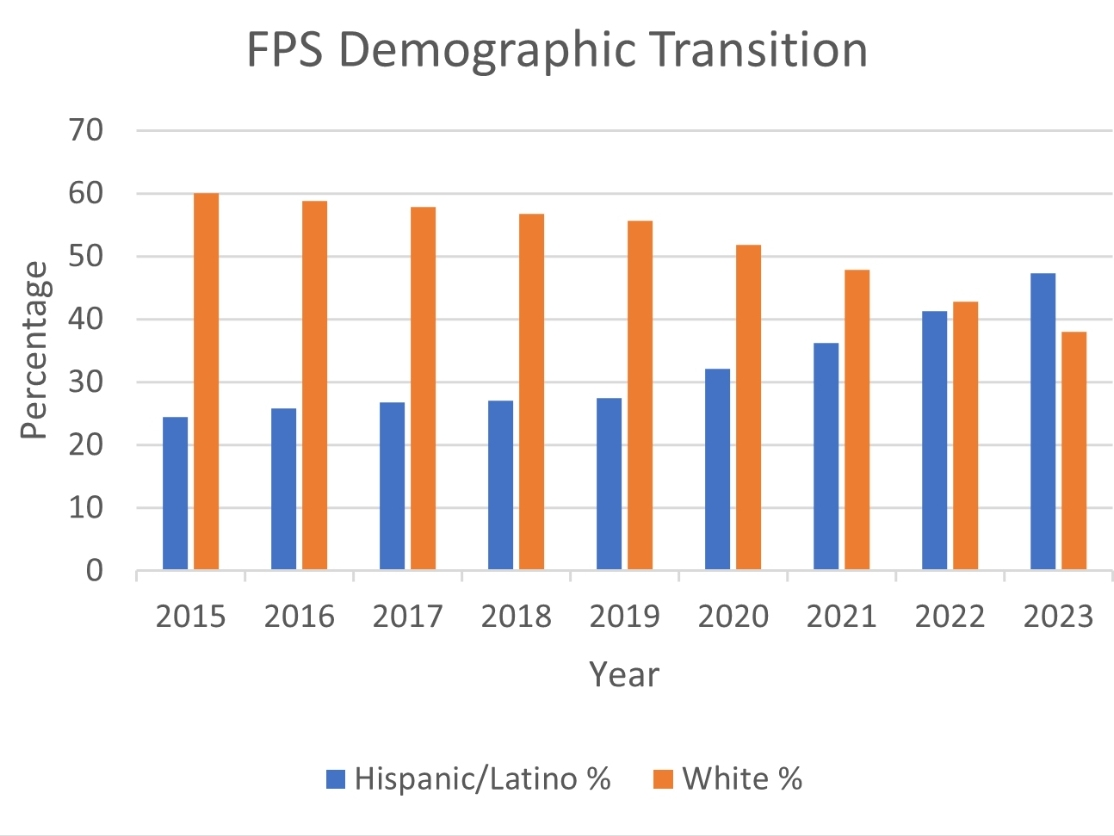
This is the third of three of articles examining the damage done to city finances, city infrastructure and city students by the application of George King’s budget ‘rules’ to a city which has what Moody’s Investor Service calls: ‘Above average resident income and wealth’ but is experiencing rapid demographic changes in its school age population as the Latino/Hispanic population expands.
The first article focused on taxing below the levy limit, affordability arguments and the resulting serious damage done to city finances. The second article focused on the fundamental King misreading of Chapter 70 state aid, which triggered taxing below the levy limit and consequent extensive erosion of city infrastructure. This article lays out the educational damage being done to students and the school district, which portends a grim future for Framingham Publics Schools if the current trend continues.
____________________________________
Find out what's happening in Framinghamfor free with the latest updates from Patch.
To set the context of the analysis, let’s repeat the George King financial rules, which were clearly enunciated in the City Council meeting on May 30th, 2023. The associated video clip is here:
Find out what's happening in Framinghamfor free with the latest updates from Patch.
George King’s Rules
- Affordability Rule: A number of Framingham homeowners cannot afford 2.5% property tax increases, so property taxes have to be reduced for all residential property owners. (Including large scale residential apartment landlords and the vast majority of homeowners, who are perfectly capable of paying such small-scale property tax increases.)
- City Budget Growth Rule: The annual growth in a municipal budget must lie in the range between 2.5% and 4.5%.
- School District Budget Growth Rule: Framingham Public School annual budget increases of the order of 7% are not sustainable.
In the prior two articles, we have shown how the first two rules lead to a perilous reduction in city property tax revenue, a rapidly rising backlog of deferred maintenance for roads, buildings, and the water & sewer system, coupled with a depletion of city reserves. Not only has that drawn a city bond rating downgrade by Moody’s Investor Service but the ‘savings’ in property tax bills of $192 million over the last 10 years, has been wiped out by the creation of a gigantic maintenance backlog of $400 million or more, and by large increases in resident water bills, which hurt low-income homeowners the most.
As bad as the financial and infrastructure damage may be, the damage to the school system in Framingham should be of much more concern to the community, as it delivers the educational investments which determine our children’s future, attracts new residents to Framingham and is one of the main reasons our home values have risen so rapidly in the last 10 years.
Let’s take a critical look at George King’s rule #3. He says the FY24 Framingham Public Schools (FPS) budget increase of 7.4% is unsustainable. That suggests that next budget season, he would like to cut that increase back. A small amount of arithmetic shows how far off George is in understanding school district budget growth.
First, the three primary drivers of the FY24 FPS budget increase were: (1) increasing student population (4%); (2) inflation (3%) and (3) an increase in special needs out of district tuitions mandated by the state (1.3%).
That simple estimation shows that the FY24 budget increase should be roughly 8.3%. This shows that 7.4% is in the right ballpark. So, when George is complaining that the budget increase is unsustainable, he is really complaining about inflation + student population growth.
That makes no sense.
Again, he seems to think that Framingham is like Newton or Wellesley, where there is little student population growth and almost no low-income immigrant students.
And that is not the entire picture!
Left out of the FY24 FPS budget increase is any allowance for the rising percentage of Latino/Hispanic students and the added English language instructional support which should have been deployed to support them. The Chapter 70 program estimate for that is about $5 million/year. So, the FPS budget increase should have been more like 10% on an FY23 FPS budget base of $153.7 million. The same pattern was repeated in the FY23 budget, so Latino/Hispanic students have been shortchanged of a huge amount of support in the last two school district budgets.
A total of $10 million/year has been shifted over the FY23, FY24 budget cycles from education to school roof replacements. FPS budget pressure from the Mayor and City Council!
So, George is way off, not only in the budget increase needed for a growing student population, but also because he completely ignores the rapid Latino/Hispanic percentage growth within that population. See the chart at the top which shows how rapidly FPS student demographics are changing.
There are two ways to go here.
We can hack the FPS budget to pieces next year, following George King’s rules, which simply don’t apply to Framingham, or we can embrace the highly competent budgeting approach of the FPS administration, plus restore the $10 million/year taken from FPS for roof replacements and use that money to solve the two major problems facing FPS by expanding pre-K to all 4-year-olds, with no tuition fees, and hire the more than 100 classroom aides we are currently missing for English language learners and special needs students. More details on the better use of the $10 million/year can be found here. Note that I have improved the inflation estimate used in that article.
We have the good fortune to have a remarkably effective school district administrative team, led by Superintendent Bob Tremblay and Executive Director of Finance & Operations Lincoln Lynch. The school district has a solid strategic plan, and the School Committee has well thought out goals. The school district budget process was totally overhauled after Lincoln Lynch’s arrival in 2018, and is comprehensive, thorough, collaborative, and transparent. It is built from scratch each year in a zero-based approach and has achieved many genuine efficiencies in the past 5 years. It is also well documented with a budget book which runs to over 200 pages, and is jam packed with current and historical information.
The clear and present danger now is that having damaged city finances and infrastructure, the City Council plans to expand its domain of havoc to this well-run school system.
It seems reasonable to expect the community would not be on board with that approach.
I shall end this analysis with a simple chart which shows how city support of education is plummeting.
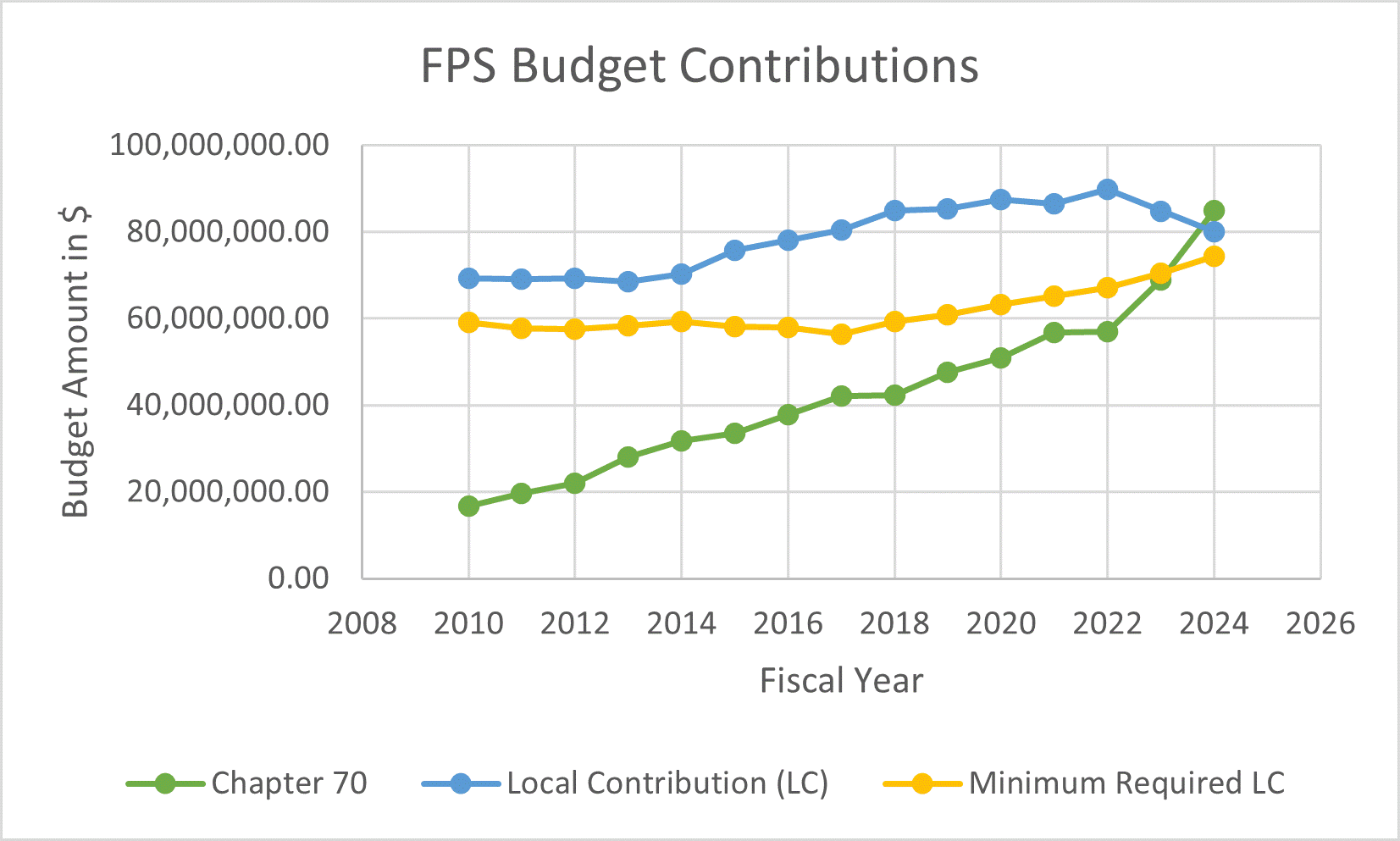
The school district budget is made of two pieces: the local contribution (LC), funded by city property taxes and state Chapter 70 aid for education. The chart shows those two pieces, and also includes a plot of the minimum local contribution required by the state.
The steady rise in Chapter 70 aid is quite clear, as is its acceleration in the last 2 years, as the low-income, Portuguese speaking segment of the student population surges. Also, clear is the steady rise of the local contribution, whose average annual growth tracked inflation at around 2%/year from 2009-2022. During a good deal of this period, as is typical with communities which value education, the local contribution was ‘excellent’ at about 30% above the rock-bottom minimum local contribution required by the state, to ensure that local education funding is least ‘adequate’. Any community which demands a good education for its children aims for ‘excellent’, not ‘adequate’.
Pay special attention to the last two budget years: FY23 and FY24. While Chapter 70 aid surges, the local contribution plunges, as it sheds $10 million/year in just two years. The local contribution for FY24 is now just 8% above the rock-bottom minimum local contribution required by the state.
It is clear that the FPS local educational funding trajectory is heading steeply downwards.
With a growing preponderance of students entering kindergarten, with no pre-K experience and not speaking English, and with an extreme shortage of classroom aides to provide English language support for K and higher grades, a growing number of classes will become harder and harder to manage as students struggle with the basics. That not only will disadvantage Latino/Hispanic student enormously but will affect all students.
$10 million/year shifted back to education to fund universal, free pre-K, and fully staffed classroom aides would guarantee that FPS could reinforce its dual language program innovations to provide a model for how other cities and towns could successfully integrate immigrant student populations into a successful educational program for all children.
Or we could go the George King route and head for educational oblivion.