Community Corner
Glimpse Into History of Saxonville
A hurricane, mills, Irish immigrants, area's first Catholic Church, Civil War manufacturing and Ku Klux Klan are have ties to historic Saxonville.


In 1647 John and Anna Stone established a homestead along the Sudbury River near the falls in North Framingham. They build a gristmill and thus began a family dynasty that would last for seven generations. A hurricane in 1798 destroyed the last of the Stones’ mills.
Following the invention of the cotton gin, textile production became an emerging industry in New England. Cotton quickly expanded to woolens. In 1822 a group of investors bought the mill site at the falls in Framingham and constructed a new mill. The fleece of Saxon sheep was to provide the raw material so the business was incorporated as Saxon Factory Company. Soon the surrounding area became known as Saxonville.
By 1832, the Saxon Factory included five mills employing 246 workers. A decade later Michael Simpson would expand this business and Saxonville Village. Simultaneously William Knight built a successful carpet manufacturing company on Cochituate Brook. That business closed when the City of Boston began to tap Lake Cochutuate for drinking water. A dam was built at the lake reducing the once powerful Cochituate Brook to a trickle and removing Knight’s power source.
The Boston & Worcester Railroad linked Saxonville to Natick Center and Town Meeting recognized the growing importance of the village by authorizing the building of the Athenaeum on Concord Street. The building is now listed in the National Register of Historic Places and anchors the Saxonville Historic District.
Famine in Ireland drove many immigrants to America during this era. From the port of Boston they spread into neighboring cities and towns looking for work.
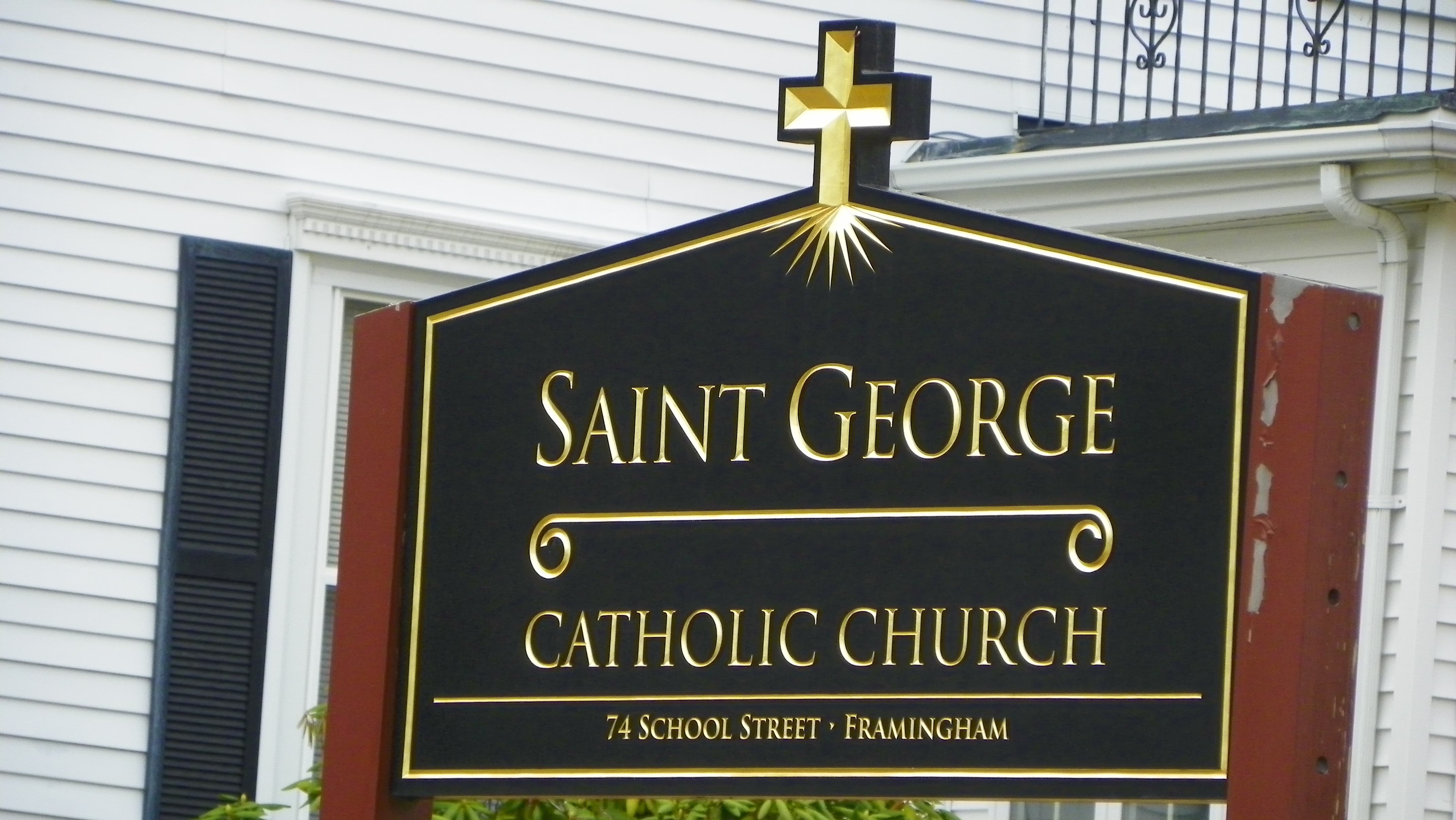
The small Catholic population in greater Saxonville grew and a rector was appointed. In 1847, was dedicated. It was the first Catholic Church in the whole area so the parish included Natick, Wayland and Sudbury.
During the Civil War, Saxonville mills manufactured blankets and blue kersey cloth for the Union Army.
Following the war production shifted to civilian goods. By 1875 10% of the residents of Framingham were working in one the mills.
Find out what's happening in Framinghamfor free with the latest updates from Patch.
The early twentieth century was a period of unrest in Saxonville. First Police Officer William Welch was killed while apprehending a thief. Then, the mill workers went on strike. Replacement workers were hired and riots ensued.
Finally, the Ku Klux Klan had gained a foothold in Massachusetts by extending their list of enemies to include immigrants and Catholics. Many Saxonville residents were Catholic immigrants and they were terrorized by cross burnings. By the summer of 1925 tensions erupted. A counter demonstration was held, guns were fired and 75 Klansmen were arrested. Widespread publicity about this ugly incident may have contributed to the Klan’s eventual demise in Massachusetts.