Schools
History Detectives Explore the Two Towns
Hamilton-Wenham Regional High School seniors lead area third graders on a tour of the North Shore's past.


Time: 1 pm.
Date: May 19, 2011
Place: Shoe Factory,
Find out what's happening in Hamilton-Wenhamfor free with the latest updates from Patch.
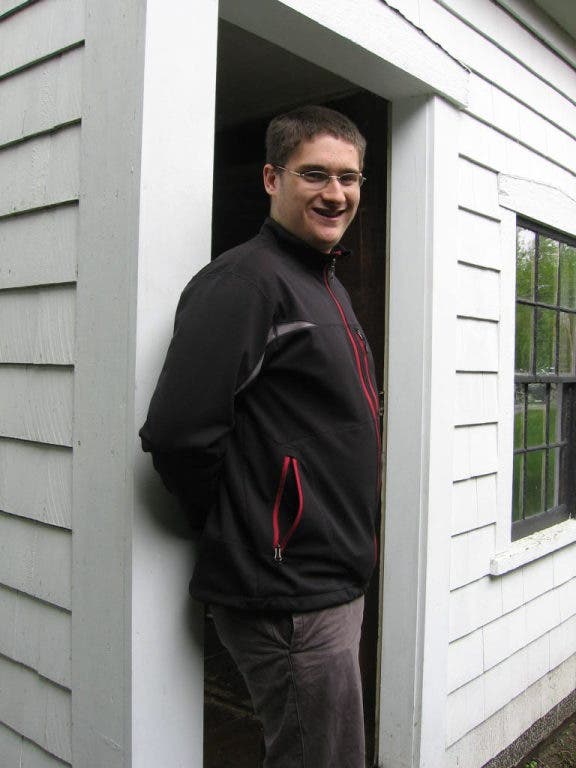
Noah Shearer, a senior at , is explaining to an area third-grader why there are bits of old newspapers tacked to the walls of the 10-by-10 foot shoemaker’s shack adjacent to Wenham Museum.
“One person might read the paper as the other person worked,” Shearer said.
Find out what's happening in Hamilton-Wenhamfor free with the latest updates from Patch.
“Why?”
“Because they didn’t have radio then.”
“But why?”
“Because they didn’t have electricity then.”
“But why?”
“Because it was Colonial times, and...okay," Shearer smiled. " Let's get back to the shoes a minute. Does anyone know what a shoe last is?"
And on it went.
Shearer was one of a troupe of 12th graders from the district’s Advanced Placement History class who were participating in an annual program in which older students guide younger students through the history of their towns and cities.
It’s all in fulfillment of the state requirements for history education for third graders. Teachers must use local historic sites and historical societies and museums to inform children of the history of Massachusetts from the time of the arrival of the Pilgrims. They also must learn the history of their own cities and towns and about famous people and events in Massachusetts history.
So, under the guidance of third grade teacher Gretchen Ahearn, 12th grade teacher Kristen Borges, and selected helpers and parents, the children moved from the to the , the fire station, , and , among other sites.
In addition to telling children about the day-to-day functions of area masons, farmers, ice-cutters, and shoemakers (and as Colonial-era newsreaders), the student teachers emphasized the roles of residents and tradesmen in the cultural, social, and industrial development of the state — how, for example, Massachusetts ponds helped sustain an ice industry that sent ice to the U.S. West and to Europe; how Wenham, like other parts of the North Shore, was a vibrant part of the nation’s shoe industry; how developments in Hamilton and Wenham affected the outcome of the Revolutionary War.
Borges, who is in her seventh year at Hamilton-Wenham and fourth with the program said, “This becomes more than an exercise for the students. It gives them a chance to live the history.”
Borges also mentioned the value of the program in encouraging children to get into the mindset of others: The 12th graders must structure a program that is historically relevant but tailored to the learning levels and styles of third graders. And the third graders, through interactive exercises, and forced to think about life in a world without phones or computers.
After leaving the lecture at the First Church — in which senior Jack Lebel explained how the church underwent renovation to make it wider, Sophia Szady said, “I don’t want to go back to school, I want to do more of this.”
And on the way to the firehouse, Nick Greco remarked upon the mock town meeting and the elections, saying, “I liked how they said ‘Object!”
Greco also shared details of the cemetery tour, where he was told about the life of Manasseh Cutler, a North Shore clergyman whose contributions to the Revolutionary War effort as well as to the fields of law, medicine and botany are hailed today.
The children are not the only ones who are impressed; Borges was .
Gretchen Ahearn, smiling upon the proceedings, was heard to remark to a parent, “Programs like this are so important to their learning experience.”
(Sssh…don’t let the kids know.)