

Sunday, March 17, 1-3 p.m. Lexington High School
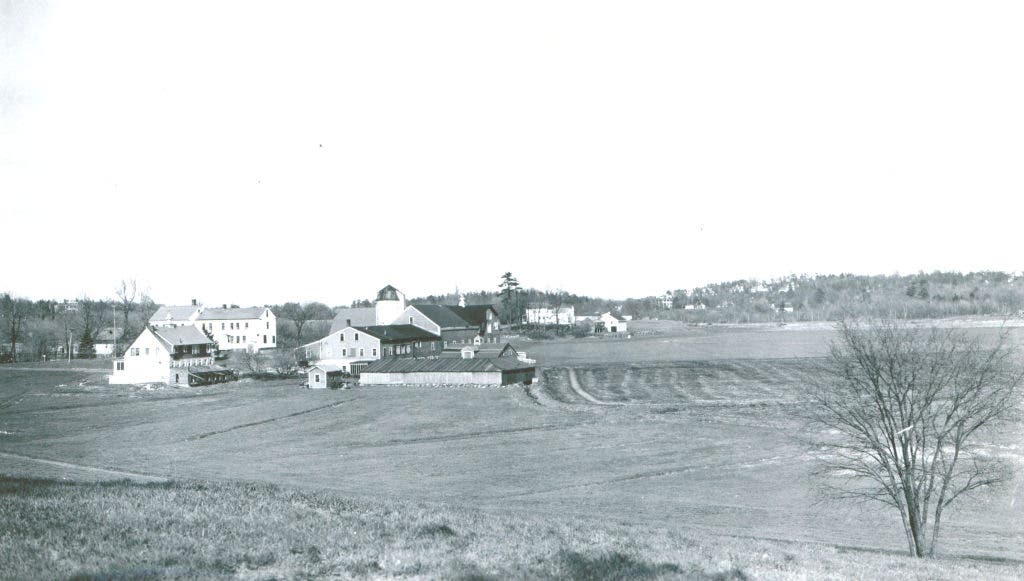
For more than two centuries, Lexington was an agricultural town. Yet farms and farming were always changing, with land devoted to cultivating a range of crops and livestock and sold to both local and more distant markets.
As part of LexCelebrate! Incorporation Weekend, an exploration of our town’s history and the talents the community currently harbors, Lexington Community Farm Coalition member and public historian Carolyn Goldstein has put together a panel of noteworthy speakers to discuss Lexington’s farming history.
Find out what's happening in Lexingtonfor free with the latest updates from Patch.
These speakers include Mary Babson Fuhrer, independent consulting historian specializing in 18th-century New England; Richard Kollen, local historian and former archivist for the Lexington Historical Society; August “Gus” Schumacher, Jr. who grew up on a farm in Lexington, and later served as Commissioner of Food and Agriculture for the Commonwealth of Massachusetts; and Donald Wilson, a third-generation farmer and co-owner of Wilson’s Farm in Lexington.
“We are planning lively slide presentations and opportunities for the audience to share their memories and reflections,” Goldstein says. “Residents are invited to join in the conversation about the important turning points in local and regional farming and the many factors that contributed to the changing understandings of what “farms” were over time.”
Find out what's happening in Lexingtonfor free with the latest updates from Patch.
A group of four panelists will consider a number of questions. What did it mean to have a sustainable farm at different periods in Lexington’s history? As the population in the town and the region expanded, what strategies did farm families use to keep their farms viable? How did farm operations change from relatively small, self-sufficient into more commercial operations, with more external dependencies?
What role did immigrants play in the emergence of market gardening for nearby urban consumers in the 19th century? What kinds of challenges did farmers face in the 20th century as Boston’s population expanded and global competition increased? What were the responses to these and other market pressures? What are the challenges for current and future farmers for producing food sustainably?
You can find more information about LexCelebrate! Incorporation Weekend as well as a more detailed overview of the panelists online at: www.lexington300.org/events. The Farming Panel is sponsored by the Lexington Community Farm Coalition.