Community Corner
At Jacob Whittemore House, Lexington Resident Helps Historic Walls Speak
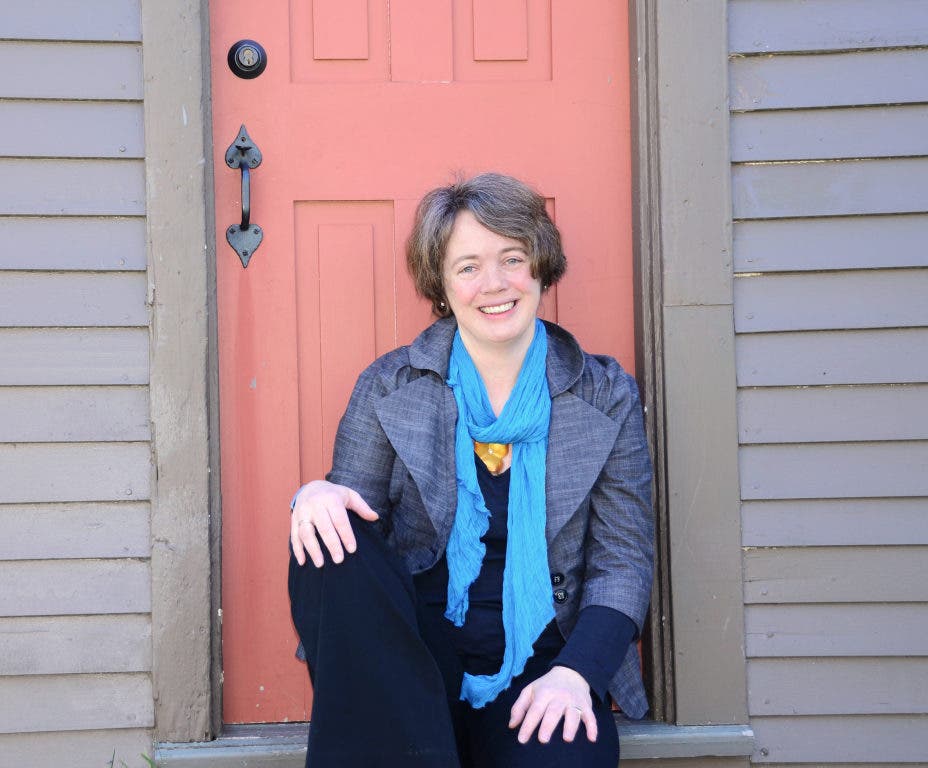
For the past year, the house and the family that inhabited it in 1775 have been the subjects of grant-funded research, led by Lexington resident and public historian Polly Kienle


The following was provided by Minute Man National Historical Park.
Of the 43 historic buildings within Minute Man National Historical Park, 11 were standing on April 19, 1775 to witness the Battle of Lexington and Concord. Of these eleven “witness structures,” only the Jacob Whittemore House (ca. 1717) stands in Lexington.
For the past year, the house and the family that inhabited it in 1775 have been the subjects of grant-funded research. The Friends of Minute Man National Park were awarded a grant by the Mass Humanities Foundation to fund a Scholar-in-Residence project on behalf of the park. Lexington resident and public historian Polly Kienle has spent the grant term investigating the structure’s 18th-century residents, a “forgotten family” whose story has not been part of the traditional narrative of the Battle of Lexington and Concord. The family was plagued with misfortunes, causing economic insecurity and necessitating difficult choices. The lives of the heads of household Jacob and Elizabeth, Jacob’s daughter Sarah and her husband Moses Reed, and their four young children illuminate the actions and experiences of the people who lived at the time of the battle. Working from source materials in Minute Man’s archival collection and elsewhere, Kienle has explored the Whittemores' life at home, their farm and lands, and how they solved problems.
Find out what's happening in Lexingtonfor free with the latest updates from Patch.
Its proximity to the Park’s Minute Man Visitor Center on Route 2A at the westerly end of Lexington makes the Jacob Whittemore House an ideal destination for families with young children. Kienle’s research is being used to create new programs for the visiting public, as well as to develop additional education programming for early elementary students. Both programs innovate by bringing children and their families closer to the complexities of daily life at the time of the American Revolution.
Kienle presented a program, “If these Walls Could Speak…,” on Saturday, May 18th as a part of a day-long special event at the Jacob Whittemore House. The house will be open to the public on a regular basis from June 29 to August 24, Thursday through Monday afternoons. Kienle’s research contributed to the development of new interactive exhibits about daily life in 1775 that invite visitors to the Whittemore House to explore 18th-century food and where it came from, clothing and what was worn when, and division of work within a rural 18th century family. A ranger-led family activity, “Hats Off! A Homespun Tribute,” will be offered daily, while Kienle will present “If These Walls Could Speak” on five Sundays throughout the summer: June 16, July 21, August 25, September 22, and October 20.
Find out what's happening in Lexingtonfor free with the latest updates from Patch.
To learn more about the research and its findings, the public is invited to attend a forum with Kienle and panel of experts from several disciplines on Thursday, May 23 from 6 to 7:30 p.m. at Minute Man Visitor Center in Lexington.
Leslie Obleschuk, chief of interpretation and education at Minute Man National Historical Park, says: "We are very excited to have received the Scholar-in-Residence grant from Massachusetts Humanities. With this grant, our scholar has reconstructed the story of the Whittemore family who lived in one of the park's 1775 "witness structures" still standing today on the Battle Road Trail. This new information will provide the essential foundation we have been missing for the interpretation and new family activities we want to develop for the site."
The Jacob Whittemore House was purchased by the Park in 1961. It was extensively restored in 2005 and first opened to the public in 2009, the year of Minute Man’s fiftieth anniversary. Kienle’s new research is the first since fundamental research was conducted in the early 1960s.
The Scholar in Residence (SIR) program funds research that advances the interpretation and presentation of history by Massachusetts history organizations, based on research in the organization`s collections or mission purview. The program has a dual purpose: to provide organizations with expertise not normally available to them, and to encourage scholars to use the rich resources of the state's history museums and historical societies. SIR projects are set up collaboratively; scholar and project director agree on the research topic and materials to be used, and work together on the project.
Established in 1974 as the state-based affiliate of the National Endowment for the Humanities (NEH), Mass Humanities is a programming and grant-making organization that receives support from the NEH and the Massachusetts Cultural Council as well as private sources.
Mass Humanities supports programs that use history, literature, philosophy, and the other humanities disciplines to enhance and improve civic life throughout the Commonwealth.
To learn more about the public programs, please refer to Minute Man National Historical Park’s website, www.nps.gov/mima, or call 978-318-7825.
Get more local news delivered straight to your inbox. Sign up for free Patch newsletters and alerts.