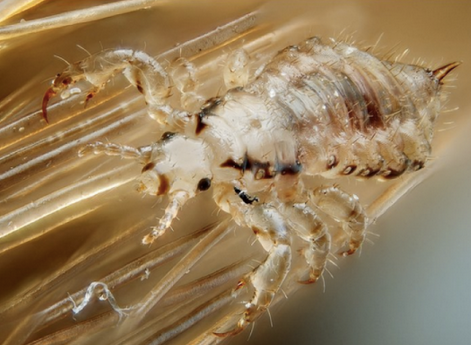
As school kids prepare for those first school bells next week, researchers are warning parents about a pest that may await them: super lice.
Scientists who study lice populations across the country have reported that the bugs found in at least 25 states — including Massachusetts — have developed into creatures quite resistant to common over-the-counter treatments. The researchers reported those findings to the American Chemical Society in Boston this week.
Kyong Yoon, Ph.D., was among those who uncovered the findings.
Find out what's happening in Lexingtonfor free with the latest updates from Patch.
“What we found was that 104 out of the 109 lice populations we tested had high levels of gene mutations, which have been linked to resistance to pyrethroids,” Yoon was quoted in a media release as saying.
Pyrethoids are a type of insecticide that is commonly used to help control mosquitoes and other insects, such as lice. Yoon ultimately found that some lice populations were developing mutations that enabled them to survive exposure to the insecticides commonly used to treat children and adults who suffer from infestations.
Find out what's happening in Lexingtonfor free with the latest updates from Patch.
Solutions to fight back against lice still exist, Yoon said. Different chemicals, such as those only available by prescription, still prove effective.
Even so, the researcher points out the spread of the “super lice” bug serves as a warning.
“If you use a chemical over and over, these little creatures will eventually develop resistance,” Yoon says. “So we have to think before we use a treatment. The good news is head lice don’t carry disease. They’re more a nuisance than anything else.”
Get more local news delivered straight to your inbox. Sign up for free Patch newsletters and alerts.