Politics & Government
Lexington Historical Demolition Makes Way for Archaeologists
Team is exploring the Munroe tavern's backyard.


Munroe Tavern's rear ell has been removed to make way for renovations, but beneath its concrete and sand foundation archeologist Christa Beranek and her team are taking a closer look into the past.
In 1966 the National Historic Preservation Act made digs such as this one a requirement for any modern-day renovations to a National Historic Site. Beranek and her eight person team from the UMass Boston Fiske Center for Archeological Research were assigned to the project when the Lexington Historical Society decided on a renovation last November. On May 25, the demolition of the rear ell commenced and the archeologists settled in for their month-long project of finding and documentation.
"What we're trying to do is find remnants and study their appearance in order to date them, we even hope to find things that pre-date the tavern" said Beranek. After their first stage removal of the sand foundation those remnants are beginning to surface.
Find out what's happening in Lexingtonfor free with the latest updates from Patch.
One of those items is a brick well in the site's back corner which Beranek calls a "mystery feature."
"My best guess is that the structure was used to pump cool water beneath a storage area to keep food cold, but it could possibly be an early plumbing system," she said. Beranek says the well's location out back the tavern seems to support the past existence of a possible buttery or pantry.
Find out what's happening in Lexingtonfor free with the latest updates from Patch.
"Finding this structure was pretty neat," said Beranek. "It's interesting to find things from the tavern period."
"We date this structure to around 1860," said Beranek. Given the tavern's rich history, dating back well before the Revolutionary War, Beranek said there is still much to explore.
During the first week, the site was divided into one meter by one meter sections to allow for methodical, diligent digging. Beranek said removing the soil layers one at a time within the sections tells about different dates and events.
In doing so, the team is unearthing the site's features, or structural clues, to piece together historical context of the site through the last two centuries.
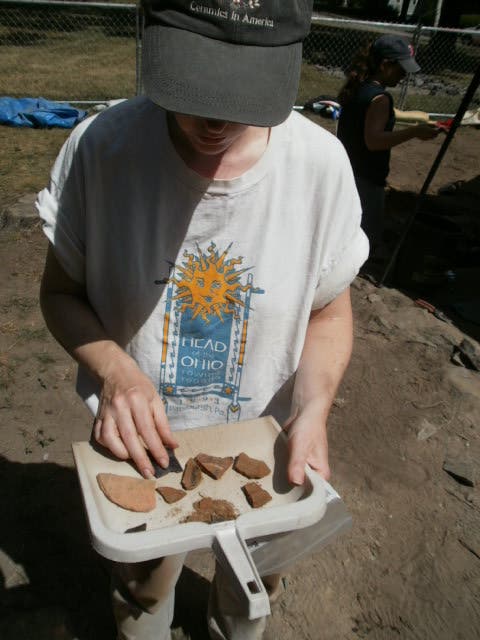
"So far the site has not been rich in artifacts and we don't have anything worthy of display, but we have found pieces of glazed redware from the 18th Century," said Beranek. According to Beranek the glazed redware, which is akin to modern day Tupperware, may have been part of a storage container, cooking pot or chamber pot.
Other artifacts include animal bones and other small items which shed light on colonial eating habits. Beranek said she hopes to find military artifacts.
"We have three more weeks here," she said. Interested parties are welcome to visit the site weekdays from 8 a.m. to 3:30 p.m. throughout July and visit the Fiske Center Blog for updates.