Neighbor News
Notes from Youville: Intergenerational Relationships Matter
As our population ages, relationships between younger and older generations are becoming increasingly important.
When was the last time you had a meaningful interaction with someone significantly younger or older than yourself?
Relationships that cross age boundaries may be rare, but they are becoming increasingly important. As life expectancy increases and baby boomers retire en masse, the senior services sector is attracting younger workers and bringing different generations together in unexpected ways. One new challenge in senior care settings is that younger employees often don’t fully understand the needs, tastes, and sensibilities of the seniors they are serving. In turn, seniors may find the dress, vocabulary and manners of younger employees difficult to understand. This disconnect is often the result of what sociologists refer to as a lifelong pattern of “age segregation.”
Age segregation begins early. It is a formal characteristic of our education system, where we’re placed in age-specific classes from the moment we enter kindergarten. We intentionally learn to develop close bonds with our peers. Unintentionally, we learn to think of different age groups as profoundly “other.” There may be benefits to such circumscribed social habits, but there are also missed opportunities.
In an article published last year in the Boston Globe, “What Age Segregation Does to America”, columnist Leon Neyfakh describes missed intergenerational opportunities and their costs: “Kids, the research indicates, develop important skills by interacting with adults and making friends of different ages, while the elderly have been shown to benefit from spending time around children. There is also evidence that age segregation can affect the economic well-being of a community by making people of different age groups blind to each other’s needs.”
Neyfakh traces the seeds of age segregation in America to an unlikely source: the Industrial Revolution. Drawing on research from professor Howard Chudacoff, author of How Old Are You? Age Consciousness in America, he compares typical American lifestyles before and after the Industrial Revolution. Before the shift, Neyfakh writes that “generations often worked side by side, and kids and adults got their entertainment at the same county fairs. Schoolchildren, meanwhile, were often assigned to classes based on how much they knew rather than when they were born.” After the Industrial Revolution and its new emphasis on clock time, factory work days and efficiency, along with resulting child labor laws, age played an increasingly defining role in all aspects of life.
Few people would claim that the spirit of intergenerational cooperation is better left behind in the past. If anything, this sense of empathy and shared purpose is what we most need to try and cultivate in today’s post-Industrial society.
Promoting Intergenerational Programs
One way to bridge generation gaps is to provide formal, structured opportunities for interaction across age boundaries. Nonprofits and school programs are already bringing young and old together in programs across the country. Temple University has an Intergenerational Center, whose mission is to “mobilize people of all ages to support one another and address critical social issues in their communities.” Many elementary schools place senior volunteers with students in need of one-on-one tutoring. Nationwide, organizations like Senior Corps offers many opportunities for seniors to engage in service projects and interact with younger people.
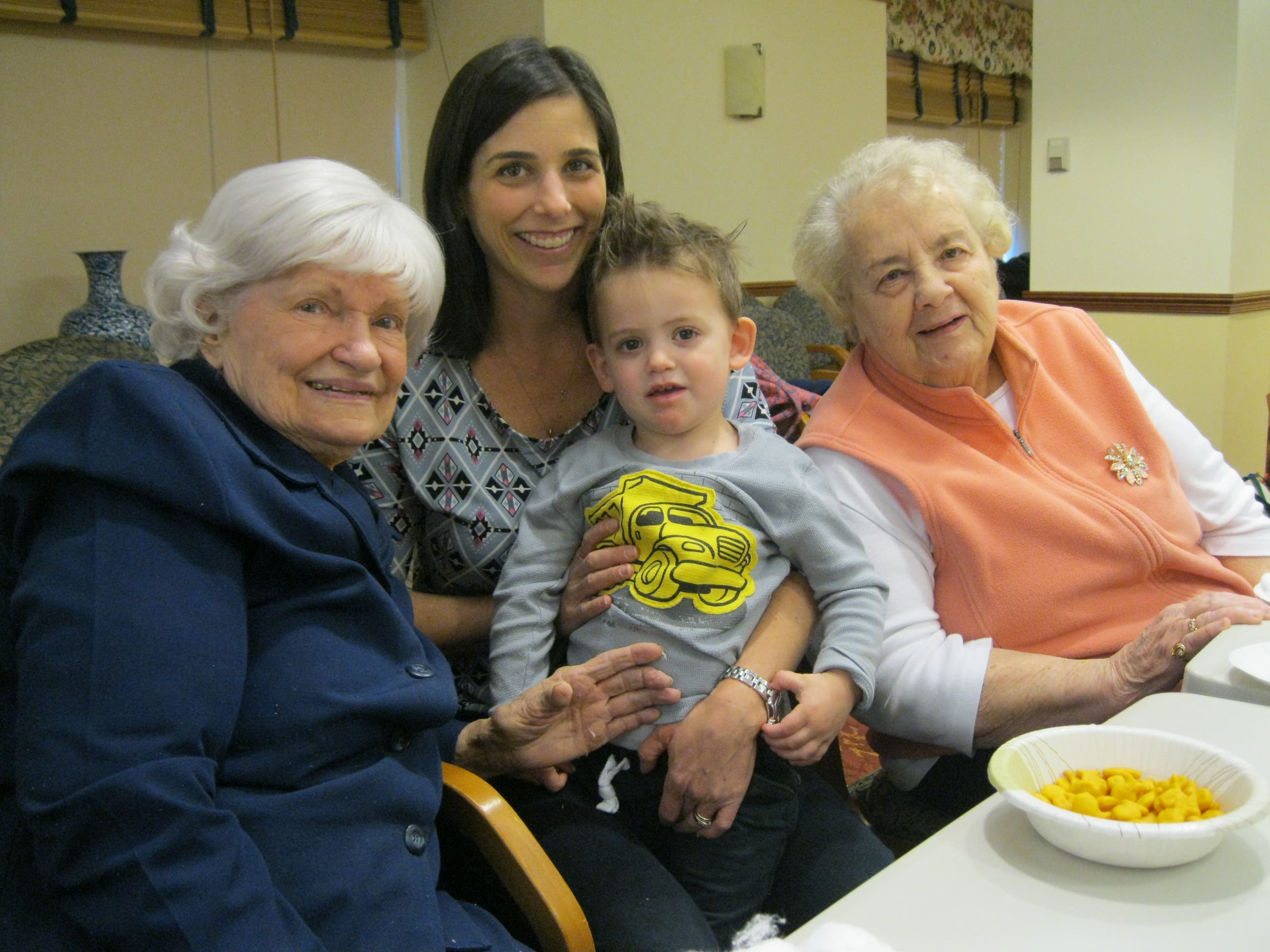
At Youville Place in Lexington, senior residents enjoy regular visits from LexFUN!, Lexington’s “Five and Under Network” that supports families with young children. The play groups at Youville Place provide a setting for seniors, middle-aged parents and young children to socialize and collaborate on crafts and other activities. According to Katie Blanchard, Director of Programs at Youville Place, “Our residents have been delighted to see LexFUN! children as they grow over the years. We’ve seen wonderful relationships develop.”
Everyone benefits from intergenerational exposure. Children develop confidence, empathy and other social skills through their interactions with older adults. Seniors have the opportunity to share wisdom, break out of patterns of isolation, and stay informed about the rapidly changing world around them. Research published in the Journal of Urban Health found that a group of seniors who regularly volunteered with children experienced improvements in memory, balance, and were more likely to maintain a healthy weight. These benefits were likely due to the increase in physical activity and mental stimulation that resulted from a routine of volunteering.
If you are interested in reaching out to younger generations, the following tips might help get you started:
-Volunteer as a tutor or a “class grandparent at a school, through a literacy program, or any other mentoring program. Consider volunteering with Senior Corps
-Ask about opportunities within your church community to get involved with volunteer or intergenerational activities
-If you’re looking for a retirement community or long-term care, consider places in which intergenerational activities are featured prominently in the programs offering
-Keep an open mind. Try to be curious rather than judgmental when encountering generational differences
A more fully intergenerational society can only be possible when make the effort to adjust our attitudes. Next time you catch yourself shying away from a conversation with someone younger or older than yourself, think again. If necessary, pretend the Industrial Revolution never happened, and take the plunge! A simple, civil conversation could be the first step toward greater change.