Politics & Government
Planning Board Considers Harwell Avenue Economic Development
Members of the Economic Development Advisory Council speak about the Harwell Avenue Transportation Management Overlay District.
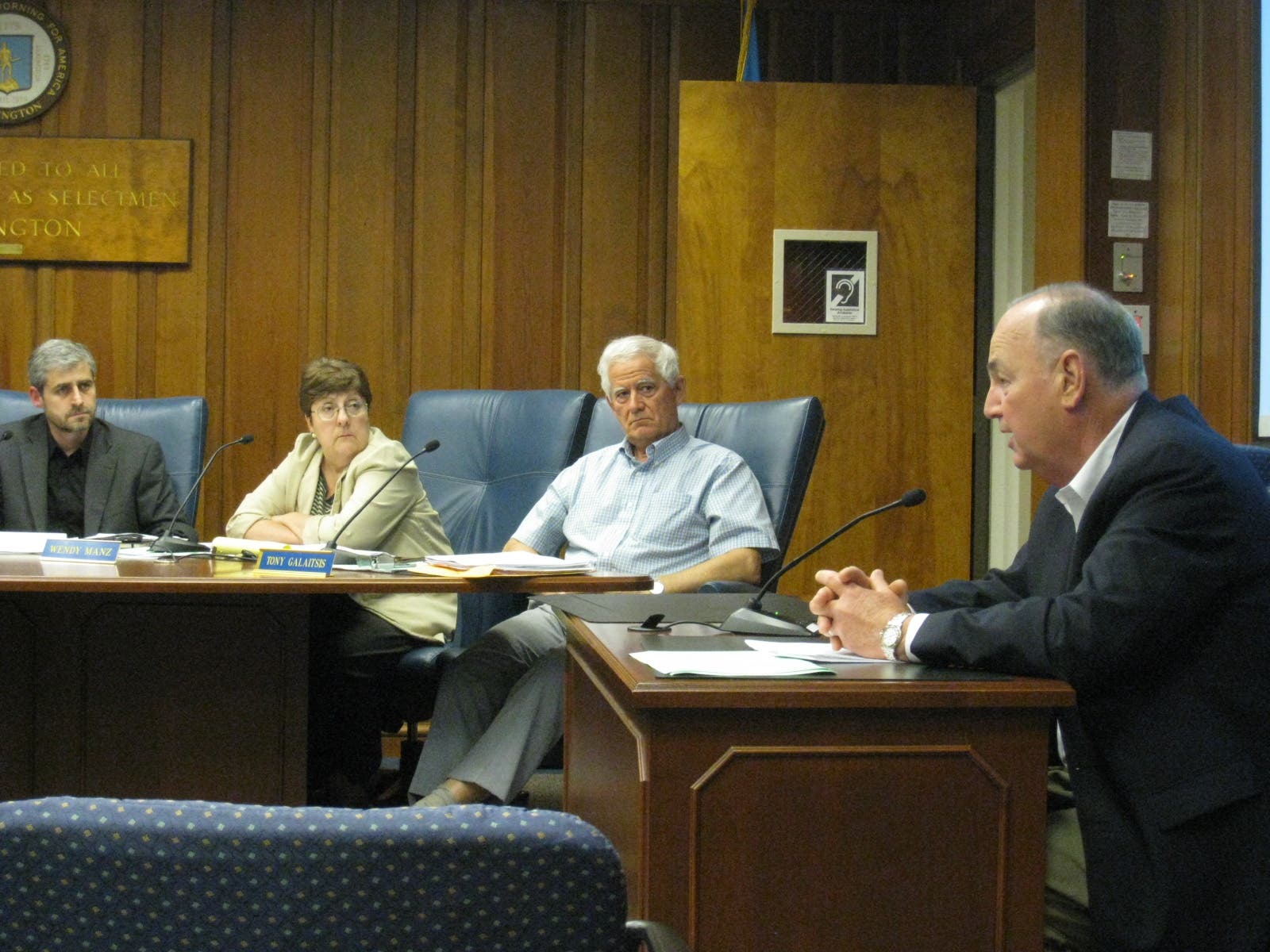
Instead of considering the infrastructure details of the $12.4 million Harwell Avenue Transportation Management Overlay District (TMOD) plan, members of the Economic Development Advisory Committee (EDAC) last night asked the Planning Board and transportation consultant about the plan's true goals.
They asked whether the goal is to attract investment, developers and tenants to the area as quickly as possible, or whether it's to spend the necessary time to develop a plan the entire community can support – left-hand turn restrictions, roundabouts and all.
Susan Yanofsky, the town's economic development officer, said no one would disagree with the big picture of the plan – improving safety and improving capacity - but for developers, the details of the infrastructure are less important.
Find out what's happening in Lexingtonfor free with the latest updates from Patch.
"I see you are willing to put in the hours that no one else is in terms of getting into the details, and I would not discourage you from doing that," she said. "On the other hand, what is the goal here? You've decided you're going to have a ballpark, and now you're trying to decide if it's a soccer field or a baseball diamond. The point of the TMOD was to figure out whether you've got the dollars mostly right."
Members of the Planning Board said they have the information before them to approve a plan, but certain assumptions made in the plan do not yet have community support.
Find out what's happening in Lexingtonfor free with the latest updates from Patch.
"We can work at driving community consensus about how people feel about roundabouts which will make things take longer, or if there's time pressure, we could choose to move forward with something an awful lot vaguer and less detailed that would open the gates so that someone could redevelop their property," said member Charles Hornig. "They'd have to pay whatever somewhat arbitrary fee we set based on our somewhat arbitrary plans of infrastructure, but they could build. I think it's really important for us to understand what the real value is to the community."
Yanofsky said developers have been turned away in the last year because the plan wasn't yet ready.
"Given the economy we don't want to be encouraging that," she said. " It's really hard when you don't know what you're selling, and some certainty and some clarity is essential, but I think you're going to get a louder push from the EDAC to make something happen sooner."
Other members of the EDAC questioned the fees posed to developers - the impact fees and the fees associated with creating the Transportation Management Authority (TMA) to try to get businesses on board with a plan to encourage employees to use alternate methods to get to work. Tetra Tech, the transportation consulting firm behind proposed the plan, has suggested a $10-$20 fee per employee to get such a program running.
"Guys are investing an awful lot of money out there, and this is really nothing more than a nuisance type payment," said John McWeeney, EDAC chairman. " I think it's insulting to think someone's going to come out here and invest multi-millions of dollars, and then think the town, with this $10 charge has got some kind of chain around their neck."
Larry Smith, EDAC member and a land owner and developer who is president of Cranberry Hill Associates, said the goal should be to encourage development.
"We should be working with the Economic Development Advisory Committee to make things happen out there, not prevent them," Smith said. "In my professional opinion as a developer, this will slow down the development process, because this board will say wait until the roads are built, et cetera."
Rick Bryant, vice president of Tetra Tech, said developers know they are often asked to mitigate traffic when they build, and the transparency of an upfront impact fee actually creates a better environment for developers.
"The marketplace is going to tell us if that works or doesn't work," he said. "We've got $12 million worth of work to pay for."