

Have you ever wanted to be a king? To ride through the streets in a jeweled carriage, face stern with cruel authority, while the common folk flee into shops and alleyways to escape your regal stare?
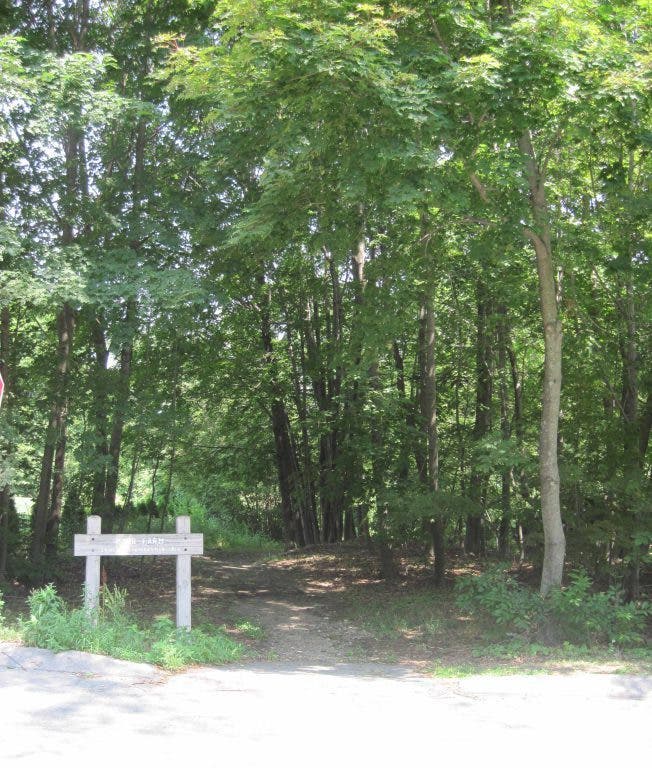
If you've ever dreamed of being a feared tyrant, I highly recommend taking a walk this week through the Poor Farm, Lexington's 11-acre conservation land site at the corner of Hill and Cedar streets and Paul Revere Road. The main path will take you straight to a large, open grassy knoll filled with heat-worn grass and hundreds of nervous grasshoppers. Take a step off the trodden path, and everywhere insects will scatter—or at least, I think they do. It's difficult to see anything but the motion, the jump itself as tan grasshoppers ripple through tan summer fields.
As you redistribute insects over the fallow land, consider what it must have been like to live on this land, fully aware that everyone in town knew that you were too poor to live anywhere else. This land was where Lexington housed our "less fortunate" citizens who could not survive without public assistance.
Find out what's happening in Lexingtonfor free with the latest updates from Patch.
According to Tom Sileo's fascinating Historic Guide to Open Space in Lexington, it was not Lexington's first poor house. That house was built in 1783 near the Hayden Recreation Center east of Lincoln Street; the Lincoln Park soccer field was the farm that supported the poor. This Poor Farm was purchased by the town in 1845. By 1850, 22 Lexingtonians were living temporarily on the Poor Farm, and four lived there permanently. They cost the town $3 per person per year, a sum roughly equivalent to $6,000 today.
The poor on the Poor Farm produced vegetables and hay, and raised cows, pigs and chickens at various times. It wasn't shut for good until 1925, when the town started sending indigent residents to what Sileo calls an "institution in Charlestown," whatever that might be.
Find out what's happening in Lexingtonfor free with the latest updates from Patch.
Since then, the barn has vanished, the house has disappeared, and much of the farm site along Cedar and Hill Streets was sold for house lots to Lexington's World War II veterans. What remains is an open field on a gently sloping hill bordered by Cedar Street's houses to the west, and woods, wetlands and the Pine Meadows Golf Club to the east.
Still, you can see traces of the farm in the shapes of the trees. There are several wide-branching white oaks in the woods, showing the shape of what Tom Wessels calls "wolf trees" in his classic Reading the Forested Landscape. Wolf trees grow fat in open fields, where they lord over the land by spreading their limbs far and wide. Meeker trees in crowded forests grow tall and thin, reaching upward as quickly as they can to find small patches of sun of their own.
The Poor Farm closes, summer grasshoppers come to be scorned by winter's ants and young trees lead narrower lives than their sires. Life changes and transforms.
Today, the Poor Farm is a pleasant place to walk (if you're not a grasshopper), and a fine place to inspect the effect of selected invasive plant species listed in the Massachusetts prohibited plant list — plants which may not be sold, propagated, traded, or brought into our fair commonwealth. If you want to see who is going to be king of the forest in 20 years, take a look at the stand of Japanese knotweed by the entrance, or the arm-thick vines of Asiatic bittersweet strangling trees in the northeast corner of the wetlands. Given the power of the invasives' numbers, will the jack-in-the-pulpit by the abandoned picnic bench survive? Will the red maples escape a bittersweet embrace? They might; if there's any lesson to history, it's that all tyrants eventually fail.