Politics & Government
Finance Committee OKs $15 million for Transfer Station and Landfill Cap
Town faces $630,000 in fines from state if project is rejected again this year.
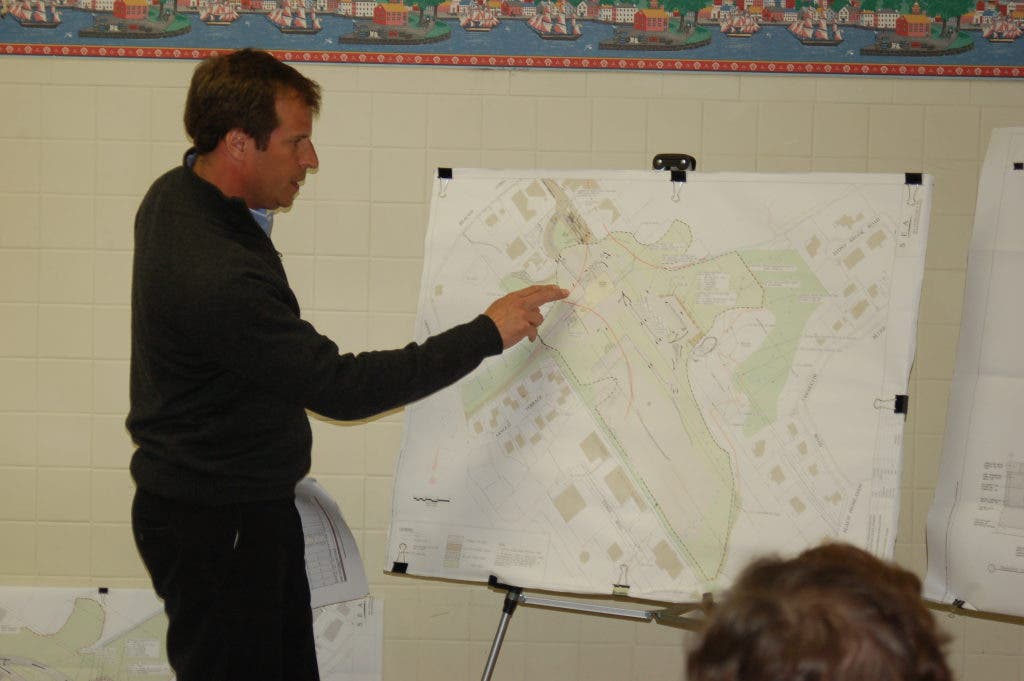
Calling the new plans for a scaled-down trash transfer station a “pickup truck” as opposed to the “Cadillac” it approved last year, the town's Finance Committee voted unanimously to recommend that the residents who attend the Town Meeting in May approve spending $15.1 million to cap the and replace the 54-year-old transfer station.
The vote completes all of the items for the , where the focus will be on two high-ticket projects: the landfill and .
Jack Buba, who led the opposition against last year's 10 capital projects, has already indicated he will oppose the expensive projects.
Find out what's happening in Marbleheadfor free with the latest updates from Patch.
The committee heard a detailed analysis of the proposed $15.1 million project that would install a rubber and asphalt cap on the town's landfill and build a new trash transfer station.
The proposal is about $7 million less than the $22 million project that was approved by the Finance Committee and Town Meeting last year, only to be defeated in the June override election.
Find out what's happening in Marbleheadfor free with the latest updates from Patch.
“Let's call it a fully-equipped pick up truck,” said Health Director Wayne Attridge.
To defeat the landfill and transfer station this year “would not be a healthy option for the town,” said Matthew Herring, a member of the finance committee and chairman of the subcommittee for the Board of Health that developed the less expensive alternative.
“We have to do this,” said Lisa Louden, another committee member.
Marblehead, which is under an administrative order with the Massachusetts Department of Environmental Protection to cap the landfill, would face $630,000 a year in fines this year and about $725,000 in fines next year if it does not show the DEP that it is making progress to cap the landfill.
The transfer station, which is 40 percent less expensive than the “Cadillac” that was proposed last year, also generates about $400,000 a year, said John McGinn, the town's finance director. If that revenue stream continues, the transfer station would pay for itself in about six years, he said.
The average homeowner would pay about $106 more in property taxes for the next 20 years if the town goes ahead with building the transfer station and capping the landfill.
But if the DEP levies fines against the town, it average homeowner would pay about $71 a year to cover the fines, and DEP could still force the town to pay for capping the landfill, official said.
Herring outlined several major changes in the project that has reduced the estimated cost. Among the major items are shrinking the transfer station by 20 feet, relocating it to reduce the expense of building a retaining wall, eliminating a trailer storage area, reducing the number of bays at the station, installing a sleeve in a water pipe under the landfill rather than encasing it in concrete and capping the entire landfill area, rather than digging up portions of the landfill and consolidating all the trash in one area.
Each of these items will save a significant amount of money, Herring told the committee.
Eric Church, a finance committee member, praised the subcommittee that developed the new project, saying the committee had taken “a sledge hammer” to the old proposal.
Moses Grader, a vice chairman of the finance committee, asked if the project had to be done this year.
Herring and Attridge said it has to be done now or risk having DEP fine the town and take control of the project.
Several finance committee members questioned Herring about “the PR component” of selling this project to the Town Meeting and the voters.
Herring said he plans to take the lead in explaining the project at Town Meeting, but assured the committee that there would be a lot of support given “from other quarters.”