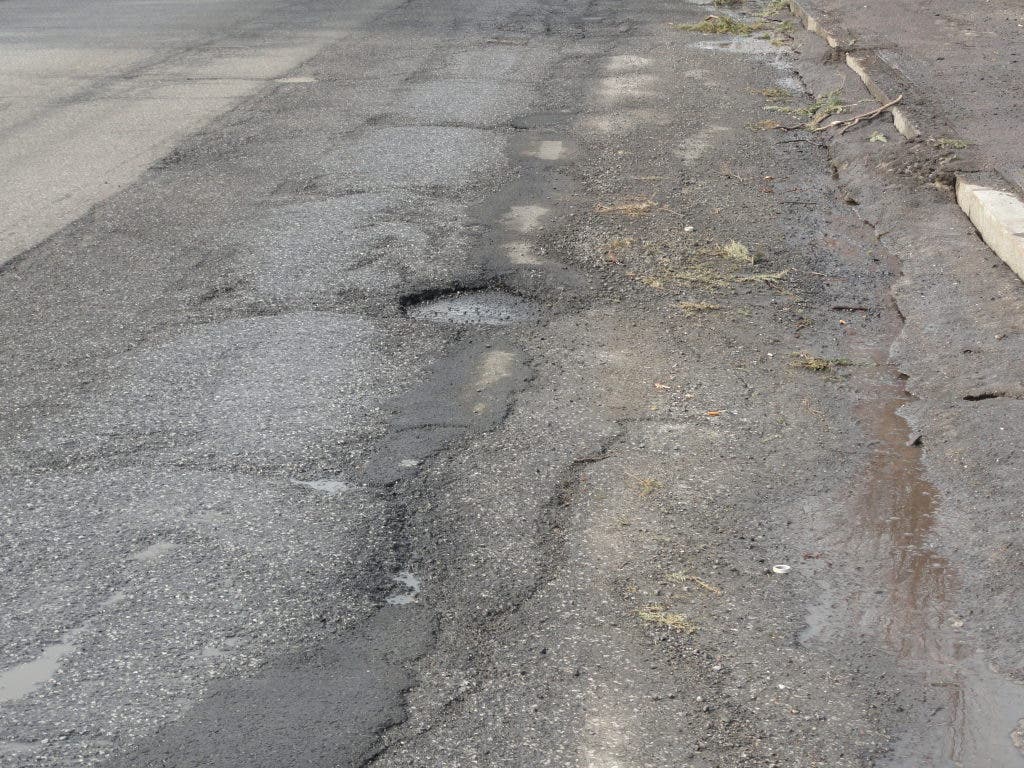
Temperatures ranging from 60 degrees to 20 degrees-with-45-mile-per-hour winds brought more than just shorts and t-shirts and parkas and ear muffs to Marblehead streets within the last two weeks. It also brought potholes.
"They’re getting pretty nasty," said Dave DiPippo of Stingray Collision on Woodfin Terrace. "They can happen anywhere that there’s water, sand, and warm and cold."
Pothole season, according to DiPippo, usually begins in March when temperatures are above freezing during the day but drop below freezing at night. This causes water that has seeped underneath the asphalt road surface to repeatedly expand and contract as it freezes and melts, weakening the asphalt to the point where it cracks and can be easily dug up by passing snowplows and other vehicles.
Find out what's happening in Marbleheadfor free with the latest updates from Patch.
But the season started early this year. Two weeks ago, the town briefly set up a special email link to report potholes, and the first wounded vehicle entered Anderson Street Autobody.
DiPippo said he hadn’t yet seen any uptick in complaints specifically tied to potholes but that it would only be a matter of time before the jobs come in - They always do, he said.
Find out what's happening in Marbleheadfor free with the latest updates from Patch.
First to arrive are usually commuters who travel daily on heavily used highways, DiPippo said. Those with high performance sports cars such as Mercedes and BMWs or SUVs are particularly vulnerable, because they typically use tires with a low profile (the amount of rubber visible between the road and the chrome of the wheel) that provides less cushioning over bumps but better grips the road.
The damage can be anything from a flat that needs to be patched to a new tire plus a reconstructed wheel case, realignment and new struts. Sometimes even a deep hole can rip off a car's bumper.
Meanwhile, the town is working to patch any potholes that should appear. Director of Public Works David Donahue said that crews are assigned to different parts of town and have been able to fill the holes within a day with a special emulsion mix that adheres the cracked asphalt together. The town will add a coating of hard mix once the temperatures are reliably above freezing.
But for now, Donahue said that citizens should report the problem and that the department will get right on it.
“If you see a pothole one day, if the weather’s good it’ll be gone during the next day,” he said.
The only thing that could prevent the hole from being filled immediately, Donahue said, would be another storm.