Politics & Government
Jeanne Cahill: MA 2020 Primary Candidate Profile
Northborough's Jeanne Cahill is challenging state Rep. Danielle Gregoire in the Sept. 1 Democratic primary.


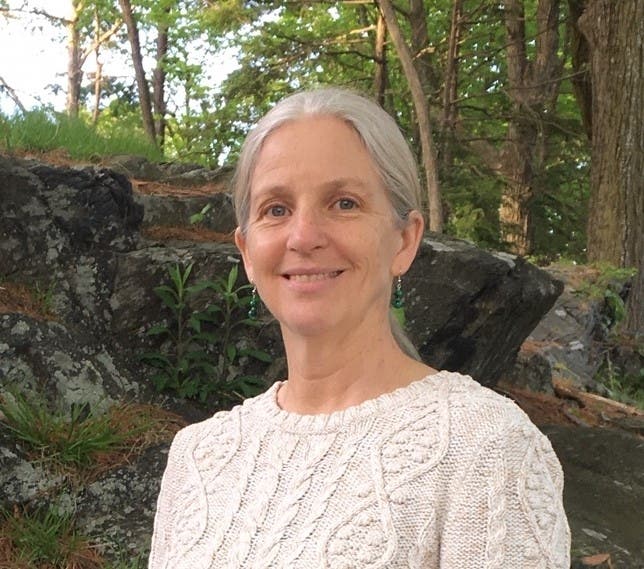
MARLBOROUGH, MA — For the fourth time since she was first elected to the 4th Middlesex state House seat in 2008, Democratic state Rep. Danielle Gregoire will face a primary opponent this year.
Gregoire will face Northborough resident Jeanne Cahill, who is running with the goal of bringing more transparency to voters in the district. Gregoire has never lost a primary, but she did lose the 4th Middlesex seat in the 2010 general election to Republican Steven Levy — but won it back in the 2012 general election.
Patch has asked both Gregoire and Cahill to answer our candidate questionnaires ahead of the Sept. 1 primary to give voters a view on where they stand on local issues. Here's how Cahill answered our questionnaire:
Find out what's happening in Marlboroughfor free with the latest updates from Patch.
Jeanne Cahill
Family: Husband Joe and two daughters, aged 17 and 22
Education: BS Biology, Bates College and Ph.D. Environmental Sciences, UMass Boston
Occupation: Human and environmental health risk assessor
Previous or Current Elected or Appointed Office: None
Campaign website: jeannecahillforma.org
Why are you seeking elective office?
Find out what's happening in Marlboroughfor free with the latest updates from Patch.
I seek to represent the Boros district fairly and with full transparency. I pledge to publicly disclose my record of actions and votes, and to work for the public interest.
Current state House decisions are made behind closed doors. Only 10% of bills introduced each two year session reach a floor vote. We don't why bills progress or die each two-year session, and how our representative votes on them. This closed process weakens House legislation so that it fails to respond to the rooted problems and growing inequities we face: climate, health care, employment, housing. The House of Representatives kicks difficult issues to the next session, or votes on incremental measures that bond the price to next generations.
I run to bring to the House needed expertise, integrity, questioning, and determination. I am excited to draft sensible and sound policy, in consultation with those I represent. I seek triple-win solutions that benefit people, planet, pocketbook.
How would you rate the state's response to the coronavirus pandemic on a letter-grade scale (A, B, C, D or F), and how would you explain that rating?
The state's early response overall I would give a C. Lost credit is due to the lag in preventative planning during January and February 2020; the virulence of infection in vulnerable populations and communities of color; the lack of paid sick leave spreading infection in workplaces, homes, and care facilities. I credit the state House and Senate for covid emergency legislation that expanded unemployment benefits for those laid off during the shut down, though I disagree with how it was administered. The moratorium on evictions and foreclosures through October 17 is necessary; yet how tenants are held to repay rent remains in question. I appreciate the Governor's daily reports and orders to adopt preventative measures, yet wish they came earlier and were aligned and normalized nationally. If provided with more detailed data, people would understand the current risk factors better, eg: in which places and conditions are new daily cases getting exposed? Each person is the key to maintaining safe schools and keeping workplaces open. As we behave and comply with guidelines, so we may contain the spread. I give the people of Boston an A+ for widespread public mask wearing and distancing. They role model our best defenses against a resurgence of covid-19 cases. We each need to be responsible and vigilant, as we move from outdoor to indoor living this fall, to keep all safe and protect the most vulnerable among us.
Is Chapter 40B, the state's affordable housing law, working, and if not what would you change?
I support allowing municipalities to charge a real estate transfer fee to fund affordable (relative to income) multi-family housing, beyond the minimum required, to meet demand for those who work in the community to live there, and to diversify our neighborhoods.
What steps, if any, should the state take toward police reform?
The police reform, shift and build act is currently in a House-Senate conference committee to reconcile provisions that will be signed into law. Everyone agrees reform is needed. I don't hear much pushback on police standards and training certification What I hear most objected to is what it means to remove qualified immunity. The House bill set up a task force to examine this legal doctrine and how it could apply relative to de-certification. This omnibus bill passed through both branches hastily, met with oppositional lobbying, but without allowance for community dialogue, reckoning, and response.
I understand that Black lives matter. I am alarmed by the volume of evidence of disparate health outcomes based on race. This includes 2-5 fold higher disease, hospitalization, and death rates for a spectrum of chronic and acute health conditions. Also, the most polluting facilities are sited in low-income, particularly African-American majority, communities. The stresses of living at society's margins compound physical and mental health problems.
I am committed to listening to another's experience that challenges my own preconceptions. I hold myself accountable to do all I can to recognize and remediate past discrimination and its effect on next generations. This regards how we open opportunities, neighborhoods, policies, and practices. The young people who champion Black lives are focused on a wider examination of racism. Our town/city/state leaders are called to engage in this work.
Describe the other issues that define your campaign platform
As a scientist, I will bring to the statehouse skills and understanding to address complex, interlocking, systemic issues that stymie state progress and diminish our kids' future.
I will support the following open government rules: public reporting of committee testimony, deliberations, and votes; sufficient time for bills to be reviewed and consulted on with community members before a scheduled vote; a limit on House leadership terms of office; committee chairs voted by committee rather than appointed with a salary boost; news reporting on the content of bills under consideration, not keeping secret until the last days of the two-year session, voting the next day, and excluding public involvement.
I will support taking active measures to reduce climate changing emissions now, not in two or four years as the House just approved. A green economic clean energy and efficiency stimulus is the best investment at this time according to US and UK economists. Thirteen states have adopted 100% renewable energy goals; the Massachusetts House weakened their goal to net-zero carbon emissions by 2050 with no specified mechanisms to get there.
I will study and seek to defragment and rebalance the broken state of public health care provision and financing. We need consistent, known, affordable costs, and equitable access and delivery of care. We need paid sick leave, not just during the covid emergency, but as the basis for public health maintenance.
What are the critical differences between you and the other candidates seeking this post?
The incumbent voted against multiple House Rules transparency amendments at the start of the 2019-2020 legislative session, many of which are cited above.
She has voted against taxing income over $1 million at a higher rate, despite the growing income inequality amassing to benefit the the top income bracket. She has not acted and reported back to constituents concerned about climate change, over the recent four years. She publicly called out single payer healthcare as "dangerous" in 2017, but now claims that the state House is moving in that direction with a bill requiring health insurance companies to cover telehealth appointments.
She voted against same day voter registration, which accepts a provisional ballot that would count once information on voter qualification is verified.
If you are a challenger, in what way has the current board or officeholder failed the community (or district or constituency)?
What seems like a benefit may rather be a revolving door of public funds. The incumbent touts her accomplishments of delivering to the community funding for municipal projects. The state House's recent $1.5 Billion Technology Infrastructure bond bill provides $50 million to equip school districts with computing during remote learning. Yet it also includes earmarked funds for municipal projects, including in each of the Boros. I question how appropriately state borrowing for the purpose of information technology should barrel in municipally-budgeted expenditures, just ahead of local elections.
I observe that the incumbent does not listen to valid constituent concerns. Her voting record favors regressive taxation and borrowing, not taxing wealth and corporate interests.
What accomplishments in your past would you cite as evidence you can handle this job?
I've advocated voluntarily at the statehouse on climate and clean energy, health care, community safety, and election fairness bills. This includes attending multiple public hearings on bills, meeting with legislators, and representing constituent concerns directly in person. These efforts have not accomplished the intended goals of improving public policy outcomes.
My accomplishments include application and knowledge of the body of Mass environmental laws and policies; campaigning in local communities on state and local ballot questions that passed, and canvassing for Democratic candidates; service on executive boards for community, civic, and political issue/action organizations; working with youth on environmental education initiatives and passing two municipal bylaws; operating an independent scientific consulting practice that collaboratively refines solutions to complex problems.
The best advice ever shared with me was:
Always meet the deadline.
What else would you like voters to know about yourself and your positions?
Please refer to my website jeannecahillforma.org for more information, and to access linked social media updates on recent legislative issues.
The last day to register to vote in the primary is Saturday, which is also the day early voting gets underway.
Get more local news delivered straight to your inbox. Sign up for free Patch newsletters and alerts.